Character chemistry archetypes

I’m continuing to work on my arbitrarily-ultra-secret cartoon idea, and this week I’ve been spending an enormous amount of time thinking about character and, more importantly, character relationships.  And I’ve had a sort of epiphany that none of the books on writing I’ve read seem to mention (not that I’ve read a ton), but it’s pretty obvious once you realize it: character chemistry is a whole that is greater than the sum of its parts.

So often books on writing or plotting talk about characterization as if characters are complete entities in and of themselves.  That’s the natural way to think of them.  But in a story, a character does not exist in a vacuum.  A story, and our interest in it, is born of the interactions between one character and another.

The best way to understand this is to think about your favorite character being placed in a world in which everyone was just like him.  Unless the character has multiple personality disorder, an interesting story is impossible because there’s no way to get any character contrast, no way for the character to be defined, and thus no way for us to get any meaning out of the character.  A canvas painted one color holds no interest; it is a specific collection of colors that attracts our eyes.

Many books on writing talk about character archetypes.  I still think those are valid, but I think they’re incomplete.  For example, the “old wise mentor” character archetype is useless without a student to teach.  It is not the “mentor” archetype that we relate to, but the mentor-student relationship we enjoy.  Both characters are necessary because it’s a relationship, not just a character sitting there by himself.

So I paced around and tried to come up with the main basic relationship archetypes we see again and again in stories.  Here’s what I came up with.  Let me know if you can think of any I might’ve missed:


The Straight Man and The Fool

AKA: The Annoyed and The Annoyer, The Serious and the Unserious, “The Double Act”

Examples: Shrek and Donkey, Squidward and SpongeBob, Bert and Ernie

This is definitely one of the most popular relationship archetypes.  One character says stupid things and acts annoying, and the other character gets angry.  We, the audience, laugh not at the fool (or at least not only at the fool), but at the relationship.  We laugh more when other characters react with serious looks.  The humor is born of the relationship.


The Hero and The Client

AKA: The Rescuer and The Rescued

Examples: Mario and Princess Peach, Luke Skywalker and Princess Leia, Shrek and Fiona, Dr Alan Grant and the grandchildren

Another extremely powerful and popular relationship.  A character needs help, and another character agrees (often reluctantly at first) to help them.  Pretty easy to understand.

There are many stories in which a hero is on a mission to save a city or a kingdom or an entire world, such as Frodo destroying the One Ring or Luke Skywalker destroying the Death Star.  I would not consider these quests to be part of this relationship; it’s not concrete enough to be a relationship.  Caring about such stories only works if, within those stories, there are other pre-established relationships we care about.  We really don’t care about an entire world for its own sake, we care about the specific relationships within it.  I think this is a very important point.  Character relationships we care about have to be at stake for the peril of the world to matter.


The Mentor and The Student

Examples: Obi-Wan and Luke Skywalker, Gandalf and Frodo, Shifu and Po, Doc and Marty

Another age-old powerful relationship.  One character teaches, the other learns.  We, the audience, get to learn with the student, but we also get to observe his progress along with the teacher.


The Envied and The Envious

AKA: The Used and The User

Examples: Mozart and Salieri, Frodo and Gollum, Captain Hammer and Dr Horrible

A simple and understandable way to create animosity between characters.  Since we’ve all known the feeling of envy at one time or another, this relationship allows us to identify with the otherwise negative envying character.  When he wants something specific that the other character has, we understand his motivation for doing evil things.

I would also lump into this category relationships in which one character is merely using the other character as a means to an end.  There may or may not necessarily be any envy involved, but the character can’t achieve what he wants on his own, so he forms a relationship, perhaps faking friendship, to get what he wants.


The Noble and The Rogue

Examples: Will Turner and Jack Sparrow, Luke Skywalker and Han Solo, Christine and The Phantom, Lisa Cuddy and Gregory House, Wendy and Peter Pan

One character tries to play by the rules, while the other character’s moral compass is a bit harder to follow.  I think we, the audience, tend to gravitate our fascination toward the rogue character, but they’re at their most interesting when they’re playing off or arguing with someone whose moral compass is more like ours.  Note that the rogue character doesn’t necessarily have to be evil or have evil tendencies; his ways of doing things simply have to seem foreign to us.


The Guard and The Prisoner

AKA: The Ruler and The Ruled, The Boss and The Employee

Examples: Lisa Cuddy and Gregory House, Mother Gothel and Rapunzel, Vernon Dursley and Harry Potter, The Wicked Stepmother and Cinderella, Captain Stottlemeyer and Monk, Monk and Sharona or Natalie, Mr Krabbs and SpongeBob

This is basically an authority relationship; one character has the power to tell the other character what to do.  We immediately relate to it because we all have to deal with authority of some form, and I doubt any of us really like it.  It’s a relationship that naturally and constantly creates conflict (hopefully not as much in real life as in fiction).

There can be different degrees of this relationship, from the cruel wicked character keeping the other character trapped, to the friendly boss who works with an assistant.  The point is that we clearly understand the direction of the authority.


Dysfunctional love / friendship

Examples: If you can’t think of any, you have no hope

This is probably the penultimate relationship; it makes all the other relationships interesting, and it can be found in some fashion in almost every story.  Two characters somehow connect or fill a need for one another.  They care about each other.  While conflicts may force them apart, love or friendship is the magnet that keeps them coming back to each other.

I use this relationship to describe any relationship in which both characters care about each other.  It could a romantic love, in which the characters will probably want to eventually get married, it could be family love, or it could just be the friendship of two buddies who get along.

In many stories, this relationship begins as one of the preceding relationships, such as a Hero and Client relationship leading to romantic love, or a Straight Man and Fool relationship leading to friendship.

For most of the story, perhaps even for the entire story, the love or friendship must be dysfunctional.  We are not interested in love or friendship that is working fine.  The relationship is only interesting if it is being tested by one of the other relationships or outside conflicts.  Perhaps authority figures from the Boss and Employee relationship do not want the character to fall in love, perhaps there’s a love triangle and another character is envious, perhaps the characters in love have ideological differences due to a Noble and Rogue relationship.  The point is that it’s never perfect unless we’re past the story’s climax.


They’re all mixed up

Of course, within a story, characters can take on multiple roles in multiple relationships.

For example, in the Back to the Future trilogy, Doc is often the Unserious-Mentor-Hero while the young Marty McFly is the Serious-Student-Client.  Sometimes Doc becomes the Client while Marty becomes the Hero.  Their relationship is held together by Dysfunctional Friendship, and there are multiple Dysfunctional Love relationships throughout the trilogy.

Role reversals are also fun.  In the Shrek movies, Shrek is usually annoyed by Donkey (“You’re headed the right way for a smacked bottom”), but he sometimes becomes the annoyer himself as he makes his own jokes (“Well, sure it’s big enough, but look at the location!”) which are made funnier because Donkey doesn’t laugh, maintaining the Straight Man and Fool relationship.  As long as the characters stay in character, relationship switches can keep things interesting.


Conflict itself is not a relationship / Having a crush on someone is not a relationship

In the movie Jurassic Park, what relationship does the T-rex have with Dr Alan Grant?  Obviously none.  OK, that’s an easy one, since the T-rex is not a human.  How about the Joker in The Dark Knight?  What relationship does he have with Bruce Wayne?  Again, none.  He causes conflict, sure, but he has no motivations other than to cause conflict.  He might as well be an unconscious volcano.  (You might claim it’s a Noble and Rogue relationship, but I’d argue it’s not, because, like I said, the Joker has no desires or motivations.  Rogues do.)

You can find this with a lot of villain characters.  What about The Emperor and Luke Skywalker in Star Wars?  Obviously there’s some conflict there.  But, again, I’d argue there’s no relationship.  There’s just conflict created by the Emperor wanting Luke to turn to the dark side (maybe if they changed its name?).  What about Sauron and Frodo in Lord of the Rings?  Again, no relationship, just conflict.

My point is that just because a character acts as a conflict does not mean he necessarily has a relationship with the character (he may or may not).  But it is through these outside conflicts that Love and Friendship relationships are threatened and tested.  It is against these conflicts that Love and Friendship must remain standing (or not, if it’s a tragedy).

Similarly, if one character has a crush on another character, that is not a relationship.  It is just an interest.  Such an interest might play a part in the character’s already-existing relationships, and it might lead to another relationship, but it is not a relationship in and of itself, because it’s one sided.  And we, as an audience, probably don’t care much about it until some actual interaction takes place.


Simplicity

How many main character relationships can we find in stories?

I think books have the space to become as complex as they want to, but in TV shows and movies, I think it is usually kept quite simple; probably at most three for a single TV show episode, and at most four for a movie, and even that might be pushing it (I have yet to seriously analyze any films for this).  TV shows and movies can still have many small relationships that play out for a scene or two, but only a few will be important for the overall story arc.  (For example, in the Lord of the Rings film trilogy, I would not consider the relationship between Aragon and Arwen to be of prime importance to the overall story; hence the reason some of their scenes were edited out for the theatrical versions.  Nor would I consider the friendship between Gimli and Legolas to be too important.)


In Conclusion

OK, hope that was an interesting post.  You will now either begin to see these relationship archetypes all over the place, or completely forget everything I just told you.

Some thoughts on learning perfect pitch…

According to the Wikipedia article on perfect pitch (aka absolute pitch):

no adult has ever been documented to have acquired absolute listening ability, as all adults who have undergone AP training have failed, when formally tested, to show “an unqualified level of accuracy… comparable to that of AP possessors”.

I’m not exactly sure how these training attempts were made, but I theorize acquiring perfect pitch is greatly aided by the ability to sing or whistle; to produce specific tones with one’s own body. Perhaps this somehow allows the tones to become part of sense memory. For example, when you learn to walk, you not only memorize how to move a bunch of muscles in a complex synchronization, you also learn what to expect the act to feel like. You are constantly expecting to hit the floor on the next step before you actually do, and you are probably expecting the floor to feel a certain way under your feet, and you know what to expect in terms of what the new the pressure under the foot will do to the rest of the body. So sense memory not only takes into consideration how your muscles move relative to other muscles, but also what senses you should expect to feel, what forces you should expect to act upon your body.

Why should sound be any different? It is a sense. So the singer or whistler memorizes what tone should be associated with a certain mouth or throat position. This allows tone memorization, the ability to remember that specific tone or a series of tones, despite not having heard any tones in a while. The specific tone can be remembered at will because of its original association with a particular muscle position when the memory was being etched into the brain.

And once the tone is engraved in the brain, the muscle memory perhaps doesn’t even necessarily need to be maintained. The tone engraving is all you need!

I theorize this because I’ve noticed that if I whistle a tone in a relaxed position, not trying to raise or lower the note, my natural whistle tone is always E. (E4 to be exact.) This has allowed me to remember the E tone without actually having to whistle. Taking perfect pitch tests, I can then use relative pitch to deduce some other tones with greater accuracy than I could a year ago. Certainly not flawless accuracy, and I stink with the accidentals, but I still find the increase in ability interesting, as slight as it may be. (I didn’t keep scientific records of my progress.) I am not going to continue training, because I really don’t care that much right now… maybe later.

So I think if anyone out there is doing research in the field, focusing the perfect pitch training on pitch production (through singing or whistling) should be something to strongly consider. (The subject should also have a good sense of relative pitch identification first; that is, he should be able to recognize major thirds, perfect fifths, etc.)

Such studies may have already been done, but I am too busy with other matters to do much research…

Movies I watched in March 2012

Here are all the movies I watched in the month of March.  Well, some are actually from February, but I didn’t do a post for the films of February, so they’ll just have to be included here.  I don’t actually watch a movie every single day.  I wish.  (A star (*) denotes movies I re-watched.)

breathless

Breathless

This 1960 French film is often touted as a very influential film.  I’ll agree that it was ahead of its time, because it was like a bad YouTube video.  It tells the tale of a young man who kills a cop, and the rest is pretty much filler.  I just didn’t get it.  And the jarring cuts are annoying, as even in these YouTube days, they draw way too much attention to themselves.  Maybe with the lack of an interesting story, that’s OK?

badbeautiful

The Bad and the Beautiful

This 1952 film starring Kirk Douglas tells the tale of a film producer who alienates his best friends in the pursuit of his craft.  While it may not be entirely accurate in its depiction of Hollywood’s inside (not that I would know), it makes some interesting points on the creative philosophy of the business.  Fun movie.  (I don’t know why the poster makes it look like a romance.)

arrietty

The Secret World of Arrietty

This came out in Japan in 2010, I think, but it just came to US theaters last month (though I prefer subs to dubs).  It’s based on those “Borrower” books that American audiences should already be familiar with from other adaptations.  This was a wonderful film, full of a simple honesty and reflectiveness that is lacking in so many of today’s fast-paced bing-bang-boom-zip let’s-be-funny-with-randomness animation.  Great movie.

beauty

Beauty and the Beast 3D

The first film I ever remember seeing in theaters was either Disney’s Beauty and the Beast or An American Tail: Fievel Goes West when I was five or six years old.  They both came out in November 1991, so which one I saw first, I don’t know.  Theaters were so big back then.  Anyway, I didn’t want to miss the chance to see the film again in 3D.  The result?  Meh.  The backgrounds looked awesome in 3D.  The characters themselves looked a bit wonky.  But I guess I was prepared for that after seeing The Lion King 3D.  Still fun to see it in theaters once again.

emperor

The Last Emperor

This 1987 film tells the tale of . . . that guy.  I forget his name now.  You know, that last emperor of China.  Except he never really had much power; he was a figure constantly being used by other forces as a symbol.  Not a very fun life.  An interesting movie; educational, at least, if one can be forgiven for not remembering Chinese names very well.

illusion

The Grand Illusion

This 1937 French film from director Jean Renoir tells the story of a prisoner escaping from prison during World War I.  It was quite a good movie, even if its depictions of war probably now seem dated after the horrors of World War II.  Great camera work as well.

children

The Children Are Watching Us

Here’s another great tragic tale from Italian director Vittorio de Sica.  Along with Shoeshine and Bicycle Theives, I think de Sica has a little trilogy of tragic masterpieces.  This 1947 film tells the story of a couple’s marriage falling apart from the point of view of their child, who perhaps doesn’t quite understand everything, but can piece together enough to understand the tragedy of the situation.  Tragic but great film.

angrymen

12 Angry Men

This popular 1957 film was boring.  I just don’t get why it’s so popular.  A bunch of people sit around a table and talk for a while.  I guess what they say should be deemed philosophically important and we can pat ourselves on the back for understanding how wrong prejudice is, but storytelling-wise it makes for a boring film.  They could’ve portrayed the same themes much more dynamically.

empty

Running on Empty

Another film from director Sidney Lumet, this 1988 film starring River Pheonix tells the story of a prodigious piano player who’s family is on the fun from the law.  When River’s character falls in love, it creates quite a difficult situation.  I thought the story and acting were great, but something about the way it was shot and edited makes it look like an old cheesy made-for-TV film.

sunday

Sunday in the Park with George

This really isn’t a film, it’s a recording of the 1985 musical with music and lyrics by Stephen Sondheim, of whom I became a fan after discovering Sweeney Todd back in 2007.  I knew a lot of the songs from the musical from the album, but I didn’t know how they all fit together until I saw this recording.  Great show.  The songs Finishing the Hat and Move On awesomely describe some of the struggles of the creative process.  All artists should check out the musical.

logansrun

Logan’s Run

This 1976 sci-fi film is quite cheesy by today’s standards, but there’s something rather charming about that.  If it weren’t for pointless use of nudity.  Anyway, great score by Jerry Goldsmith.

hugo

Hugo*

I had to rewatch this Martin Scorsese film for a third time when it came out on blu-ray.  It does not get boring; to me, it really inspires creativity.  I especially love getting to see some old Melies work in 1080p.  The movie’s not as good in 2D though.  Oh well.  Still a great movie to have on blu-ray.

rulesofthegame

The Rules of the Game

Another film from Jean Renoir, this one from 1939.  I can’t say it really has much of an effect from my cultural view.  Interesting use of rabbit-killing though.

lorax

The Lorax

A guy cuts down trees (which I don’t think would be capable of photosynthesis anyway), and runs out of trees because he’s not thinking long-term.  Problems ensue.  This 2012 animated film was interesting, I guess.

boys

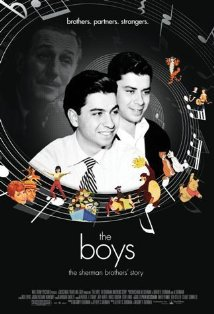
The Boys: The Sherman Brothers’ Story

It seemed like a good time to watch this 2009 documentary after Richard Sherman passed away.  (Yes, I did know who they were before he died.)  Great and insightful documentary.

primrose

Evening Primrose

A made-for-TV musical from 1966 with songs and lyrics by Stephen Sondheim.  The music was great.  The story was rather bizarre.

thx

THX 1138

I’ve been wanting to see this film from 1971 for a while since it was George Lucas’s first feature.  It tells the story of THX 1138, who decides to escape from the world of his mundane controlled dystopian life.  I must say, unlike Logan’s Run, it does not show it’s age quite so much.  Of course, part of that is because it’s been touched up; Lucas likes to touch up, you know.  But even so, the story and the way it’s told feels much more real than the other sci-fi features from that time (not that I’ve seen very many).  And I’ll resist the strong urge to make a Jar-Jar Binks joke at this time.

pathsofglory

Paths of Glory

From 1957, this Stanley Kubrick film tells the story insane stupid war-leaders making insane stupid war decisions, and then punishing the soldiers when they don’t obey.  It does raise the age-old soldier-philosophy question: when is it right and wrong to disobey orders?  But instead of exploring that question, the film just shoots you in the face because war is bad.  Thanks a lot.  I used to think war was good, but now I understand the truth!

aurevoir

Au Revoir les Enfants

Warning: there be spoilers ahead.  This French 1987 film tells the story of a young student, Julien, at a Catholic boarding school in occupied France.  The school brings in a few Jewish students to hide them from the Nazis, one of them named Jean.  Julien and Jean slowly form a friendship.  And here’s the spoiler, if you’re still reading: at the end of the film, the Gestapo raids the school and captures Jean, several other Jews, and the head of the school who hid them there.  You never get to see what happens to Jean, but as the Gestapo lead him away out the gates of the school, the narrator says something like: “That was the last time I saw Jean.  He died in Auschwitz.  I never forgot that day.”  As an audience member, I didn’t need to be reminded of the horrors of Auschwitz for that to be perhaps the most tragic and depressing ending of a World War II film I’ve ever seen.  The entire film forms such a strong and realistic friendship between the characters that just seeing one of them being led away, and you know they he doesn’t realized he’s being sent to his death, and then being told he died in Auschwitz . . .

xmen

X-men: First Class

From 2011.  I was curious.  I’m not curious anymore.

dreamhouse

Dream House

A man moves into a house with his wife and daughters and then learns it might not be real.  Is he just imagining things?  Are his wife and kids really dead?  Did he murder them?  A fun psychological thriller from 2011.

bridge

The Bridge on the River Kwai*

I bought this 1957 film on blu-ray a few months ago when it was on sale at Best Buy.  I had already seen it a few years before on DVD.  A great film, and looks great blu-ray.

umberto

Umberto D.

Another film from Vittorio de Sica, this one from 1952.  An old poor man does stuff.  I didn’t really get it.

youth

Youth Without Youth

This is a Francis Ford Coppola film from 2007 starring Tim Roth.  A man gets struck by lightning, becomes young again, and gets the sorts of special powers I think we all wish we had.  The movie gives you a lot to philosophically think about, even while the story itself was too bizarre for me to really understand.  I mean, I understood what was happening, I just didn’t always understand the why.  But an interesting film.

abduction

Abduction

From 2011.  A young man discovers his parents are not his parents after a life of not realizing they don’t even look alike.  He must then go on the run as bad people with guns chase him to try to abduct him because his real father is out there and would not want him to be abducted and oh what a complicated mess!  The rest of my family was watching it so I stuck around and watched it.  And now I have watched it.

trespass

Trespass

This was also from 2011, starring Nicolas Cage.  Some bad guys with guns trespass into a guy’s house, hoping to steal his jewels.  But does he even have jewels?!  Watch and find out!

cuttingedge

The Cutting Edge: The Magic of Movie Editing

This documentary from 2004 discusses the art of film editing.  A good documentary for those interested in the subject.  The Walter Murch excerpts are particularly informative.

bonnieandclyde

Bonnie and Clyde

The 1967 classic looks great on blu-ray.  The violence is nothing by today’s standards, but I think the overall story still stands, and the editing and acting are wonderful.

spiritedaway

Spirited Away

Been wanting to see this 2001 film for a while, and I like that the DVD had the original Japanese audio as I hate listening to dubs.  A girl gets trapped in a mysterious spirit world.  Another genius film from Studio Ghibli.  Gotta love it.  Wonderful food for the imagination.

m

M

A 1931 German film with Peter Lorre directed by Fritz Lang.  A child predator is on the loose, and the police aren’t the only ones who want to catch him.  Really amazing camera work for a 1931 film, and it looks fantastic on blu-ray.

So, 30 films.  Good stuff.  The explorations in cinema shall continue, I hope.

A thank you to Animation Mentor

It hasn’t quite sunk in yet that Animation Mentor is over. I am now an Animation Mentor alumni! I still find myself thinking: “Hmmm, where am I on my assignment? Oh, wait… it’s over…”

I recently filled out my last Animation Mentor survey, and I just wanted to make a public record of my final words in the “say anything” field. Not that it’s tremendously poetic or inspirational or anything, but I do want to sing my praises to Animation Mentor because it’s made a huge difference in my life. Not that I’m now off to Hollywood to make a fortune being the next John Lasseter, but that I went from being someone who only dreamed of animation to someone who actually feels confident in pursuing work in the industry. And whenever I stop and think about that, it never stops feeling incredibly awesome!

To Animation Mentor:

THANK YOU!! I went from being a bored computer science major daydreaming of the art of animation to being someone who can actually animate something! I thought I was doomed to a life of computer work for at least the next few decades… I never thought I’d be able to learn animation. Now, two years later, I have not only learned a TON about animation, but I’ve also learned that I can do more than I thought I could. Animation Mentor has truly completely changed my life. I THANK YOU so much for the opportunity!

I think Animation Mentor is not only a leader in the field of animation education, but in the field of education in general; so many traditional educators put so much emphasis on prerequisites (“we must approve your portfolio before we let you learn here!”), and so many traditional educators put too much emphasis on grades (by rewarding higher grades with certificates and awards). At AM, I never felt like I was being overly judged; instead, I was constantly being encouraged and inspired. Animation is a lot of hard work, and I am so thankful to have had such welcoming support for AM’s staff and mentors, and not the sort of grade or degree or achievement-driven judgmental mentality so prevalent in brick-and-mortar schools which does little to actually encourage the passion for the art.

Keep up the great work! You are truly changing lives.

Distraction: some random thoughts on Internet media

I’ll be spending the next several weeks really diving into developing my ideas for a cartoon series (which I’ve mentioned every now and then on this blog for while). I’m putting together a pitch and will try my best to sell it. If that doesn’t pan out (it’s a super-competitive market, after all), I might look into Internet distribution.

Two things got me thinking about the Internet as a form of video distribution. First, there was this post on Cartoon Brew. I myself have often wondered about the possibilities of marketing cartoon content on the Internet. No one has really figured out how to monetize videos yet, except in very limited ways (ads on YouTube, mainly, which don’t pay nearly enough to guarantee an income for someone just starting out; making a living off of YouTube ad revenue takes a combination of continuous hard work and luck; that is, you can’t guarantee a ton of people will see your work like you can if your work appears on a popular TV channel).

I was also recently thinking about the art of film editing after having watched The Cutting Edge – The Magic of Movie Editing. The documentary makes mention of the fact that audiences today seem more capable of handling (or are more hungry for) extremely fast-paced rapid cuts (such as during chase scenes and fight scenes). And I took particular note of something director Martin Scorsese said about this:

What I’m afraid of is the tendency for everything to go by quickly and I’m afraid of what it does to the culture… a sense of consuming something and throwing it away as opposed to being enveloped with something, taking the time to see and experience time in a different way.

If you take a look at what sorts of comedy videos become popular on YouTube (such as Fred, The Annoying Orange, Smosh, etc.), they share one main important feature: short length. These video creators do not ask viewers to become involved in a story the way TV shows and movies do. They are short and gag-driven.

Why is this the case?

It is my theory (not that I’m the only one to have this theory, of course) that it is because when viewers watch videos on the Internet, they are close to their keyboards. They are ready to type chat messages with their friends on Facebook. They are ready to watch the next video on the side of YouTube. They are ready to load up a new website. It’s just so easy to be distracted, to go on to something else, that they are probably not going to sit through a 22-minute or 43-minute or 90-minute video narrative of something they’ve never seen before. (By narrative video, I mean a fiction-story-driven video, not a documentary or a lecture or an interview, etc.)

If they want to have that sort of longer video watching experience, they’ll go to the TV, where they have a more comfortable seat, a better viewing distance, and less distractions. Or they’ll turn their TV on while they do something else and use the TV’s narrative as a background experience. (Which really isn’t great for your mind, but if you’re working on something dull, like folding laundry or history homework, it can help the time go by.)

If you want the best distraction-free narrative viewing, you go to the movie theater. The lights are dimmed, people’s cell phones should be off, there’s no rewind button, there’s no house phone, there’s no refrigerator for you to get a drink from, there are no commercials… it’s just you and the movie. You go there to be absorbed entirely in the story of the movie.

So… my point is that if we’re going to try to monetize the narrative video viewing experience on the Internet like it’s monetized with advertising on the TV, we have to take into account all the possible distractions people have while they sit on their computers. If you want to distribute a 22-minute cartoon episode (or really anything over 5 minutes), maybe force full-screen? Er… I’m not sure I can think of anything else that might help counter the distraction problem at the moment, but I think that’s what video distributors need to be thinking about: how to stop viewers from being distracted. Until then, I think the classic TV in the living room will remain the dominant distribution method for longer narratives.

That said, Internet TVs will, I think, certainly change things. At least they have the potential to as they become more popular. It will be interesting to see whether they make longer narrative videos more popular on the Internet or introduce more distractions into the normal TV-watching experience. Or both. But I think that’s the boat to be on. I think YouTube is simply too distraction-driven for longer narratives to find potential audiences.

(That said, even with Internet TVs, there will still be no guaranteed way to make money off your content; the competition is simply too strong. Luck will always be a factor, no matter the content or the manner of distribution. We can not hold up something like The Annoying Orange and claim it became popular for some innate reason. Likewise, we can not hold up some video that failed to become popular and claim its unpopularity was due to some innate flaw or some sort of artistic ignorance. Success simply can’t be mathematically manufactured; it is a product of a social system far too complex to design for.)

Melody Generator for the web progress…

Finally fixed this blog’s recent comment-spam problem by adding a CAPTCHA plugin.  Duh.  Why didn’t I think of that before?

Anyway, my Melody Generator for the web is slowly coming along.  It mainly consists of two pages.  First, the "Compose Melody" page:

mgw2

Above you can see all the functionality the melody generator should have.  Right now, none of those options actually work, except for the “Melody name” field and the “Compose melody” button.  The rest still needs to be programmed, which is what I’ll be working on for the next few weeks or so.  After you hit the “Compose melody” button, the melody plays as a MIDI file at the top.  If you like the melody, you can download it right away, or you can save it to your Library.

And that’s the second page, “My Library”:

mgw1

The library section should be pretty self-explanatory; you can go through your list of saved melodies and download them, play them, or delete them.  You’re allowed to save up to 5,000 melodies, though if you actually compose that many, you are probably somewhat insane.

After I finish programming the functionality for the melody generation options, I’ll have to program some user-settings (such as the ability to change your password).  Not sure how long it’ll take, but I’ll keep the blog updated.  Maybe.

VUDU looks useless

This article seemed interesting. I guess the movie studios are really hating not being able to capitalize on Netflix’s streaming success (which, quality-wise, isn’t even that great):

At a press conference today in Los Angeles, the company announced that, as rumored, it’s launching a new program called the Disc to Digital service. Starting on April 16, anyone can bring their DVD collection into a Walmart store, and copies of each movie will be loaded onto your account on VUDU…

To make this happen, Walmart is partnering with 20th Century Fox, Universal, Sony Pictures, Paramount, and Warner Bros., and it sounds like the program will include any DVD released by those studios. (Executives from all five took the stage at Walmart’s event.) The system will also integrate with the UltraViolet digital locker platform that the studios have been pushing, making UltraViolet titles available through VUDU.

Um… I guess that’s nice, but are they really loading your movies on to VUDU, or just unlocking access to them? And if they’re just unlocking access to them, should that really cost so much?

I personally prefer to watch blu-rays on my laptop. A movie theater provides the best movie-watching experience (though I wish I could help them get the sound and focus at just the right levels), but a blu-ray on the laptop is the next best thing. Then DVD. Then streaming. Streaming is awful, quality-wise. VUDU says it allows HD streaming to TVs via various devices, but I’m not sure most Internet connections can support that yet, at least not around here; and even if they could, it seems like a terrible waste of resources. And it doesn’t support HD streaming to PCs. And it doesn’t support mobile Android devices.

And the prices to rent or buy digital content from them are ridiculous.

So, as far as I can tell, this is pretty much useless at the moment. I’ll stick to buying blu-rays, or renting them from Netflix.