I never did a list for June, so I’ll have to combine June and July.
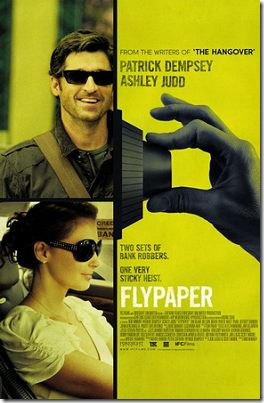
Flypaper
This 2011 thriller tells the story of a man who finds himself trapped in a bank as it is robbed by two sets of criminals at the same time. The man decides to play detective and tries to figure out what is going on. This film was on TV during a free trial of some movie channel on DirecTV. Most of the humor was too raunchy or stupid for me, but it did have some funny parts. It did have an interesting and engaging whodunit mystery to it, which did keep me guessing until the end, yet still made sense; not an easy accomplishment, so I applaud the writers for that. I enjoyed the mystery of it. Fun movie, but the raunchy humor will probably prevent me from ever wanting to watch it again.

Raising Arizona
I got this 1987 film as part of a blu-ray 4-pack called From the Minds of the Coen Brothers, which was on sale at Best Buy for $20. The other films included Blood Simple, Fargo, and Miller’s Crossing. I really just wanted Miller’s Crossing, as it was the only film in the pack I had seen, but I had seen pieces of Fargo on TV and wanted to see that as well. And $20 seemed like a great value for four blu-rays. Anyway, Raising Arizona tells the story of a man and wife who can’t have children, so they decide to steal a baby from a local rich man who they think has too many. Of course you know they’re going to eventually change their hearts and realize that stealing a baby is not OK, but it’s a comedy. While there were some funny parts, most of it was just too off the wall and far-fetched for me.
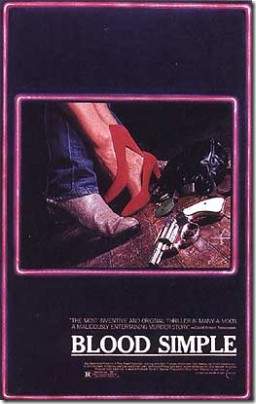
Blood Simple
This 1985 Coen Brothers film tells a story about . . . uh . . . hmmm. It’s kind of all over the place. One guy hires a hit man to kill his ex-wife’s new love interest. But the hit man has plans of his own, as does just about everyone else. Murder, attempted murder, and evidence cover-ups abound. I found it more humorous than Raising Arizona, and the story was engaging. Fun movie.

We Need to Talk About Kevin
This 2011 film tells the story of a mother’s difficult relationship with her son, and how she copes with life after her son is goes on a killing spree at school. The premise makes you think the story will explore some pretty tough emotional places. After all, what leads people to do such horrendous things? Unfortunately the characters made no sense. They got mad and angry and sad and manipulative and frustrated for no understandable reasons, which made their actions even less understandable. It’s as if they were all brooding over doubts on the worth of the point of existing at all, every now and then doing something for the sake of moving the story along. I didn’t understand this film.

Extremely Loud and Incredibly Close
This 2011 film tells the story of a middle-grade child who loses his father in the 9/11 tragedy. He discovers a mysterious key his father left behind, and, as a way of coping with his father’s death, sets out to find what the key goes to. I enjoyed some things about this film. I liked the premise, and the acting was good, especially Max von Sydow as an elderly mute. Unfortunately the emotional impact of the tragedy that begins the story was lessened for me by the disjointed way it unfolds. Instead of letting us see everything that happens to the protagonist on 9/11, the writers keep important parts of that tragic day a secret throughout the film, until the protagonist reveals it at the climax. By then, it had lost a significant amount of its potential emotional punch. Overall, good film, but with some glaring weaknesses. (Also, somebody destroy that tambourine please.)

The Human Condition – Part 3: A Soldier’s Prayer
This 1961 film is the final installment of the epic trilogy of The Human Condition. Our main character Kaji escapes from the battlefield and attempts to journey home. But the country is still distressed by the hardships of war, and Kaji has many battles left to fight, even if not with his gun. Great (if tragic) conclusion to the great (if tragic) trilogy.

The Last Starfighter
This 1984 film is based on the daydream that a popular video game is actually a test for recruiters fighting space battles. The effects are charmingly cheesy and the story is weak, but there’s a spirit in the film that the filmmakers know this and are making it anyway, because it’s fun. The biggest story weakness was that the setup takes so long, the protagonist goes to such great lengths to refuse his quest, that when he finally accepts what he must do, it’s time for the film’s climax. It makes the point of his quest seem unimportant, as if all he ever had to do was push a button. Boring movie.
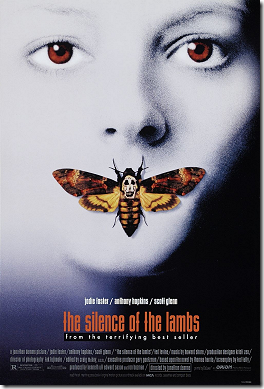
The Silence of the Lambs
This classic 1991 thriller tells the story of an FBI agent who enlists the help of the deadly psychopath cannibal Hannibal Lecter to help her track down a serial killer on the loose. I found Hannibal’s cannibalism, or at least its portrayal, to be more comic than disturbing, but the other serial killer, and what he likes to collect from his victims, was quite disturbing indeed. I want to say it was a fun movie, but it was really more disgusting than anything else.
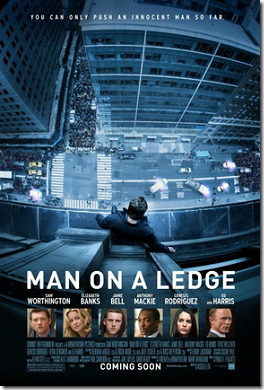
Man on a Ledge
This 2012 thriller tells the story of a man who walks out on the ledge of a tall building, appearing to be pondering suicide. But there’s more to his plan than meets the eyes, as it’s really part of an elaborate plot to clear his name from a crime he was framed for. It was all kind of confusing and farfetched, but fun, I guess.
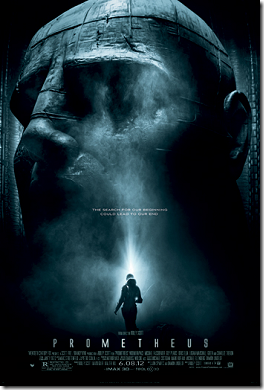
Prometheus
This 2012 sci-fi movie from director Ridley Scott is the prequel to Alien, which I have yet to see. Anyway, a team of scientists land on an alien planet to investigate . . . something. I can’t remember. And then, oh no, there are evil alien things that want to kill them! Oh no! OK, it was actually much more engaging than I can make it sound. And the 3D effects, especially the crashing of the spaceship, were quite beautiful to watch on the big screen. It had a great music score as well. I’m not sure if the writers are people of faith, but there is a character who is asked why he believes something, and he replies something like, “It’s what I choose to believe.” If you’re a person of faith and this answer makes sense to you, that’s fine. But if I were an atheist and asking this question in honesty, the answer seems rather arbitrary, if not circular. Why not believe something else? Why is this what you choose? Can’t you be more specific? It would’ve been nice if the film had let faith dig a little deeper than settling with what might be understood as an arbitrary choice. Also, there’s a robot character who claims that lack of emotions make him better able to make good decisions. Similar to the reason the character of Spock annoys me, I don’t understand this notion. To make a decision is to have an emotion. Emotion is an aid to decision making. I don’t understand the notion that the emotion and decision-making can be or should be divorced, as if emotions are somehow prevented from ever being rational themselves. Anyway, Prometheus was a fun movie, even if I have philosophical problems with some of the characters.

The Seventh Seal
This 1957 Ingmar Bergman film explores the nature of how man lives constantly trapped in the shadow of death as a man challenges death himself to a chess match when he comes calling. The premise makes the film sound more interesting than it is, as it really doesn’t explore any deep ethical or philosophical ideas about death. It just says, “Oh my, we’re all going to die! Isn’t that interesting to think about!” Really? Gee, I never thought of that before! Still, there’s something fantastically fascinating about making death a character, instead of just some shadowy theme that hangs around in metaphors. Somewhat fun movie, but mostly boring.

Burn Notice – Season 4
Finished watching the fourth season of Burn Notice from 2010 on DVD. Another fun season; the fast paced thrilling action, intriguing villains, creative solutions to messy situations, and fiery explosions remain as addicting as salty potato chips without the side-effects of over-eating. I look forward to more seasons, whenever I can get my hands on the DVDs.

Fargo
This 1996 Coen Brothers comedy was darkly hilarious. A man hatches a plan to have his own wife kidnapped so that his father-in-law will pay a ransom, which he’ll get a cut of. But things go wrong, of course, people get murdered, and the sweet charming hospitable police woman Marge investigates. The hilarity lies in the over-the-top situations (oddly the very same reason Raising Arizona didn’t work for me), mixed with the believable acting, from the warm and welcoming Marge to the terribly annoying Jerry Lundegaard. Great movie.

The Devil’s Backbone
This 2001 film from director Guillermo del Toro tells the story of a boy who’s dropped off at an orphanage for boys during the Spanish Civil War in the 1930s. And, wouldn’t you know it, the orphanage is haunted by a young ghost boy who was murdered by someone working there at the orphanage. Like del Toro’s Pan’s Labyrinth, while there is some ugly violence to the drama, under the story there’s a peaceful and welcoming assurance that you that as long as your heart is in the right place, the world’s ugliness is really nothing to fear. Great movie.
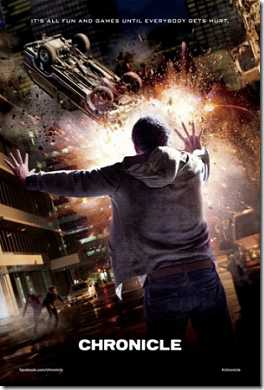
Chronicle
This 2012 action comedy tells the story of three teenagers who obtain super powers. But one of the teenagers is so angsty, that he uses his powers for evil! While the premise was fun, and the parts meant to be humorous were fun, the overall story didn’t make much sense, as the characters’ motivations for doing things didn’t make much sense (hey, teenagers go to parties, let’s have that). I think the biggest problem was that the story was told from the POV of a handheld camera, as in Cloverfield. But, in Chronicle, there’s no reason for it at all. If you really gained super powers, why in the world would your first thought be to record it all on camera? It makes many of the elements of the story seem forced as the filmmakers wonder, “Hmmm, how do we work that handheld camera in this scene?” Disappointing movie.

Ran
This 1985 film was the last epic from director Akira Kurosawa, and starred Tatsuya Nakadai (Kaji from The Human Condition). It’s very much a retelling of King Lear set in ancient Japan. A powerful ruler decides to abdicate his powerful position and split his lands between his three sons, who of course do not want to listen to their father for one reason or another. Battle and tragedy ensue. As in Kagemusha, it seems Kurosawa loved over-the-top, almost frightening make-up to show his main character’s descent into tragic madness. The photography was also very flat, like grand paintings, which made the film seem as if you were watching moving illustrations in some history book rather than realistic intimate depictions, but I imagine this is what Kurosawa was going for. While this film certainly had some great moments, I could hardly stand just sitting there watching the white-faced Nakadai stare blankly at the screen. Some of the battles also dragged on and on (though it didn’t get as bad as the dying horses in Kagemusha). Overall, though, fun film.
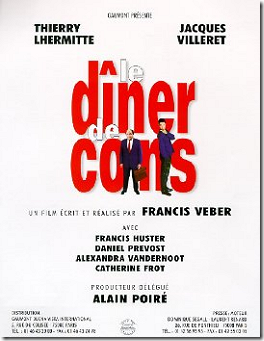
The Dinner Game
This 1998 French comedy tells the story a man who plays a “dinner game” which involves finding someone he thinks is an idiot and bringing him to dinner as a guest so that he and his intellectual friends can make fun of the idiocy of each other’s idiots. (It was remade in America as Dinner for Schmucks, which I’m guessing was much more raunchy and probably dumber.) Unfortunately, he never gets to the dinner, as he throws out his back, and his wife leaves him. And who’s there to help him through the situation? The idiot he invited inside, of course, who only makes things worse. Most of the movie takes place on one night in one room as the idiot tries to help the man track down his wife through phone conversations and inviting other friends over, a bit like an extended sitcom. Pretty hilarious movie.

12 Monkeys
This 1995 wacky sci-fi from Terry Gilliam didn’t make any sense. A man from a post-apocalyptic future is sent back to the past to uncover how a deadly toxin came to destroy much of the breathable air on the Earth’s surface. And it has something to do with an underground organization called “12 Monkeys.” It could hardly follow it, or perhaps I just wasn’t interested in trying.

Harakiri
This 1962 film from director Masaki Kobayashi (director of The Human Condition) and yet again starring Tatsuya Nakadai tells the tale of a samurai who arrives at an estate and requests to use their courtyard to commit harakiri (suicide consisting of sticking a blade into your gut and slicing open your intestines). But before he does, he tells the story of why he’s really there, revealing how tragically immoral and hypocritical the warriors of the estate are. Great film. (On a side note, the film was remade in 3D in 2011 by director Takashi Miike. Unfortunately I don’t think I’ll have the opportunity to see it in 3D in theaters, as theaters around here don’t play foreign films, but I would definitely like to see it at some point. Miike’s 13 Assassins was great, though his portrayal of violence and disturbing imagery is sometimes too over-the-top for me.)
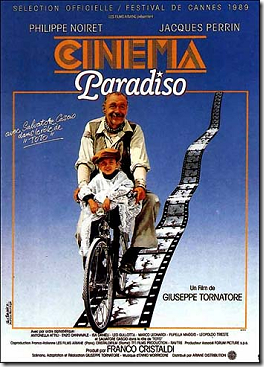
Cinema Paradiso
This 1988 film tells the story of a young boy who grows up in the 1940s and 50s obsessed with films. He grows fond of the local cinema’s projectionist, begging to learn how the projector works. Later, he becomes interested in making his own films, but remains close friends with the projectionist. The story is great, as is the incredibly beautiful musical score by Ennio Morricone. Great movie, and I think the ending scene, even if a bit predictable, is the best ending of any film I’ve ever seen.

Andrei Rublev
This boring film from 1966 tells the story of artist Andrei Rublev as he struggles with his life and faith in the poverty and violence-filled 15th century medieval Russia. While most of the film was rather boring, I admit I was on the edge of my seat watching to see whether or not the giant bell they make near the end of the film would work or not. But the rest of the film was rather boring. Now and then there were some interesting religious and philosophical discussions, but nothing mind-bendingly engaging.

Once Upon a Time in the West
This 1968 spaghetti western from director Sergio Leone tells the story of a woman who inherits a piece of land which is worth a great fortune due to its location. Gun battles ensue over twisted plots of killing or protecting the landowner. Another great score from Ennio Morricone. While the pace was sometimes slow, I thought if it was any faster it might’ve been hard to understand the constant twists and turns of the long story. Great film.

Z
This 1969 French political thriller tells the story of the aftermath of the assassination of some important politician (yeah, I don’t know my world political history). While the film makes you want to see the assassinators caught and the conspiracy uncovered, it doesn’t bring you to the edge of your seat about it. It reminded me a bit of The French Connection, in how the story is told with handheld-ish documentary-style cameras, running through the streets alongside people. Overall it was kind of boring.

Brave
Pixar’s new 2012 film tells the story of a princess who, in typical princess fashion, doesn’t want to marry any of the uncharming princes offered to her. But the real story begins when she accidentally puts a magical curse upon her mother, and must strive to break the spell and mend their relationship. Unfortunately, the story was a bit of a mess, especially for Pixar’s usually high standards. The main problem was lack of focus. The conflict starts out as a princess battling a fate forced upon her, then turns into a relationship conflict. Add in a magic system that makes little sense and some characters that have no personality and only speak for comic relief, and the end result is a bit of a hodge-podge. Despite the mess, there are some nice heartfelt moments. Finally, the title makes no sense, as bravery is only a thin thread of a theme in the film. The original title, The Bear and the Bow, fits much better, in my opinion. (You can go ahead and hire me as a creative executive, Pixar.)
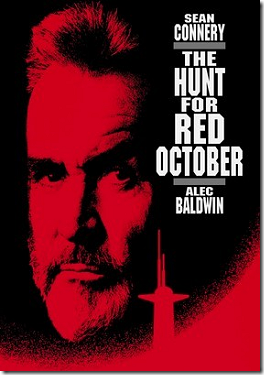
The Hunt for Red October
Based on the Tom Clancy novel, this 1990 thriller tells the story of the Soviet captain of a submarine called “Red October.” He abandons his orders and goes rogue. Now it’s up to Jack Ryan to find out why and prevent a war from starting when both nations are already on edge. Fun movie. It also has a great music score.

The Magician
This 1958 film from director Ingmar Bergman once again stars Max von Sydow, this time as a mysterious magician. When he and his troupe are investigated for fraud, the magician must prove what his acts are all about. It reminded me a bit of The Prestige; there’s an interesting theme about how artists relate to their audiences, how both artists and audiences know it’s all a trick, but art is about letting oneself be manipulated for the sake of experiencing emotions. Great film.

The Usual Suspects
This 1995 movie tells the story of . . . oh, who cares? This movie was dumb.
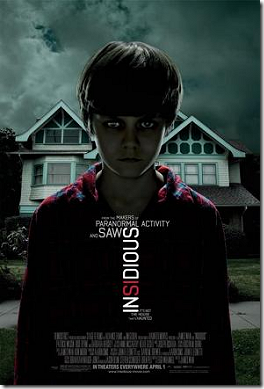
Insidious
This 2011 horror thriller tells the story of a kid who slips into a coma while something strange and mysterious begins haunting his family’s new house. Things go from cheesy to ultra-super-cheesy when it is revealed just what is haunting the house and how to set things right. But it was so ridiculous, that it was actually somewhat fun to watch.

The Terminator
This classic 1984 film tells the story of the infamous killing robot and the victim he pursues, the famous Sarah Connor. How this ever became popular, I don’t know. I reckon the sequel elevated its status? This is really a cheesy, poorly written piece of slop.

The Orphanage
This 2007 thriller tells the haunting tale of a woman who lives in a house that used to be an orphanage. One day, her son tragically goes missing. To find him, the woman will have to uncover what happened to the children of the orphanage. This is one of the few ghost stories I’ve found to be both genuinely creepy and heartfelt at the same time. The other one that comes to mind is The Sixth Sense. Though quite tragic, this was a great film.
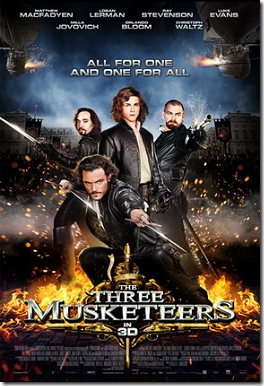
The Three Musketeers
I was curious to see how airships would play into the 2011 remake of The Three Musketeers. But the airships weren’t that epic. The entire premise for the daring swordfights and sky battles center around . . . getting the Queen’s necklace back so that her husband will not think she’s cheating on him, which, because of other convoluted circumstances, will prevent war. Not exactly the most exciting plot device to get the conflict going. But James Corden was funny.

Unknown White Male
This 2005 documentary follows the aftermath of a young man who suddenly mysteriously suffers from severe amnesia, forgetting almost everything about his life and who he is. It’s interesting for about ten minutes as one wonders, “Woah, what would that do to a person’s life?” And then it’s just a bit boring. Might’ve been more interesting if the filmmaker had waited ten years or so to revisit the young man to see how his life had changed since his amnesia, what sort of friends he kept and what sort of friends he lost, how his personality changed, etc.
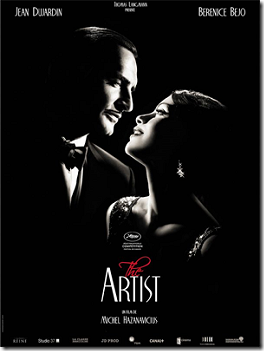
The Artist
This Oscar-winning 2011 silent black-and-white film tells the story of a film star who struggles with the film industry’s transition to the “talkies.” While the premise was fine, it felt like only twenty minutes of story stretched out over an hour and a half, making it extremely boring. I’m surprised I sat through it. Too much character brooding. Boring film. And, really, if you want to enjoy the novelty of a silent film, watch a real one. They’re much better. Filmmakers had to work within the confines of silence; they didn’t use it as a gimmick.

The Illusionist
This 2010 animated film tells the story of a young girl who grows attached to a traveling illusionist, who she seems to believe is a real magician. The illusionist is kind, and is happy to please his biggest fan, but the girl begins to want more and more worldly pleasures. The illusionist is torn between keeping his biggest fan pleased and happy, or revealing that he’s just an illusionist, and that all his work is just a trick. Great film. Certainly not the sort of warm-fuzzy animated film you’d get from America (not that that’s good or bad, only that it’s refreshing to see an animated film with a different tone).

The Lovely Bones
I was curious to see Peter Jackson’s 2009 film based on Alice Sebold’s book. The film tells the story of a young girl who is murdered and, from beyond the grave, tries to cope with her death and tries to help her family find her killer. The premise certainly had potential, but unfortunately it seemed like the film forgot its original premise at the end, or didn’t properly set up the conflict the story was meant to resolve. The films jumps to the killer wanting to not get caught, to the father trying to cope with the tragedy, to the dead girl wondering through the surrealist afterlife trying to figure out what she wants to do now that she’s dead. It was just a bit too much of a mess.

Tsotsi
I wanted to check out some of director Gavin Hood’s work, as I’m quite curious to see how he’ll handle Ender’s Game. This 2005 foreign film tells the story of Tsotsi, a poor thief who shoots a woman and steals her car, only to discover a baby in the backseat. He grows attached to the baby, despite having no means to care for it, and must come to terms with the sorry state of his life. This could’ve been a powerful movie, but unfortunately the character of Tsotsi was just too evil for me to feel much sympathy for his plight. He seems to have no remorse over the murders he’s involved in, and seems to have no problem pulling a gun on people and ordering them around. His tragic childhood and his attachment to the baby do not excuse his behavior. I suppose he changes by the end of the film, but it wasn’t quite enough for me. Anyway, after seeing what Hood is emotionally capable of, will he manage to pull off Ender’s Game? It’s certainly possible, but it’s no guarantee.

How to Succeed in Business Without Really Trying
My family watched this 1967 musical on Netflix, so I watched it too. It tells the comic story of a guy who wants to succeed in business without really trying. He does this by reading a book and breaking into song every now and then. Wow. It was awful. How did this ever become a popular musical? The plot is nonsense, the songs seem completely random and rarely progress the story much, and their lyrics are drivel. But I guess it’s a musical for girls who like preppy guys?
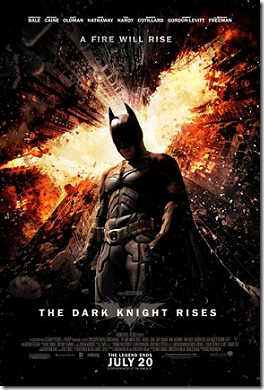
The Dark Knight Rises
Christopher Nolan finished his Batman trilogy with this 2012 installment. Bruce Wayne is retired and his business, Wayne Enterprises, is waning. The economy is not so good. And then comes Bane, physically stronger than Batman, with a terrible plot to destroy Gotham in the most torturous ways he can. As with all Nolan’s film, this was great, I loved it, definitely a worthy successor to his previous Batman films. But I still think The Dark Knight is the best Batman movie. This one is about tied with Batman Begins in my mind. Overall, fantastic trilogy. I can’t wait to be able to sit down one day and watch them all one after the other.
So there’s June and July 2012.


 and
and  (if you don’t have them, I order you to go buy them and read them now), finally has his new book ready. Antifragile looks like it will continue Taleb’s variations on the theme of living among complex systems, this time perhaps attempting to answer the question: how can we use randomness (unpredictable chaotic systems) to make our lives better? To make our lives stronger? To make our systems non-fragile, that is, “antifragile”? Looks like a very interesting book; I look forward to seeing what Taleb has to say on the subject.

 (if you don’t have it, I order you to go buy it and read it now), at long last returns to the bookstore bookshelves with a new book. Amazon’s description reads:
 (another book I highly recommend) and
  show, no one is just born with innate expertise; it all must be learned and practiced. (Sometimes the experts themselves have trouble explaining how they do things, which perpetuates the myth that it’s just innate. Even as I type here on a keyboard, I could not explain “how” I type; I just do, and my motions have become automatic with practice. That doesn’t mean I was born with any innate abilities that lend themself to quick typing.)