No NaNo and other stuff instead

I guess NaNoWriMo has officially started!  And … I don’t care.  I’ve once again changed my mind, and will probably not participate this year.  I have a bunch of other stuff I want to do, including finishing my album that I’ve been working on for over a year now.  I’m still about 10 minutes of music away from completing the thing.  I’m currently working on the last section of an unnamed orchestral piece.  I’m orchestrating / composing the climax and end, so it’s almost done.  Then I have four other pieces started that need finishing, though I don’t believe all of them will make it onto the album.  One will probably be called “The Journey Ahead” and I am fairly sure that it will indeed appear on the album as I think it really fits with the spirit of the other pieces.  And one will probably be called “Castle Sky” … that’s my long 15-minute orchestral piece (and still unfinished, but I don’t think it will be much longer).

Oh, I started a new project, one that I know I’ll finish eventually because it requires hardly any work at all from me.  I call it: The Mozart Listening Project.  The objective: to listen to the complete works of Mozart while following along with the scores.  As you can see on the side, I made a page about it.  Because it is just so important.  I just started working through his symphonies.  Got a long way to go.

Android Lastly, I was chatting on a music forum on Friday, and someone mentioned the new Verizon phone coming out called Droid, which will compete with the iPhone (though, of course, that’s some very tough competition).  Looking at the Droid rekindled my interest in creating an app.  It was something I looked into in college, when Google’s Android OS first came out, but somehow lost interest.  (And as far as I can tell, one must have a Mac to use the iPhone SDK, so I don’t think I’ll be trying to develop for the iPhone anytime soon … though, from a business perspective, that’s currently where most of the phone app market is, methinks.)

Anyway, I’m downloading the newest Android SDK and will perhaps try creating something with it.  Having long been interested in game development, two things excite me about the phone app market: 1) It’s rather new, and is still at a stage where a single developer can develop a sellable app by himself.  In most of the video game industry (except perhaps online Flash games), those days are long gone, never to return.  And perhaps one day the phone app industry will be like that too, but it isn’t now.  And 2) it can be very lucrative.  Actually, I’m not sure how lucrative it is.  I’ve heard that some iPhone apps are making millions.  But that’s only a very select few out of tens of thousands, so I suppose it’s like saying that the music industry can be very lucrative.  Well, yes, it can be, but only few a very select few.  Still, I’m guessing the phone app industry is more lucrative than the indie artist industry.  Unfortunately, I’m sure it’s even less lucrative for non-iPhone developers at this time, but who know?  With Google’s more open platform, Android or some similar OS might come to dominate the phone industry, just like Windows now dominate Macs, despite Apple’s oh-so-witty ads.  In fact, I predict that will happen in the next decade or so … Apple may still dominate the iTunes / iPod industry, but the iPhone might meet its demise with a collection of other phones that run the same OS and are thus compatible with the same programs…

And… I guess that’s all I have to say.

Writing fiction is mentally exhausting

I worked a bit more on my novelette this weekend, The Cliffs of Oakenrah.  The wordcount is now up to 5,600.  I’m still on scene 5 of 21 though, but it’s a rather long scene.  Perhaps it is because I am out of practice, and I haven’t been forcing myself to write everyday whether I feel like it or not (as some writers do), but I am finding the process to be mentally exhausting.  Some of it is because of the actual writing; trying to find the right words, trying to describe things as simply as possible, trying to make sentences flow easily together.  But some of it also has to do with the internal imagining of the world.  If I were just going to sit and daydream, it wouldn’t be very hard; I could probably go through scenes in my head as if they were parts of a movie.  But when I have to write down everything that happens, I have to always slow it down, play it over again and again (and of course it’s always a bit different each time), and pay attention to the details.  Not that my writing is overly detailed, but it’s easier to imagine travelling through a mysterious cave than it is to describe it in words.  It’s easy to imagine the look and movements of fantastical non-existent creatures than it is to describe them in words.  I find that process to be very mentally exhausting.

Dialogue can also be annoying, because as the author I know what I want the characters to talk about, but if they’re talking about something completely different, I have to find a way for them to flow into the desired topic, without it seeming completely forced.  And I have to continually change world-view perspectives in my mind.  The story might be from the point-of-view of one character, but I have to know the world-view and motivation for every character that says something important to write his or her dialogue believably.

And then of course there’s always the balance of info-giving.  Especially since this is a fantasy novelette, there’s a lot of other-worldly stuff I could spend time describing.  But I don’t want to “info-dump,” which might bore readers.  On the other hand, I don’t want to leave too much out, which would confuse readers.  Finding the balance is tricky, especially since it’s something I don’t really think about directly while writing; it’s more an element I just have to get a feel for through feedback I think, since my world is always completely clear to me, the writer.

OK, that’s enough blather isn’t it?

Ten thousand hours might mean nothing

At this point I’m fairly sure I will indeed do NaNoWriMo … sort of.  I’m going to start writing, that is, but I’m not really going to try to win, I’m not going to strive for 50,000 words in a month.  I’m just going to see how much I can get done, but I’m not going to push myself.  That way, I can’t lose!

I spent an hour today finally continuing work on my fantasy novelette, The Cliffs of Oakenrah.  I’m on scene 5 of 21, so there’s a ways to go.  If I finish, it might become longer than Dreamgiver, making it the longest work of fiction I’ve ever completed.  Which, I suppose, is pretty lame compared to most writers, but very superior compared to people who never write anything.

TEN THOUSAND HOURS

I was listening to a writing podcast the other day, and I heard the concept of the “ten thousand hours to expert” come up once again.  I think some writers and artists in general are interpreting the concept in a ridiculous way, taking it to mean that an artist’s art won’t be any good until the artist has ten thousand hours of experience, and that artists who do have ten thousand of experience are objectively better because of it.  But I think the arts are a bit too subjective for that, and I think people forget that there’s a difference between experience and practice, as I mention on the Book Quotes Blog.  Even I have used the terms synonymously, when they’re not exactly synonymous.  Getting more experience doing something you already know how to do well might not help you much, might not make you that much better.

Really, though, it just comes down to the subjectivity of an art like writing.  It’s hard to argue that you’re a better chess player if you keep losing games, or a better piano player when you can’t play anything by Chopin.  But there are no games or rules in writing.  And we don’t have “author’s experience hours” stamped on the back of books to help us decide whether or not it’s something we’ll like.

So please please just stop applying the ten thousand hour rule to something as subjective as writing fiction.  It actually doesn’t mean quite so much in such a context.  I’m sure there are plenty of inexperienced writers whose first works I would find brilliant, and plenty twenty-thousand-hours experienced writers who might make me want to jump of cliff to end the torture of knowing their work was deemed by someone else to be publishable.

Nor does the ten thousand hour concept apply to walking, eating, sleeping, daydreaming, etc.

I still think about this post by writer John Scalzi (especially since it was brought up in the podcast I mentioned as being a “painfully honest post”).

While I agree with a lot of what he says, I also think he is making the mistake of thinking his own experience counts for a bit too much.  Experience does not make your opinions more valid, not in the subjective art world, as he (and many others) seem to think.  I believe that that is a snobby way to think.  Sometimes people compare writing to fields in which opinions aren’t subjective, like medicine.  (“I want my doctor to have experience!”)  Well, duh.  There is right and wrong in medicine.  Writing, not so much.  Yes, there is some, but not nearly as much.  Writing is based on our desires, the rules come from our opinions.  Medicine doesn’t work that way.  Experience writing also does not automatically make you a better writer.  You have to practice … you have to work to understand the conventions of our time, understand how you as a reader respond to other people’s works, understand how the authors you enjoy write the way they do.  So, yes, I do agree that inexperienced authors (including me) tend to not be as good.  I still don’t have any sense of how a plot should arc over the course of something novel size, as I have never finished writing a novel.  But that opinion comes from me, not some scientific objective rule about novel plot arcs, and not from writers who are more experienced looking down upon me judging my work.  And I’m not going to get better (which is also subjective) without getting feedback from others, including publishers who reject my work.

It’s not science (well, technically it is; it’s psychology, but it’s nothing we can currently objectively study).  It’s definitely not medicine.  And authors are not doctors.

And that’s all I have to say today.

Read a book, write a book

READ A BOOK

Why Don't Students Like School? The other day I finished reading the book Why Don’t Students Like School: A Cognitive Scientist Answers Questions About How the Mind Works and What It Means for the Classroom and I put up some quotes from the book on my Book Quotes blog.  It was a short read, only 165 pages.  It’s really meant for teachers, but as someone who is interested in our terrible American education system, I quite wanted to read it.  It takes a psychological perspective on education, which would probably interest anyone interested in the basic psychology of learning.

That’s only 8th book I’ve finished this year.  I probably could’ve read more by now, but I’m reading about 8 more books simultaneously at the moment, so finishing one takes a lot longer.  And of course sometimes I just give up on a book.  I realized yesterday that I only finished reading one fiction book this year, the other seven were all non-fiction.

WRITE A BOOK

I’m still not sure whether or not I’ll participate in NaNoWriMo next month.  I have some fun new ideas floating around in my head, so it’s quite tempting, but I do want to finish my album, obviously.  I keep going back and forth.  One day I’ll think to myself “oh, I’ve gotta at least try NaNoWriMo; this idea is just too exciting to resist,” and then the next day I’ll think, “I can’t do it, I’ve gotta finish this album.  I don’t want to have to worry about writing fiction too.”

So I still don’t know what I’ll do.  It will all depend on how I feel in November I guess.

Deadline failure and other such things

I was hoping to compose 5 minutes of music a week, starting last Tuesday, but unfortunately I was only able to compose 2 minutes and 46 seconds by this past Sunday.  So I fail!  Shocking, no?

I blame a few things:

deadlineclock1)  My job. It’s a part-time job, so I can’t blame it for taking up too much time, but it does take up time.  So I must blame it.

2)  Fatigue. This is also job related.  When I have to work at 9 AM, that means I am pretty much tired throughout the day.  Which isn’t a problem for doing most things.  But I think a lot while I’m composing; it’s a very mind-intensive activity; it takes a lot of focus for me.  And when I’m fatigued, music has a way of lulling me off to the land of pleasant dreams, especially the incredibly fantastic music I compose.  So it is extremely difficult to compose while fatigued.  I did try taking some caffeine tablets, but alas, no effect.  I must have high caffeine tolerance.  I could feel it make my heart beat faster, but nothing else.  Of course, caffeine really isn’t supposed to be used to counter sleep-deprivation, so maybe it has nothing to with tolerance.  But that’s what some people seem to use it for and they swear by it.  It doesn’t help me though.

3)  Not being able to stay up all night. Again, job related.  Since I have to be at work at certain hours, I am not free to simply stay up as late as I want composing and then just sleep until I am not tired anymore.  (Not that this problem doesn’t plague most people.)  I sometimes seem to think more actively at night, perhaps because there are fewer distractions; the TVs and radios are off, no one’s on the phone and no one calls, etc.  But I can’t use the time to my advantage if I need to get some sleep in before going to work.

4)  Perfectionism. Or pickiness.  I spent 2.5 hours a few nights ago composing and orchestrating 4 bars.  I think that’s the longest 4 bars ever took me.  But I’m very pleased with the result.  Though I suppose I could fiddle around and tweak orchestration for many many hours, it always eventually has to come to a point in which I am pleased enough and must move on.

5)  Other stuff. For example, on Tuesday, I had to spend time tidying the house for guests.  Chores are evil and must be blamed.

That said, I must say I’m extremely pleased with the progress I’ve been making with my latest piece so far.  I went to bed yesterday with the melodies I composed annoyingly humming through my mind uncontrollably.

A big disadvantage of giving myself a deadline has emerged: I get angry. And stressed.  And a bit depressed.  And what fun is that?  I blame all the other stuff I must do, like go to work, which just makes going to work that much more painful and annoying.  So I’m very much considering throwing away the deadline and just composing as often as I can.  I don’t want to be angry by having goals and then not reaching them due to things like having to go to work that I can do little about.  Or I could just blame my undisciplined self for not being more disciplined and getting more done when I do have chances, but that won’t make me any happier either.

FEDERATIONS

federationsSince I don’t have much time for composing, I have even less time to read, but in what short moments I can spare, I’ve been reading a collection of science fiction short stories in a book called Federations.  Here are my very short reviews of the few stories from the book I’ve read so far.  They are only my subjective opinions, and I am perhaps more picky than most (ratings are on a scale of 0-5 stars):

Mazer in Prison by Orson Scott Card:  4 stars.  I actually read this in another book before, so I skipped reading it again, but I almost always enjoy Orson Scott Card.  Very good story from the Ender’s Game universe.

Carthago Delenda Est by Genevieve Valentine:  2 stars.  Though the premise was very interesting, the author didn’t seem to do much with it.  It was more of an idea story, as nothing much really happened.  A world was presented, some unimportant things took place, and that was it.

Life-Suspension by L. E. Modesitt:  0 stars.  Interesting characters with interesting dynamics.  But nothing very interesting happened.  And there were these battle scenes that were too cryptic for me with all their pilot-in-battle speak.

Terra-Exulta by S. L. Gilbow:  3.5 stars.  Not really a story, but a very fun fictional letter.  I enjoyed it.

Aftermaths by Lois McMaster Bujold:  1.5 stars.  Again, an interesting premise, but an uninteresting story.

Someone is Stealing the Great Throne Rooms of the Galaxy by Harry Turtledove:  2 stars.  Had it’s funny moments, but most of it’s humor was just stale and annoying, as if the author just wrote the story off the top of his head, writing down every stupid joke he thought of.  Didn’t really work for me.

Prisons by Kevin J. Anderson and Doug Beason:  3.5 stars.  Started off a bit confusing, but once the story started rolling, it was actually quite good.

Different Day by K. Tempest Bradford:  0 stars.  Yikes.  While I like the idea of not portraying an alien race as a clichéd “monoculture” (as we humans certainly aren’t), this not-really-a-story didn’t really do much with it.  It’s just a three page ramble.

And that’s all for today, methinks.

Deadline

As you may have noticed, I am no longer concerning myself with the Hours project.  Took too long, obviously.

cds I really want to finish my album before the end of the year; before Christmas if possible.  So I’m going to try giving myself a deadline of October 31st to finish all the music for the album.  October 31st 2011 that is!  No, no, the end of this October.  Part of me hates to give myself a deadline because I would much rather work at my own leisure, composing when I feel like it.  On the other hand, I really want to finish the album.  And I want to get working on other albums.  I’ve got so much music flowing through my head lately that I really want to get out.

Fortunately I only have about 15 more minutes of music to write for the album to be at least 60 minutes long.  So if I can write at least 5 minutes of music a week, I should be set to go.  So for now I’m giving myself until Sunday, October 4th, to write 5 more minutes of music.  I’ll let you know if I succeed or fail.

Then when (or if) I finish the music at the end of October, November will involve getting everything else ready to go, ordering the CD replication, and getting it out there (mostly to CD Baby and Amazon).  I am hoping it will also be the first album of The Worlds Inside series I’m starting.

For a little while, I became a bit interested in trying to replicate some mini CDs.  I thought they might be cheaper since they’re smaller.  After researching around and asking for some quotes (since it seems not that many companies want to publish prices for mini CD replication), it seems it’s actually more expensive, I suppose because it’s just less popular.  It would save on postage though, but not quite enough to make it worthwhile, at least not for a first album.

When you ask for price quotes from a bunch of different companies, some will just email you back a price, others will email your three times before they give you a price letting you know that you will soon be receiving a price, some fill their quotes with guarantees and promises and statistics of how many customers they’ve pleased, and some treat you as if you’ve already signed a deal with them.

Anyway, I haven’t really been up to much [that is not super top secret] lately.  So I won’t write anything else in this post.

Well, blah blah blah

I haven’t worked on any music since I finished Across the Kingdom.  My friend and I finished another O’Really animation here.

The other day, I bought some watercolor supplies so I could begin learning the art of watercolor painting.  Because, you know, I’m always trying something new, I’m such a renaissance man.  So far my efforts are horrible.  But I suppose that’s to be expected when one just starts.  There’s a lot one must get a feel for: how the colors mix, how much water to mix with it, how wet the paper should be before applying paint, how to apply the paint, etc.  Years on down the road, I think it’d be awesome to be able to paint (good looking) pictures of castles and dragons, blah blah blah, and be a millionaire too.

I’ve been receiving instruction from the late Bob Ross with this very instructional video:

Popularity is meaningless

I came across the following video from a blog post by Derek Sivers:


Firstly, I’m not really sure that’s at all a “new” way to think about creativity.  Secondly, there seems to be an unspoken assumption that she makes.  Not just her, actually, but I think the audience is making it too.  In fact, I think most people in general make it because it’s a natural way of thinking.  That assumption is: a good product will be met with praise, fame, and acclaim, while a bad product will fail.  In other words, if you write a book, or a piece of music, or whatever, you yourself don’t know how “good” it is until it either succeeds (by becoming popular) or fails.  If it succeeds, congrats!  You done good!  If it fails, you failed.

But I disagree with that assumption.  I believe how “good” something is (well, in the world of art at least) is entirely subjective.  Elizabeth Gilbert’s book may have been very popular, but to me that doesn’t imply that it’s any good.  I might think it’s terrible!  What does the success of her book mean?  Nothing!  And it really shouldn’t mean anything to anyone else either (except perhaps it means a good amount of money for her and the publisher).  And I believe there is a ton of brilliant work out there that’s not popular.  And I might love it if only I could find it.  I tend to find popular things the most because that’s what makes them easier to find.

In that way, popularity is an emergent property.  What makes something popular or not is a complex collection of millions of decisions by millions of people.  Should I read this?  Should I publish this?  Should I talk about this?  Should I invest in this?

I’ve heard that the first Harry Potter book was rejected by quite a few publishers before being accepted by one.  So now people say “wow, those publishers who rejected it sure must be sorry!”  Well, no.  Harry Potter’s eventual insane success was never a guarantee based entirely on the story.  If another publisher had published it, it might not have become a success.  If it was published a year later, it might not have become a success.  (For that matter, if one set of J. K. Rowling’s great great great great grandparents had not met, Harry Potter wouldn’t even exist.)

Movie producers are always making assumptions about why this or that movie succeeded or failed.  Shut up, you idiots!  You don’t know!  “Ah, this Disney animation film failed because people want computer animation now.”  “This film succeeded because Tom Hanks was in it.”  “This film failed because of the competing films that came out at the same time.”  “This film succeeded because it had a strong central hero character and a villain that represented the evils of our times very well.”  And blah, blah, blah, blah, whatever they can say to themselves to make their investments not seem so risky and more predictable.

And people apply this assumption to artists who have become insanely famous.  The Beatles are so famous because they were good.  Shakespeare was good.  Mozart was good.  But these aren’t objective facts just because they’ve happened to stand the test of time (at least, for now).  Their continued fame is still an emergent property based on millions of decisions by millions of people.  (Let’s stop forcing high-schoolers to read Shakespeare and see what happens to that market!)

“If it is popular, it is because it is really good!”  I completely reject the assumption.  When I experience or create a piece of art, I make up my own mind.

Not that I don’t care what other people think.  If I write a piece of music and someone on YouTube comments that they like it, I find it flattering and encouraging.  But it doesn’t change my initial thoughts about my own work.

In conclusion, what is “good” and what is popular are two completely different things.  You shouldn’t let what is popular influence your creative decisions too much, because you actually have no control over what becomes popular.  So stop thinking you do!

And read The Black Swan: The Impact of the Highly Improbable, it’s a good book.

Across the Kingdom

Just a quick post here to mention that I’ve uploaded another YouTube video of my latest piece, Opus 52, an orchestral piece called Across the Kingdom.  For some reason, I ended not using the harp at all.  Amazing, huh?  Much of the piece consists of the chord progression I-vi-IV-V (or sometimes vi-iii-IV-V).  In fact, the second half was almost entirely about seeing how many melodies I could compose to the progression, while not completely overdoing it or making the melodies sound too distant from each other.  Kind of makes the bass line a bit boring, but the focus doesn’t always need to be on you, you bassists!

So that makes 6 pieces for my upcoming album: White Castle Waltz, On the Edge of a Dream, The Dragon King, Voyage of the Dream Maker, Dance of Fools, and now Across the Kingdom.

I have at least 4 other pieces started that need finishing, some of which will surely be on the album as well.

A long blathery post

THE LORD OF THE RINGS: THE TWO TOWERS

twotowerslive Last Friday my mom and I went to Wolftrap to see a Lord of the Rings concert.  They have an orchestra play all the film music (choirs and soloists included), while projecting the film The Two Towers in HD on a huge screen.  We went to the same concert last year for first Lord of the Rings film, The Fellowship of the Ring, and I blogged about the experience here.

I don’t have much else besides praise for the concert; watching a film like that is just fantastic.  I will say a few things though:

The brass was quite loud.  In the soundtrack recordings, I’m sure they can mix the orchestra sound a bit so the strings have more of a voice, and perhaps the acoustics of Wolftrap’s Filene center have an effect, but when it came to the brassy action parts, the brass was quite loud, drowning out a lot of the orchestra, and sometimes the character’s voices.  The percussion could be quite loud at times too, especially instruments like the bass drum.  But this is not complaint; I love the sound of a booming bass drum.

The speakers popped every now and then a little before and after intermission, which was really annoying.

The choirs were amazing.  I really loved the elvish choir music.  The strings and choirs sounded especially dynamic and full and rich when hearing them live.

There were many moments in the film in which the story was so engaging that I forgot that the music was live.  This is both a testament to how well the music was played and just what a good story it is.

As I mentioned last year, it was a lot of fun to watch the film with a huge audience that also loved the film.  Hearing them laugh and cheer at moments was kind of exciting (though I myself kept silent the whole time).

Actually, watching the crowds made me kind of want to be a film composer; there’s just such a huge audience out there.  It’s easy to forget how big the world is.

Lastly, I kind of wish the Filene Center allowed popcorn and soda inside.  It would of course make a mess that they’d have to clean, but I do quite enjoy munching on popcorn while watching a film.

Next year I hope to see The Return of the King in a similar manner!

LAPTOP FAILURE

firelaptop A few days ago, all the applications on my laptop, from Firefox to Microsoft Office programs, kept crashing.  Then I’d often get the bluescreen of death saying something about a physical memory dump and then restarting the computer.  I was sure it was a RAM issue, and thought one of my sticks of RAM was bad and needed to be replaced.  So I took out one of the laptop’s RAM modules and, voila, it worked!  Though I was out 2 GB of RAM.  I wanted to go buy some more RAM just for the quick fix of it, but my father insisted that I call Dell support.  So I did (well, actually, he did, and then handed me the phone) and, by switching the working RAM into the other slot as support told me to, I discovered the problem wasn’t with the RAM, but with the motherboard; it couldn’t communicate with that RAM port for some reason.
So sometime this week or next week or whenever, a Dell guy should come to my house and replace the motherboard, which will hopefully go smoothly.  In the meantime, I’ll only have 2 GB of RAM, but everything should at least run smoothly without crashing.  My music composing might be impaired a bit, since I often do use up a lot of RAM loading up virtual instruments, but 2 GB should still be manageable.

The laptop (an Alienware M17x) gets really hot when playing games.  Like, burning hot.  Like, you could fry an egg on it.  Okay, maybe not that hot, but, still, it gets really hot.  Which is fine with me because it plays games really really well; highest resolution (1920 x 1200) on highest settings and the frame rates stay high.  It’s just awesome.  But I’m wondering if it’s all the heat it produces that damaged the motherboard?  Eh… who knows…

READING

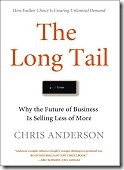
thelongtail Last week, I finished reading Long Tail, The, Revised and Updated Edition: Why the Future of Business is Selling Less of More.  It was written in 2006, and in the computer world, that makes it outdated already.  (Though there is now an updated and revised edition that I haven’t read, but I’m linking to it anyway.)  YouTube wasn’t as big when the book was written, and it mentions Google Froogle every now and then.  But, overall, the ideas in the book are very good.

That said, I’m not sure reading an entire book on the subject was worth it.  It’s a short book, only around 230 pages, but it certainly seemed repetitive.  The idea of the “Long Tail” isn’t too hard to understand: there’s a definite market for niche products, so if you can offer a lot of choices to buyers (without, obviously, spending too much money yourself), you can definitely make a profit.  Great subject for a magazine article (which is what I believe it started as), but for a book it seems just a bit stretched.  Makes for easy reading at least.

PROJECTS

oreally3 I also recently started some projects with a friend.  The first idea was to create cartoony shorts, similar to PowerPoint presentations we used to give in high school.  You can see our first animation here on YouTube.

Some problems with this project are: the animation is very rough and the recent-event subject is time-sensitive.  I think such shorts could find an audience if we could keep them up, but with just two people creating them, neither of which are quick or experienced animators, it would probably be infeasible, unless we had a lot more time to dedicate to it each week.

What I’d like to do eventually is use this similar method of animation (creating animation frames in PowerPoint, since I know how to draw best in it) to create something longer, and non-political.  Two years or so ago, my sister and I planned out a kid-friendly comedy-fantasy story with the hope of one day turning into a series of cartoons.  At the time, I had just bought Flash and had high hopes of gaining awesome animation skills with it.  Using PowerPoint didn’t cross my mind, because I am stupid.  But now that I am reminded, maybe it will be something to try in the future.  I especially like the idea of writing music to it, and being able to take a long time polishing an animation.

Anyway, the other project we started was the writing of a novel.  But I can not yet say anything about it due to a non-disclosure agreement.

SCHOOL WORK

I don’t go to school anymore, so I don’t have any.