Some forthcoming metal

About a year and a half ago, Nightwish was pretty much the only symphonic metal band I listened to, but after stumbling across Xandria last year (especially their album Neverworld’s End, which is perhaps my favorite symphonic metal album so far, or at least tied with Nightwish’s Imaginaerum), I have been steadily expanding my tastes for the genre. I have realized that their often fantastical themes, ridiculously cheesy as their lyrics may sometimes be, provide wonderful inspiration for my writing (perhaps equally cheesy) fantasy.

Just recently, some new singles have been released from some upcoming albums.


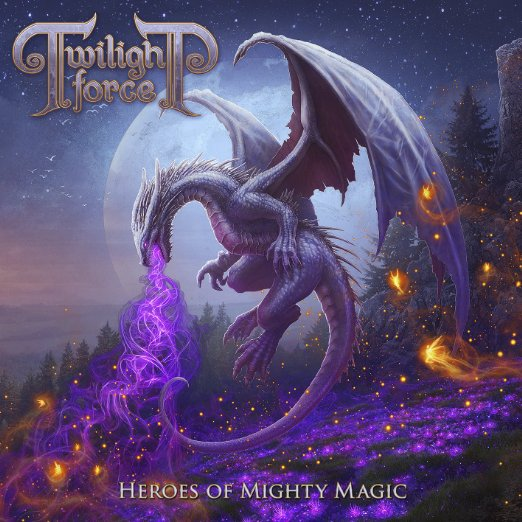
Heroes of Mighty Magic

First up, there’s Battle of Arcane Might from Twilight Force’s upcoming album Heroes of Mighty Magic. (How’s that for a cheesy fantasy title?)

I’m not so sure about all the girly pink and purple color scheme, but, well, there’s a dragon! Anyway, I love the track; triumphant sound, and a nice cinematic melody.


Then there’s Hammer of the Gods from Freedom Call’s upcoming album, Master of Light:

They’ve got a pretty distinct style, often featuring very anthem-like choruses. I always find them pretty catchy, and this track is no exception.


The Last Stand

Finally, there’s The Lost Battalion from Sabaton’s upcoming album The Last Stand:

I actually couldn’t get into Sabaton’s music at first; the main singer’s deeper, grungier voice is quite a difference from the more operatic female vocals featured in bands like Nightwish and Xandria. But they’re still actually singing here. I highly doubt I’ll ever get into those uglier types of heavy metal that feature singers just vomiting into the mic.

Rather than singing about fantasy, their albums are always war-based concept albums. They don’t glorify war for its own sake, but rather tell war stories, often honoring and paying musical tribute to real men who served. So one could certainly learn some history listening to their music. And their melodies, in a different context, could almost be folk songs. But they’re just as catchy in their bombastic epic metal form.

So three upcoming albums I’m looking forward to. Xandria’s also recording a new album at this very moment, which is awesome. Now I just want Ancient Bards to release a new album…

Random bits from Frances Hodgson Burnett’s biography

fhb

I finished reading a biography about my old famous aunt Frances Hodgson Burnett a while ago, the most recent comprehensive biography that was published in 2004: Frances Hodgson Burnett: The Unexpected Life of the Author of The Secret Garden

I recently came across some quotes I had pulled from it, little tidbits I thought were interesting.


From page 137:

It was about this time that Frances fell into the habit of “adopting” other children while she was absent from her own. In Rome she took up two “tiny pretty little beggar boys” who sang for tourists near her hotel. … Over time she would bring in sick children to educate them, and would help establish a club for boys in London. She saw these disadvantaged children as somehow substituting for her own, and she expected her own children, so far away, to respond with enthusiasm toward those they might well view as their substitutes as rivals. Frances in some way believed that lavishing attention and gifts on other children, then telling her own children about it, would make her sons feel closer to her rather than jealous or replaced.

This just made me laugh. It’s of course easy to admire her charity, but telling her own children about it as if it excused her from lavishing similar attention on them leaves me scratching my head. Maybe her children were not as hungry for attention as others, but I can’t see myself as a child much appreciating hearing about strangers getting gifts from one of my parents. Even when you’re a mature adult, it’s like getting one of those donation non-gift gifts, “a donation has been made in your name to blah blah blah”, to which you must politely and humbly reply, “Gee, that’s great, thanks!” rather than, “Thanks for reminding me that I’m already too fortunate for a gift and that you’re charitable. What a great gift.”


Frances was a famous writer at a time when high powered women were not so common and surely the idea of “feminism” meant something far different than it does these days (especially the Internet’s bizarre brand of “SJW feminism”). She was once asked to contribute a set of her works to woman’s exhibit at the World’s Fair in Chicago in the 1890’s, an exhibit meant to “instruct men as to the work and importance of women”, paying tribute “to the achievements, public and domestic, of women.” From page 166:

As one of the world’s most popular living women writers, Frances was asked to contribute a set of her works, but she did not take this as the honor it was doubtless intended to be but rather as one in a series of requests. Her apparent annoyance seemed to lie more in the fact of a building devoted to womanhood than with anything else. “Will you please send a complete set of my books … ” she wrote to Scribner’s. “It is in response to one of those endless demands that one should send some of oneself to some Womans Department of Something at the Worlds Fair. I have grown so tired of Woman with a W though I suppose it is the rankest heresy to say so. I dont want to be a Woman at all. I have begun to feel that I want to be something like this ‘WOMAN.’ Nevertheless if every body is sending books I must send mine.”

I thought that was an interesting response; I reckon she didn’t like the idea of others seeming to define for her what a ‘Woman’ should or shouldn’t be, or that she was automatically obligated to support the cause by virtue of being a famous woman. Hard to tell for sure though.


A hint of how the book business worked in the days of old, from page 178. Frances wanted a book of hers to be published immediately rather than having to follow the publisher’s schedule, and she was apparently a popular enough author that she had some pull. Scribner’s offered to skip the novel serialization and the income that would have come with it, but offered an advance on royalties. Here’s what I thought was interesting: Frances rejected this deal because accepting an advance on royalties could be risky in those days because the advance might have had to be returned if the book failed to earn it out. Can you imagine having to pay back an advance? That would stink. I was surprised publishers and authors apparently used to make those sorts of deals.


Back to womanhood for a moment, from page 187, Frances was being interviewed and was asked questions about the sexes:

“The man and woman question has no interest for me,” she told the interviewer. “We are not to be divided into mere men and women; we are human beings who are part of each other. Each part should be as noble as the other, and the one who is stronger should teach the other strength. To be a man’s wife and the mother of human beings is a stately thing. Frequently it is not, but it should be. And to be a woman’s husband and the father of human beings should be quite a stately thing. When it is not it is rather disgraceful. . . .”

“Then I gather that your ideal woman must be a mother?” [The interviewer putting words in her mouth?]

“She must be a mother if she has children. . . . She must have the reason and sense of honor and justice which one expects from the ideal man.”

Having written a book that both bowed to and called into question the proper role of women, she ended the interview with a statement that seems to have sprung from her lips without forethought. “It is my opinion,” she told the interviewer, “that the ideal woman, among quite a number of other things, should be a ‘perfect gentleman.'”


Skipping 100 pages into Frances’s future, here’s another part I found funny. In 1914, Little Lord Fauntleroy was turned into a British film for the first time. From page 279:

[The film] made its New York screen debut at the Lyric Theater. In true Frances fashion, she made a “fairy story” of it, taking the hundred seats the producer had offered her for the first performance, a benefit for the Newsboys’ Fund, and instead of distributing them among her friends made a children’s party of it. With Frances as hostess, the dozens of boys arrived half an hour before the curtain went up and waited in great excitement.

This reminded me of J. M. Barrie doing something similar in the film Finding Neverland, inaccurate as it may be, in which the playwright invites children to fill seats throughout the theater for the premier of Peter Pan, both as a gift to them, and to provide a spirited laugh track for his fairy tale to ease what the typical adults may otherwise try to take too seriously. “What is it called, James? A play!

Anyway, Frances’s little plan does not go so well…

Although she had been told that there would be a few “novelties” in the production, neither she nor the children were quite prepared for the fact that the director decided to kill off each of the heirs to Dorincourt, one at a time, in florid details of hunting accidents and delirium tremens. By the third miserable death, one of Frances’s small guests cried out, “I don’t like this play! If I knew this play was going to be this kind play I wouldn’t have come to this play. I want to go home.” With that he bolted up the aisle in tears, and most of the other children followed suit. Frances could only herd the wailing children out of the theater in dismay.

Sad, but hilarious.


Finally, it seems Frances did not much like editors or criticism. Nowadays, writers quickly learn that taking criticism is part of the craft, and one must learn to use it to fine-tune one’s work and one’s skill. Frances, it appears, did not quite operate that way. She believed her work came from a higher power, so it was not for others to criticize or edit. From page 294, emphasis mine:

Elizabeth [a friend] was a sounding board, one whose job was to admire but not to criticize. Frances once recounted in amazement the time she’d read a story to a young man who dared to offer criticism, something Elizabeth would never dream of doing. In fact, the only other time someone had dared such a thing, it ended with his losing his job. Apparently Frances sent the manuscript of one of her novels to the publisher at a time when her editor was unfortunately in Europe. His new young assistant wrote out a list of improvements and passed them on to the equally new assistant editor, who made the mistake of mailing it to Frances. “The result,” Elizabeth wrote, “was an explosion that shook the building which held the magazine and its employees. Mrs. Burnett gave a magnificent illustration of the tempest that can be aroused in gentle souls.” She withdrew the manuscript, to the astonishment of the editor who’d known nothing of what happened, and refused all their calls and letters and cables. By the time it was resolved, months later, Frances had their written agreement that they would continue to publish her work without any alterations whatsoever, as they had all along. When Elizabeth later asked why Frances was so averse to criticism when she averred that stories came from outside of herself, the answer was that “I am the custodian of a gift. It is for me to protect its dignity from the driveling of imbeciles!”


That’s it! Overall, it was a fascinating book, I very much enjoyed it!

Bookstore plunder

I had a bit of time over the weekend to browse a used bookstore. Not as much time as I would’ve liked (I can browse a used bookstore for many hours if allowed), but I did find some interesting stuff.

rhapsody

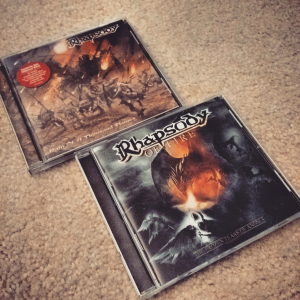
Didn’t have time to browse the film soundtracks, but I did snatch up some symphonic metal from the Italian band Rhapsody of Fire. Their album The Frozen Tears of Angels features narration from the late great Christopher Lee; his deep cinematic British voice compliments the fantastical metal very well. It’s a concept album that’s part of a larger saga of albums, none of which I have… yet.

lesmiserables

Also music related is the blu-ray of the 25th anniversary concert of Les Miserables. I think it came on PBS or something once, but I missed it. But now I can watch it over and over!

hugo

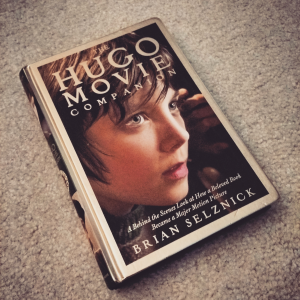
Picked up a movie companion to one of my favorite films. Looking through it, it looked awfully familiar, but I double-checked my bookshelves and I don’t have it. I could swear I’ve browsed a copy of it somewhere else before though. Maybe there’s another copy somewhere else in the house? I have no idea…

elantris

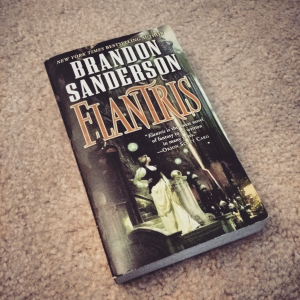
I haven’t read Brandon Sanderson in a while, but I picked up Elantris for someday.

straub

I’ve been reading Peter Straub’s Shadowland recently and have been enjoying it very much, so I picked up pretty much all the Peter Straub I could find, which amounted to nine books. They’ll take me forever to read, but they all look interesting… I’ll probably dive into one after I finish Shadowland

mozart

Picked up some books on Mozart and classical music because I’m such a classy guy.

pdqbach

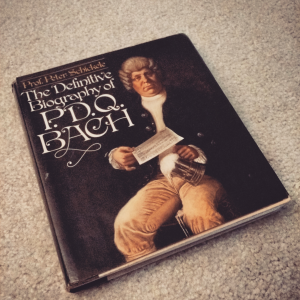
Finally, I happened upon a biography of one of the great classical composers who most music scholars, in their snooty snobbery, ignore completely.

Songs from great uncle Bert Hodgson

bert

I mentioned my 3x great uncle Bert Hodgson a while back. I thought it was interesting that he was a songwriter, since he’s the only other composer I know of in my immediate lineage (that is, not including distant cousins). At long last, I found some recordings of at least a couple of his songs. The secret was that they weren’t listed under his name, but rather under the artists who recorded them. I was browsing through mentions of his name in old newspapers from Knoxville (where I found the above article as well), and found mention that a Maynard Baird and his band had recorded some of his songs, which then came up on YouTube. So here we go, here’s some music by good old great great great uncle Bert…

Not sure why he never became internationally famous… (sorry Uncle Bert; for what it’s worth, neither have I… but I’m not dead yet, haha!)

Anyway, it’s awesome to finally find some of his work! And it looks like the Tennessee Archive of Moving Images and Sound has some recordings of his songs on old 78s. Just last week, Eric Dawson mentions him in an article:

There was also a record show, where TAMIS acquired a singular acetate recording by Maynard Baird, probably the most popular musician in Knoxville during the 1920s. Baird and his jazz band recorded several tunes at the sessions; this 1950s-era acetate finds him still going strong on a tune by Bert Hodgson.

I definitely hope to contact TAMIS soon and find out if I can have a listen to these somehow! Cool stuff!

The color green and the musical fifth

prometheus

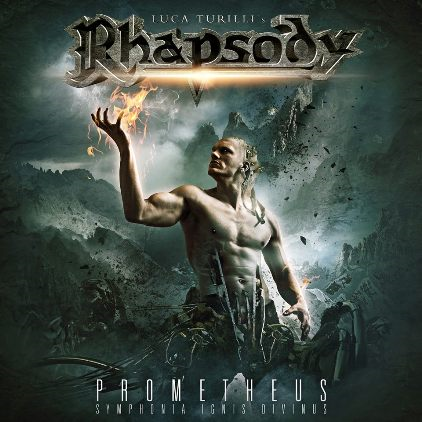
I recently bought the latest album from Luca Turilli’s Rhapsody, Prometheus, Symphonia Ignis Divinus. Symphonic metal, very cinematic, operatic, bombastic, and… metallic, I guess? A good portion of it is in Italian, so I can’t understand it without looking up translations, but it doesn’t stop one from enjoying the music itself. I listen to operas in foreign languages, after all. (And Italian is the proper language for symphonic metal. All educated people agree on that.) Anyway, this particular track gets stuck in my head: In Tempo Degli Dei (translating to Time of the Gods?) … Check out the epicness:

I was curious as to what that guy was saying at 2:51. It’s a quote from the diary of Italian thinker and painter Gustavo Rol, which translates to:

I discovered a terrible law that links the color green, the musical fifth, and heat. I have lost my will to live. I am frightened by power. I shall write no more!

… What?! How enigmatic. What the heck is this “terrible law”? And who is this guy anyway?

Gustavo Rol does not seem to be very famous outside of Italy. All I can find on him in English, other than his brief Wikipedia article, is this website, which states that Rol was:

a spiritual Teacher of Christian-Catholic orientation, who lived in Italy in the twentieth century (1903-1994), gifted with many “paranormal powers”, which he defined as “possibilities”.

These “possibilities” include “clairvoyance, telepathy, precognition, retro-cognition, telekinesis, materialization and dematerialization of objects, doubling, levitation, time travel, healing powers, xenoglossy, lightening strikes, diagnosis of illnesses (endoscopy and ability to see an aura), transfer or agility, etc.” The site states:

The intertwining of mystical aspiration and rational analysis of what surrounded him, united with curiosity, stubbornness and will, led him to the conviction at the age of 22 that it was possible to predict the color of the cards without seeing them after having passed randomly in front of a tobacco shop window where decks of cards were on display. It was a challenge that began almost like a game, but after two years of attempts he managed to predict all 52 cards in a deck. On that day, July 28, 1927, he was in Paris, and he wrote the following in his work diary:

“I discovered a terrible law linking the color green, the musical fifth and heat. I lost my will to live. Power frightens me. I will write no more!”

He began to develop his possibilities from that moment on and onward into the following years.

Regarding “the law”, the site quotes Rol as saying:

I began with the cards: why should it be impossible to predict the color of a face down card? I tried and tried again, but for a long time I could not do it. Then one day I looked at a rainbow and it was then that lightening struck. I realized that the color green was the central color, the color that kept the others united. I measured the vibration of the green color and discovered that it was the same as the musical fifth, and that it corresponded to a certain degree of heat. I then began to predict the cards accurately, and little by little to do all the other things…

I’m not quite sure how green keeps the other colors “united”. It has a frequency of 526 Thz (according to Wikipedia). A musical fifth has a frequency ration of 3:2. The highest frequency visible to the human eye lies around 789 Thz. The ratio of 789 Thz to 526 Thz is, aha, 3:2. Furthermore, the ratio of 526 Thz to the lowest visible frequency, 400 Thz, is very close to 4:3, the perfect fourth. So translating colors to musical degrees, green indeed lies at right about the musical fifth. Is this what Rol meant? I don’t know. Interesting, though.

What does this have to do with heat? Something about thermal radiation? And what does this all have to do with telepathic possibilities?

I have no idea at this point. I’ll have to continue thinking about it.

Unfortunately, beyond the aforementioned website, there’s not much info about Gustavo Rol out there, at least not in English. There is one book on Amazon in English about him, but it looks to be a collection of anecdotes from witnesses of his “possibilities”, which seem a bit like tall tales in and of themselves, and I’m not sure are very valuable to someone who just wants to understand exactly what insights Rol may have had.

I shall write no more!

The problem with the new Ghostbusters trailer

The trailer for the new upcoming Ghostbusters was recently released, and immediately widely hated. (Check out all the disapproving thumbs-down on the video, for example. This leading, of course, to claims of sexism!)

I think the problem is the “tone” or “style” of the humor illustrated in the trailer is completely inconsistent with the dry humor of the first two original films. Compare:

with this sort of humor:

See the difference? In the first two films, the characters are serious people. They might get sarcastic (particularly Bill Murray’s character), but that sarcasm is born of trying to deal with a serious situation and keeping sane, à la Gregory House, not of just being a silly person in general. All this comic-relief is needed to accept the otherwise ridiculous premise of people trying to catch ghosts with strange science, but the conflicts themselves are serious. That is, the humor helps lampshade the far-fetched premise so that the premise can be accepted. This happens to some degree in almost every fantasy / sci-fi story (see the quibbling droids and Han Solo’s sarcasm in Star Wars, for example), and when it doesn’t, you usually get something that seems way too cheesy or pretentious. The humor allows acceptance of the far-fetched premise.

And now back to the new Ghostbusters trailer, and what do we have here? We have a “goofball” comedy. Crazy wacky characters! Silly barfing ghosts! Hyuck-hyuck! The characters and the situation are no longer serious, they’re all just part of an eccentric comedy romp. This style of humor can work well on its own; plenty of films employ it to great success. But in this case it’s just not consistent with the franchise they’re trying to continue, so the whole thing feels like an insulting parody, or a kidnapping of the beloved franchise. It feels like the filmmakers were not truly fans of the originals, or didn’t really understand them, or are just incompetent filmmakers in general.

The Storm Cometh

Composer Cloud

I recently realized EastWest libraries offer a subscription service for their (otherwise very expensive) sample libraries called Composer Cloud, so I subscribed and have been experimenting with what their libraries have to offer. Here’s a short piece I recently wrote completely with some of their libraries (mainly Hollywood Strings, Hollywood Brass, Symphonic Choirs, and StormDrum):

I still have plenty left to experiment with, but so far I really like their Hollywood Strings, Hollywood Brass, and Symphonic Choirs libraries (though I doubt I’ll have the patience to use their word builder any time soon; ooh’s and ah’s are fine with me for now). And of course StormDrum has some great film-score-ish percussion available. They’re hard to resist playing with, even though I fear they may sound a bit cliche and generic these days. Oh well, too bad, I still want my turn to play with them! I’m not so impressed with their woodwinds, though; they sound pretty bland to me. I haven’t installed Garritan Personal Orchestra on this new computer of mine yet, but I hope to. I definitely prefer GPO’s woodwinds, which sound much more lively and real to me. Same goes for GPO’s harp. I also need to put my Bela D Media Celtic Winds on this computer so I can try mixing in some Irish whistles perhaps, or uilleann pipes.

Anyway, hope to write more music soon! I’ll probably write more pieces around the two minute mark. It’ll allow me to experiment a bit more, plus two minute tracks have a greater chance of being licensed I guess.

By the way, I hope you appreciate my harmony in the above composition; it may be subtle, but I tried some techniques I’ve never tried before, like going from a G# minor chord to an E minor chord for that eerie (perhaps cliche) film score-ish sound. I also use some suspended and augmented chords somewhere in there too, albeit rather subtly. Trying to expand my harmonic palette. You should be proud of me.

Who cares if Death Note is rated R?

According to this article about the upcoming Death Note film adaptation (which hasn’t, the article points out, actually been greenlit yet):

When asked about the target audience for the film, [producer Roy Lee] replied, “It’s definitely for adults. It is zero chance it will be below an R-rating,” and went on to say that the tone of the film “will be one of the first manga adaptations that feels very grounded but still has fantastical elements.” That sounds like something [director Adam Wingard] could definitely nail.

Oh, whoopee-doo. I’m not sure this, in and of itself, is anything to be excited about. The strengths of the anime, at least in my opinion, have nothing to do with how “adult” it is; for example, how the violence is portrayed is a stylistic decision. It can be intense and gory, or more comic-book like, à la Nolan’s The Dark Knight. Either could work, as long as the style’s consistent, so who cares? The fun of the anime, in my opinion, is the story itself; the chess-like cat-and-mouse game between two brilliant un-average thinkers, and their differing philosophies in defining “justice” that serve as the foundations for their opposition. I hope whoever writes the film doesn’t just take all that for granted because some animated sequences were fun to watch, thinking he can just trim the story that’s already there down to something film-length and have it still work with maybe just some editing for the sake of exposition and pacing. Because then we’ll wind up with crap for story. Or worse, something like The Guest, in which there hardly even is a story at all, just a guessing game that ends up going nowhere, so you had better enjoy the action sequences for the sake of themselves, because they serve no greater substance beyond themselves… Because in Death Note, they do, gosh darn it, so don’t butcher it too much!

(For the record, I have nothing against what the producer said; he was just answering a question. I just think the question itself is irrelevant, unless perhaps someone feared a PG rating? And being pleased with the answer just means you’re a fan of the franchise for very different reasons than I.)

And, of course, I’m crossing my fingers that the filmmakers aren’t fans of the nonsense over-acting from the English dub:

My 2015 favorites

I’m pretty late this year, but who cares? Here are my favorites from 2015! As usual, for books, the nominees are books I finished reading for the first time in 2015, regardless of their publication date. Movies and film scores must have been first released in the USA in 2015.

Year’s best live action film:Jurassic World

Year’s best animated film:Inside Out

Year’s best film score:Pan

Year’s best nonfiction book:Book of Talent

Year’s best fiction book:Fugitives of Chaos

Presidential cousin…

Our local paper was recently bought by a subsidiary of Berkshire Hathaway, which led me to briefly browsing Warren Buffett’s Wikipedia page, where it mentioned that he’s “of distant French Huguenot descent.” Not sure why this is considered noteworthy, but whatever. Anyway, I am also “of distant French Huguenot descent”, from my 10 x great grandfather (if I counted the generations right), good old Benoit Brasseur, or Old French Grandpa Benny as we call him in the family. So what Huguenot is Buffett’s Wikipedia page referring to? Could it be the same one?!

Nope. Wikipedia’s page is referring to a Mareen Duvall. But Duvall’s second wife, and the one Buffett is descended from, was Susannah Brasseur, daughter of Benoit! So that makes my 10 x great grandfather Warren Buffett’s 7 x great grandfather, making Warren Buffett my 8th cousin, 3 times removed! So the local paper is like a family business now.

But there’s a bonus relative, too. Also descended from Mareen Duvall and Susannah is a president of the USA! As in… the current one. Bleh! Old cousin Barry, 11th cousin, once removed.

(Other famous descendants of Mareen Duvall include Harry S. Truman, Dick Cheney, and actor Robert Duvall, but my brief Googling around seems to indicate that these famous guys are descended from Duvall’s first wife rather than his second.)

Of course, these connections are so distant that they’re completely and utterly unremarkable, but it is interesting to actually be able to trace a path.