Movies watched in August and September 2012

winter

Winter in Wartime

This 2008 war film from the Netherlands tells the story of a Dutch teenager growing up during the German occupation of the Netherlands.  He finds a British pilot (who had previously just barely escaped being made into a meat pie) who had become stranded in the woods with an injury, and takes it upon himself to help the pilot escape the country without being captured by the Germans.  With German uniforms and secretive spies all over the place, the task is not easy.  Still, to me the film came off more as a light-hearted thriller than the edge-of-the-seat suspense thriller the premise seems to promise.  But I suppose the film is meant to be more about the inner emotional struggles of the situation rather than the suspense it implies.  But without any intense suspense, internal or external, the sentimental moments don’t have as much impact.  In the end, it’s merely a fun film.

pulp

Pulp Fiction

I had never before seen this classic 1994 film from director Quentin Tarantino.  It’s really a collection of three inner-mingling short stories that sound rather mundane when only their premises are stated: A hitman takes a mobster’s wife out to dinner, a boxer flees hitmen after not keeping his end of a deal involving an arranged match, and a hitman says: “aw, man, I shot Marvin in the face.”  Bummer.  Problems ensue.  While the stories themselves weren’t very epic in any high-stakes sort of way (and were actually ridiculously over-the-top), Tarantino manages (as he does with all the other films of his I’ve seen, which right now only include Death Proof and Inglorious Basterds) to make each scene captivating, namely through dialog; what the characters say makes you want to hear what else they’re going to say.  They are good storytellers.  My theory, which I may expand on later, is that Tarantino interests listeners by getting them to wonder: “What?”  Even if it’s something not important to the story.  “Guess what they eat with french fries in other countries?”  Who cares?  But, because it’s framed as a “what?” question, the audience listens, because we have to find out what.  It might be important.  I’m not saying a character always has to ask something like “Guess what?”  I’m saying that a character has to get the audience to ask “what?”  Not “why?” or “how?” or “when?”  The most important storytelling question an audience has to wonder is “what?” and if you can make them do that, the answer itself doesn’t matter merely as much.  I’ve noticed this in some parts of Christopher Nolan’s movies as well.  Anyway, fun movie.

dog

My Life as a Dog

This 1985 film from Sweden tells the story of a 12-year-old who is sent to live with his uncle in small town after his mother falls terminally ill and can no longer manage her children.  In the town, the boy gets to know some eccentric characters and does his best to fit in, while having to deal with the tragedy of his mother’s eventual death.  Overall, it feels more like a dramatized memoir with a bunch of random but related vignettes; there isn’t much of a over-arching story, just shifts in mood.  I didn’t really get much out of it, except learning about the somewhat disturbing story of Laika the dog, whom the main character compares his situation to, thankful that his isn’t that hopeless.  But there wasn’t enough story for me, or enough conciseness in the narration.  The hills of the roller-coaster of emotion all seemed a bit vague and unrelated.
bridge

A Bridge Too Far

This 1977 war film was definitely directed by Richard Attenborough because, like all his films, it . . . spared no expense.  The film tells the true story of Operation Market Garden, a failed attempt to capture strategic bridges in order to break through German lines in World War II, one key bridge being the John Frost Bridge in the Netherlands (which I think I saw in climax of Winter in Wartime).  Near the end of the film, a British officer says the plan failed perhaps because they went “a bridge too far.”  Gene Hackman tries out one of the fakest accents I’ve ever heard.  I couldn’t tell if he was trying to be Scottish or Irish, but he comes across as an American trying to make fun of someone.  In trying to keep the film true to history, the film follows all sorts of characters all over the place.  We never really get a chance to relate to any one character, so it comes across as an elaborate documentary dramatization.  The end result is epic in scope, but also boring.  I guess they went a character too far.

panther

The Pink Panther

This 1964 comedy starring Peter Sellers and featuring that famous Henry Mancini theme tells the story of a criminal, a bumbling detective, and a big pink diamond.  The plot is rather simple: the criminal tries to steal the diamond, while Inspector Clouseau constantly fails to catch him.  The slapstick comedy is sometimes quite funny and sometimes feels like someone trying to make a three year old laugh.  Usually the latter.  As in: way too forced to be funny.  I think the cleverest part, however, was when Clouseau’s wife, who has two affairs going, finds them all in her room hiding from each other.  Clouseau doesn’t know anyone else is there but his wife, the other two think they’re only hiding from Clouseau.  And Clouseau’s wife manages to keep all her secrets.  Quite a funny scene which I think they could’ve done more with.  But, overall, it’s a super-cheesy film.
dasboot

Das Boot

This 1981 war drama tells the fictional story of a German U-boat as it blasts enemies before being blasted itself and getting stuck on the bottom of the ocean.  It was interesting to watch the characters go from optimistic crew members ready for some war action to tired bearded men fearing ugly impending death.  And at 3 hours and 20 minutes, the Director’s Cut certainly gives the audience plenty of time to feel that change organically and believably.  I couldn’t watch it in one sitting.  Part of that is because Netflix sent me a blu-ray that became unplayable half-way through.  But even if they didn’t, that’s a lot of movie to sit through, and it’s certainly not filled with action or drama like a long LOTR film.  It’s very natural in its pacing, and keeps the audience feeling that dark claustrophobic U-boat feel.  So you have to be in the right mood to take its slow pacing.  But if you are, it’s actually quite engaging; nothing like the forced drama you get in The Hunt for Red October (though I enjoyed that movie too).  Fun movie, if you’re in the mood to for something that length.

 samurai

Seven Samurai

At three hours, here’s another long movie, but this had plenty of action, so it doesn’t feel like so long.  This 1954 Japanese film from the famous Akira Kurosawa tells the story of common village farmers trying to defend against bandits by hiring seven ronin (masterless) samurai.  Each samurai has his own personality and method of and reason for battle, so they come across as a “misfit crew.”  The pacing works wonderfully; I don’t think trying to get so many characters introduced and recognizable and relatable through a character arc is a very easy task in three hours or less.  It’s something I’ll have to study if I ever try to revisit my abandoned Harbringer trilogy, which features nine characters coming together to defeat evil.  Anyway, very fun movie.
betterworld

In a Better World

This 2010 Danish film tells three entwining stories all dealing with how different characters deal with revenge.  Overall, the film seems to ask the question: what is the difference between justice and revenge?  Where does one draw the line?  Isn’t revenge a sense of justice?  How, then, are they different?  It’s a good question, and I don’t know the answer.  The film follows the story of 12-year-old Christian who tries to cope with his mother’s death, and the injustice he perceives in it, by seeking justice at whatever the cost, even if it means breaking the law and doing very dangerous things.  12-year-old Elias, on the other hand, has to deal with bullies, but does not have the spirit to battle them; how will the new student Christian influence him?  Meanwhile, Anton, Elias’s father, has to deal with some very unjust conditions as he works as a doctor in a refugee camp in Sudan.  How can he teach his son the difference between right and wrong, revenge and justice, when he struggles with the question himself?  Overall, though it risks running off with some subplots every now and then (I think the subplot of Anton trying to mend his troubled relationship with his wife only worked to muddle the already complicated story), it remains cohesive and engaging.  Good movie; I can see why it won the Academy Award for best foreign film.

anonymous

Anonymous

This 2011 film asks the question: did Shakespeare truly write his plays?  Are you an Oxfordian or a Stratfordian?  But rather than dramatize the question in any scholarly way, the film becomes an over-the-top ridiculous period political thriller.  If the Oxfordian theory has any merit, it certainly isn’t given credence here, at least not nearly as much as it could have.  I prefer the play The Bard of AvonAnonymous was just silly.

thomascrown

The Thomas Crown Affair

This 1968 film starring Steve McQueen tells the story of an undercover agent trying to bring a mastermind bank robber to justice by attempting to seduce him, but ends up being seduced herself.  The film features the dirtiest, most scandalous game of chess ever filmed.  Save for the bank robbing scenes, the extremely catchy opening song (Windmill’s of Your Mind, sung by Noel Harrison, not Sting), and the film’s climax, the rest was rather boring.

zhivago

Doctor Zhivago

This 1965 epic drama from epic director David Lean tells the story of a doctor, and his name is Zhivago.  (That flag pole on the movie poster always makes me think of a syringe.)  The film tells the story of Zhivago and the women he loves as they struggle through the changes of the Russian Revolution and the Russian Civil War.  Very beautiful photography, cinematography, and musical score, and an engaging story.  However, I’m not sure why we’re supposed to understand how perfectly OK it is for the doctor to completely cheat on his wife.  The characters don’t question the morality of the doctor’s affair at all; it’s as if all the characters say “well, of course this is going to happen, so who cares?”  I don’t get it.  Maybe it’s more clear in the book.  Also, as Kyle Smith writes in this article:

Zhivago … is essentially apolitical but he is also an idealist and when he returns home from the war to Moscow to discover that the People have taken over his home and moved 15 families into it, he pauses to process this infomation [sic] and then says “It’s much better this way. More just.”

Whether Zhivago is being sarcastic or not, it’s a funny reminder that even today people think of personal property comparisons as a measure of what is just.  Finally, the entire story is being told Alec Guiness’s narration, so he doesn’t speak in his own story.  It’s extremely annoying; very silly dramatization decision.  Overall, though, fun movie.
recall

Total Recall

This 2012 remake of the classic 1990 sci-film got pretty bad reviews, so I wasn’t expecting much when I went to see it.  I was pleasantly surprised to find that I enjoyed it immensely.  Rather than thinking of it as a “remake” I think it’s more like a “variation on a theme.”  One has to be familiar with the original film to understand some references.  The pacing of the remake is also ridiculously fast, so it helps to have seen the original so that you know what’s going on.  Anyway, it tells the story of Douglas Quaid as he visits a company called Rekall which implants exciting memories into people’s brains to help them temporarily escape from the dreariness of the real world.  Something goes wrong with Quaid’s memory implant, however, leaving him believing that he’s actually some sort of undercover agent who’s forgotten his memories.  So there are two possibilities: either he’s in Rekall, trapped in a fake implanted memory, or he’s really an undercover agent who has some conspiracy to uncover.  There seems to be evidence for both takes, so which is it?  Like some other films based on Philip K. Dick stories that got bad reviews, such as Paycheck and Next, I loved it.  This is my sort of movie.  The film also featured beautiful special effects.  I especially love any sci-fi film with some vertical lens flares.  Great film.  And I think this is so far the only remake in which I really enjoy both the original and the remake.
following

Following

In my quest to watch all of Christopher Nolan’s films, I watched his first effort from 1998.  This film tells the story of a creepy guy who likes to follow people.  He finds himself following a petty burglar and the two decide to help each other out on some small-time burglary.  But our main character soon realizes that this small-time burglar isn’t quite who he says he is, and that he’s inadvertently gotten himself involved in something a bit more sinister than he thought.  Like Momento and The Prestige, Nolan tells this story out of order, jumping back and forth between past and present, following different plot lines, yet manages to keep it interesting and not confusing.  It’s rather fun to piece it all together in your mind as Nolan guides you through making the necessary connections.  While the story was fun, the writing wasn’t as refined as Nolan’s later films, from Batman Begins and beyond.  Still, very enjoyable film, and very Nolanian.
thething

The Thing

This 1982 horror film tells the story of a strange alien life form that infiltrates a small group of researchers in the Arctic.  The alien has the ability to morph into human form, so it’s a constant mystery who is actually human and who is really “the thing.”  This leads to a lot of fun mind games, and some ridiculously grotesque pre-CGI special effects.  I wish I had caught glimpses of it when I was younger, because they would’ve scared me to death.  Now that they’re dated, they come off as a bit cheesy.  Overall, though, fun movie.

neverending

The Neverending Story

I first saw this 1984 film as a child, so I had vague memories of an epic fantasy journey involving a giant rock man, a giant turtle, a talking wolf, a furry dragon, a burnt face, a mean old bookseller who I didn’t realize was using reverse psychology, and a horse disappearing into mud.  The story has all those things, but I didn’t realize how short and not-really-that-epic the story really is.  I finally understand some of the thematic messages of the film about the role of imagination, but it doesn’t seem that mysterious and special anymore.  Still, I enjoy the artistry of the puppetry, which looks much real and welcoming than the intangible CGI directors would use today.  Fun movie, if only for nostalgic reasons.

paranorman

ParaNorman

Already reviewed.

afterthefox

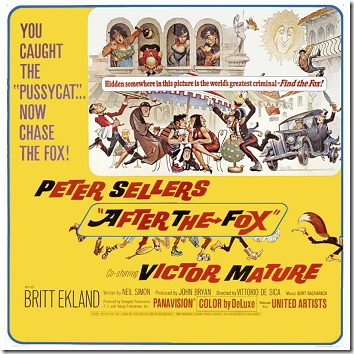
After the Fox

This 1966 comedy starring Peter Sellers and directed by Vittorio De Sica tells the story of a criminal who escapes from prison to help some friends steal some gold.  How to pull off the heist when there are police all around?  Pretend to be a movie director filming a movie, of course.  The film hilariously parodies and lambasts popular directors of the time, including De Sica himself, who appears as himself in the film in a small scene.  Quite hilarious film, though it pays to be at least a little familiar with the directors and styles they parody.  But even without that, modern audiences should be able to find something to laugh at.
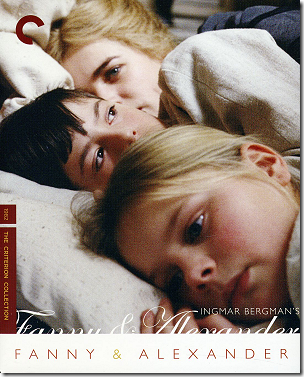
fannyandalexander

Fanny and Alexander

This looooooong 1985 film (5 hours, 12 minutes) from director Ingmar Bergman tells the story of two children who are sent to live with an evil stepfather after their real father dies.  Like Tarantino, Bergman can somehow make long dialog scenes quite engaging (though I think Tarantino is better at it, perhaps because I speak English).  The story also branches off to a number of subplots involving the children’s mother, uncles, and grandmother.  The film features Bergman’s usual search for metaphysical truth.  Does God exist?  If so, why is the world like it is?  Do ghosts exist?  And while the characters may answer yes or no, an audience member definitely recognizes some spiritual things going on, and is left to draw his own conclusions about what the director meant by them.  Bergman is very good at creating that strange sense of metaphysical mystery.  Fun movie, even though some scenes dragged on far longer than necessary.

weboughtazoo

We Bought a Zoo

Dying parents certainly give characters in films some great problems to work through, don’t they?  This 2011 film tells the true (but fictionalized) story of a man who buys a zoo after his wife dies to help his family cope with the tragedy.  He knows nothing about zoos, of course, so problems ensue.  I didn’t really understand this film; the entire story seemed a bit forced.  And Matt Damon being a family man and having kids seems a bit too Mark Wahlberg-ish for him.  And the ending was ridiculous.

thegrey

The Grey

This 2011 film tells the story of a group of men trying to survive after their plane crashes in the Alaskan wilderness.  If the unforgiving cold wasn’t bad enough, there are wolves who want to kill all humans.  Liam Neeson’s character knows how to survive better than anyone, but who made him the boss of anything?  And so Neeson and those he can convince to work with him set out to survive and escape the threat of the wolves.  Fun movie.
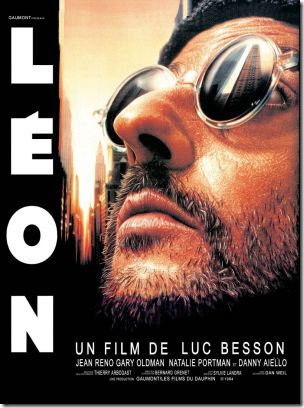
leon

Leon: The Professional

In this 1994 film, a hitman, Leon, looks after a 12-year-old after her family is killed by corrupt police officers.  Leon is street smart and is the best hitman there is, but lacks a lot of practical worldly knowledge, apparently having been a recluse most his life.  In this way, the 12-year-old compliments his abilities, even while the two are as dysfunctional as a hitman and child from a dead dysfunctional family could be.  The film features some amazing acting by a young Natalie Portman, and Gary Oldman comes off as a genuinely creepy and hate-able (if unrealistic) evil DEA officer.  Fun movie.

insomnia

Insomnia

And I complete my watching of all Christopher Nolan’s films with the only one he didn’t have a hand in writing (as far as I know) with this 2002 crime thriller.  A man, played by Al Pacino, travels to Alaska to investigate a murder in a small town.  When he finds the murderer, played by Robin Williams, he is blackmailed; Williams’ character has some dirt on Pacino.  Fun movie, but, I suppose because Nolan didn’t write it, it doesn’t really feel like a Nolan film.

birdman

The Birdman of Alcatraz

This boring 1962 film tells the true story of Robert Stroud, a prisoner in Alcatraz who kept birds and did a lot of research on the treatment of bird diseases.  After all, what better place for scientific research than a prison cell, where no one can bother you?  His nickname as the “Birdman of Alcatraz” is a bit of a misnomer, as he kept no birds after his transfer to Alcatraz; he only kept birds in whatever prison he was in before.  Alcatraz wouldn’t allow such a thing.  The film does its best to show Stroud, played by Burt Lancaster, as a sympathetic character despite his murderous deeds that landed him in prison.  The birds become a way for him to cope with the world he can’t seem to find his place in.  But it doesn’t take any effort to love things that can’t hate you, so what is the reward in that?  For me, the real failure of the film was that the subject was boring, always a threat when trying to make a film inspired by true events.

micmacs

Micmacs

This 2009 French film from stylistic director Jean-Pierre Jeunet (director of The City of Lost Children and Amelie) tells the story of a man whose father is killed by land mine.  Later, as an adult, he his shot in the head by a stray bullet from street crime.  The injury puts him out of work and out of a place to live.  He finds a home with a strange set of misfits who live underground, like something out of a strange children’s cartoon.  With the help of his new friends, he decides to seek some vigilante justice on the evil weapon manufacturers that killed his father and put a bullet in his brain.  The results are some over-the-top inventive unrealistic but funny plans.  Overall, though, I just couldn’t feel at home with the misfits.  I think I just didn’t like the color scheme.

eagle

The Eagle

This 2011 film tells the story of some Roman soldiers venturing northward to retrieve a lost Roman eagle standard from the evil northern British territories.  (I guess that’s why the Romans have American accents here?)  Fights ensue, but nothing exciting ever really happens.  The end.

pickpocket

Pickpocket

This 1959 French film from director Robert Bresson tells the story of a man learning to pickpocket and then trying to evade the authorities as he can’t seem to stop himself from the thrill of pickpocketing.  The film is interesting for the actors’ almost non-acting.  They look down most of the time and recite their lines, not even trying to put emotion into their words.  This eliminates cheesy overacting, but what’s left?  A strangeness.  Not unrealistic, but not realistic either.  Stylistic, I suppose.  While the main character is not someone the film even tries to make the audience sympathetic with, it does well to make his situation intriguing enough for us to wonder when and how he’ll be caught, and even fear the moment, as inevitable as it seems.  Fun movie.

shotinthedark

A Shot in the Dark

The bumbling Inspector Clouseau returns in this 1964 comedy.  A shot is fired, in the dark!  A man is killed.  Who shot him?  Was it the pretty damsel?  Or someone else?  In a country home in which just about everyone seems to be having or is the victim of an affair, everyone seems to have some twisted motive.  While the overall mystery was fun, Sellers’s slapstick humor again goes from being funny to being three-year-old cheesy.  “Oops, I almost tripped on these steps!  That sure is funny, huh?”  No, it’s not.

brewstersmillions

Brewster’s Millions

This 1985 comedy starring Richard Pryor and John Candy tells the story of a man who inherits 300 million dollars, but can only have it if he spends 30 million dollars in thirty days without having anything to show for it.  The premise really makes no sense at all, but provides the setup for some hilarity to ensue, and ensue it does.  Pryor’s actions make no sense to anybody.  As he tries to spend his money on frivolity, his friends are left trying to help him keep some of his fortune, or thinking him a selfish ignorant stupid jerk.  Fun movie.

gameofthrones

Game of Thrones, Season 1

Some parts of some episodes were interesting, but overall the story was just too all over the place.  It never felt like there was a clear overarching conflict; it felt like a child making up a story as he went along.  I guess wondering where the characters will end up next is intriguing enough, though, as I constantly wanted to know what would happen next.  It’s also ridiculously annoying how HBO felt they had to work nudity somehow into every episode to appeal to man’s most carnal desires, because Hollywood knows humans are slaves to their animal temptations.  There also seemed to be plenty of “filler” scenes, scenes in which one character would be sitting or standing there, and another character would walk up and start some argumentative conversation, but at the end of the scene the story had hardly progressed.  It was just some verbal conflict for the sake of itself.  Anyway, overall, engaging show in which you never know what’s going to happen next (probably because neither did the author when he was writing it).
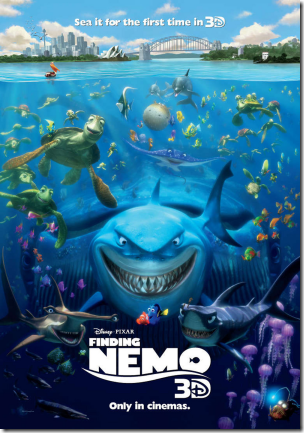
nemo

Finding Nemo 3D

Finding Nemo remains my favorite film from Pixar, so I couldn’t miss the chance to see its 3D rerelease.  I enjoyed it very much.  Unfortunately so did a row of obnoxious children a few rows behind me.  They enjoyed it a little too much, and quoted everything.

xmenwolverine

X-Men Origins: Wolverine

I wanted to some more work from Gavin Hood before Ender’s Game in 2013, which I remain cautiously optimistic about, I guess.  Anyway, the X-Men origins movie wasn’t as bad as I thought it’d be based on what I’d heard; it was at least as good as the least good X-Men movie, and better the X-Men: First Class.  Still, the character struggled with boring issues, and I don’t know the comic world well enough to be impressed by any comic character representations.  Merely a fun movie.
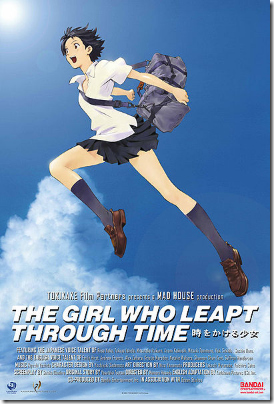
leaptthroughtime

The Girl Who Leapt Through Time

This 2006 anime movie tells the story of a teenage girl who discovers she has the mysterious ability to leap through time by somehow leaping . . . through time.  It reminded me of Groundhog’s Day at first, in that the girl first uses her powers to her own advantage to have her “perfect day.”  If anything goes wrong, a leap through time gives her another chance.  But she soon learns that all her decisions have consequences.  If she uses a time jump to leap out of the way of a flying fire extinguisher, for example, it will hit someone else.  If she turns down an opportunity for a date, the guy will ask someone else.  Realizing that makes every decision extremely intriguing.  I would’ve liked to have seen the girl use her time-leaping powers for more than relationship struggles (she really needs to sort out her emotions and stop trying to change subjects), but overall I highly enjoyed it.  Good film; I’ll try to catch some of the director’s other work.
alcatraz

Alcatraz, Season 1

I finally finished watching the first and final season of this ridiculous sci-fi crime drama.  The show ends with plenty of questions left unanswered, because how could writers write for just one season these days?  Not a very good show.  I’m not sure why I kept watching.  It’s cancellation comes as no surprise.

solaris

Solaris

This 1972 Russian sci-fi film from director Andrei Tarkovsky tells the story of a scientist, Kris, who travels to a space station orbiting the mysterious planet of Solaris to investigate what’s going on with the station’s scientists.  As he finds out, the planet Solaris seems to create things from the scientists’ minds, including Kris’s dead wife.  Despite some cheesy 70’s special effects and some ridiculously long takes that put even Stanley Kubrick’s 2001: A Space Odyssey to shame, the film asks some intriguing (if not confusing) questions about the nature of human consciousness and knowledge and love and emotion.  Can you have a world inside yourself?  Would that world be enough to sustain you emotionally?  How much of your own conscious experience comes from yourself?  I’m not sure if the film meant to ask these questions directly, but those are the questions that intrigued me while watching.  Good film.
starman

Starman

And on the other spectrum of sci-fi flicks involving the resurrection of dead spouses is this 1984 film about an alien who comes to earth for no good reason.  He (or it?) finds some dead man DNA in a lock of hair kept by his wife and morphs into his shape.  He then asks the wife to drive him to where he needs to meet up with a spaceship that will take him back home.  The women is terrified at first, but grows to love the alien-in-her-dead-husband’s-body.  The alien is very kind, even going so far as to impregnate her with dead-husband’s-baby, because he is just so kind.  Unfortunately, scientists have detected that an alien has come and, in typical scientist fashion, want to capture him and do experiments on him!  Oh no!  Will the dead-husband-alien and the woman get away?  Really awful cheesy movie.

ParaNorman review

paranorman

I saw ParaNorman in 3D the other day.  He’s my short review.

The animation was incredible.  I have never seen stop-motion so fluid and life-like; it was beautiful.  They even got blubberous body fat to move realistically (well, realistically for a stop-motion puppet).  After seeing so much pure-CGI, it’s so refreshing to see not only something with a different texture, but something that really pushes the state of the art forward.  The bar for stop-motion animation has just been set quite high.

The humor was a bit raunchy for me, which is quite odd for PG movie.  But references to or mentions of irritable bowels, diarrhea fascination, f-word swearing, itchy genitals, same-sex relationships, steroid use, butt-sniffing, butt-pausing, butt-grabbing, and more just seemed awkwardly out of place, as if the filmmakers were either trying too hard to be "edgy" or just had awkwardly dirty minds.

The story itself was a mix of weak and strong elements.  The opening scenes, establishing the character of Norman and his abilities to see and talk to the dead, were wonderful.  It was easy to become immediately sympathetic to him.  Also wonderful were the film’s final scenes, when Norman faces the antagonist face to face and sets things right.  I thought it was powerful and touching.

That said, the rest of the movie felt like a lot of boring filler.  Nothing very important seems to happen between the opening and the climax, and just about all the characters except for Norman and his Grandmother are portrayed as extremely and annoyingly stupid.

Norman’s parents especially made no sense.  The father hates that Norman claims to be able to talk to ghosts, but why it makes him so angry is unexplained, so we can’t relate to him.  (And why doesn’t Norman keep his ability a secret in the first place?  I don’t know.)  The mother tries her best calm the tension between her husband and her son, but she has no real insight to offer.  At one point, after the father erupts in anger and storms off, the mother says to Norman something like: "Sometimes when people are scared, they say things that can seem really mean."  Normal replies: "He’s my dad, he shouldn’t be scared of me."  The mother replies: "He’s not scared of you, he’s scared for you."  Does she mean: "He’s scared that you might be just as crazy as you sound"?  That’s how it comes across to me, and I don’t know how saying that could possibly help the situation.  What the mother should’ve said is: "Look, Norman, if you can really talk to ghosts, you’ll just have to understand that since most people can’t, they will find the idea that someone can to be crazy.  You’ll have to accept that and live with it."  The father, unfortunately, just seemed unsympathetically crazy.

Finally, the voice work was great for the most part, but it felt like some characters, especially Norman, had trouble with the more energetic lines, as if they were afraid to raise their voices.  It made some parts a bit annoying because the timidity of the voice didn’t match the energy of the animation.

Overall, the film was a mix.  I can’t judge it overall.  It had some really wonderful elements mixed with some really awful elements.

Movies watched in June and July 2012

I never did a list for June, so I’ll have to combine June and July.

flypaper

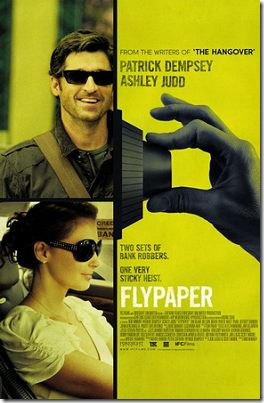
Flypaper

This 2011 thriller tells the story of a man who finds himself trapped in a bank as it is robbed by two sets of criminals at the same time.  The man decides to play detective and tries to figure out what is going on.  This film was on TV during a free trial of some movie channel on DirecTV.  Most of the humor was too raunchy or stupid for me, but it did have some funny parts.  It did have an interesting and engaging whodunit mystery to it, which did keep me guessing until the end, yet still made sense; not an easy accomplishment, so I applaud the writers for that.  I enjoyed the mystery of it.  Fun movie, but the raunchy humor will probably prevent me from ever wanting to watch it again.

raisingarizona

Raising Arizona

I got this 1987 film as part of a blu-ray 4-pack called From the Minds of the Coen Brothers, which was on sale at Best Buy for $20.  The other films included Blood Simple, Fargo, and Miller’s Crossing.  I really just wanted Miller’s Crossing, as it was the only film in the pack I had seen, but I had seen pieces of Fargo on TV and wanted to see that as well.  And $20 seemed like a great value for four blu-rays.  Anyway, Raising Arizona tells the story of a man and wife who can’t have children, so they decide to steal a baby from a local rich man who they think has too many.  Of course you know they’re going to eventually change their hearts and realize that stealing a baby is not OK, but it’s a comedy.  While there were some funny parts, most of it was just too off the wall and far-fetched for me.

bloodsimple

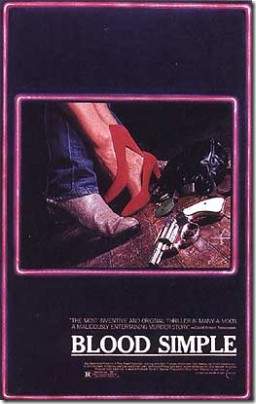
Blood Simple

This 1985 Coen Brothers film tells a story about . . . uh . . . hmmm.  It’s kind of all over the place.  One guy hires a hit man to kill his ex-wife’s new love interest.  But the hit man has plans of his own, as does just about everyone else.  Murder, attempted murder, and evidence cover-ups abound.  I found it more humorous than Raising Arizona, and the story was engaging.  Fun movie.
kevin

We Need to Talk About Kevin

This 2011 film tells the story of a mother’s difficult relationship with her son, and how she copes with life after her son is goes on a killing spree at school.  The premise makes you think the story will explore some pretty tough emotional places.  After all, what leads people to do such horrendous things?  Unfortunately the characters made no sense.  They got mad and angry and sad and manipulative and frustrated for no understandable reasons, which made their actions even less understandable.  It’s as if they were all brooding over doubts on the worth of the point of existing at all, every now and then doing something for the sake of moving the story along.  I didn’t understand this film.

extremelyloud

Extremely Loud and Incredibly Close

This 2011 film tells the story of a middle-grade child who loses his father in the 9/11 tragedy.  He discovers a mysterious key his father left behind, and, as a way of coping with his father’s death, sets out to find what the key goes to.  I enjoyed some things about this film.  I liked the premise, and the acting was good, especially Max von Sydow as an elderly mute.  Unfortunately the emotional impact of the tragedy that begins the story was lessened for me by the disjointed way it unfolds.  Instead of letting us see everything that happens to the protagonist on 9/11, the writers keep important parts of that tragic day a secret throughout the film, until the protagonist reveals it at the climax.  By then, it had lost a significant amount of its potential emotional punch.  Overall, good film, but with some glaring weaknesses.  (Also, somebody destroy that tambourine please.)

humancondition3

The Human Condition – Part 3: A Soldier’s Prayer

This 1961 film is the final installment of the epic trilogy of The Human Condition.  Our main character Kaji escapes from the battlefield and attempts to journey home.  But the country is still distressed by the hardships of war, and Kaji has many battles left to fight, even if not with his gun.  Great (if tragic) conclusion to the great (if tragic) trilogy.

starfighter

The Last Starfighter

This 1984 film is based on the daydream that a popular video game is actually a test for recruiters fighting space battles.  The effects are charmingly cheesy and the story is weak, but there’s a spirit in the film that the filmmakers know this and are making it anyway, because it’s fun.  The biggest story weakness was that the setup takes so long, the protagonist goes to such great lengths to refuse his quest, that when he finally accepts what he must do, it’s time for the film’s climax.  It makes the point of his quest seem unimportant, as if all he ever had to do was push a button.  Boring movie.

silencelambs

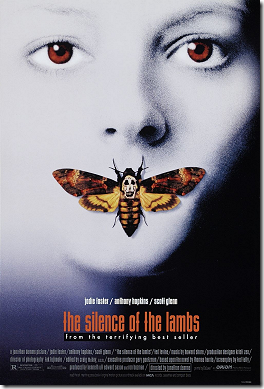
The Silence of the Lambs

This classic 1991 thriller tells the story of an FBI agent who enlists the help of the deadly psychopath cannibal Hannibal Lecter to help her track down a serial killer on the loose.  I found Hannibal’s cannibalism, or at least its portrayal, to be more comic than disturbing, but the other serial killer, and what he likes to collect from his victims, was quite disturbing indeed.  I want to say it was a fun movie, but it was really more disgusting than anything else.

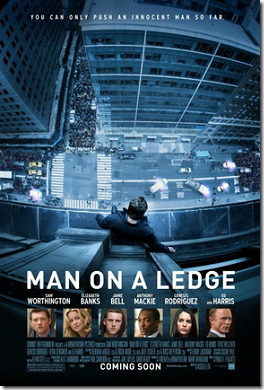
manonledge

Man on a Ledge

This 2012 thriller tells the story of a man who walks out on the ledge of a tall building, appearing to be pondering suicide.  But there’s more to his plan than meets the eyes, as it’s really part of an elaborate plot to clear his name from a crime he was framed for.  It was all kind of confusing and farfetched, but fun, I guess.

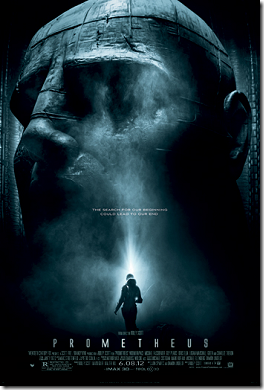
prometheus

Prometheus

This 2012 sci-fi movie from director Ridley Scott is the prequel to Alien, which I have yet to see.  Anyway, a team of scientists land on an alien planet to investigate . . . something.  I can’t remember.  And then, oh no, there are evil alien things that want to kill them!  Oh no!  OK, it was actually much more engaging than I can make it sound.  And the 3D effects, especially the crashing of the spaceship, were quite beautiful to watch on the big screen.  It had a great music score as well.  I’m not sure if the writers are people of faith, but there is a character who is asked why he believes something, and he replies something like, “It’s what I choose to believe.”  If you’re a person of faith and this answer makes sense to you, that’s fine.  But if I were an atheist and asking this question in honesty, the answer seems rather arbitrary, if not circular.  Why not believe something else?  Why is this what you choose?  Can’t you be more specific?  It would’ve been nice if the film had let faith dig a little deeper than settling with what might be understood as an arbitrary choice.  Also, there’s a robot character who claims that lack of emotions make him better able to make good decisions.  Similar to the reason the character of Spock annoys me, I don’t understand this notion.  To make a decision is to have an emotion.  Emotion is an aid to decision making.  I don’t understand the notion that the emotion and decision-making can be or should be divorced, as if emotions are somehow prevented from ever being rational themselves.  Anyway, Prometheus was a fun movie, even if I have philosophical problems with some of the characters.

seventhseal

The Seventh Seal

This 1957 Ingmar Bergman film explores the nature of how man lives constantly trapped in the shadow of death as a man challenges death himself to a chess match when he comes calling.  The premise makes the film sound more interesting than it is, as it really doesn’t explore any deep ethical or philosophical ideas about death.  It just says, “Oh my, we’re all going to die!  Isn’t that interesting to think about!”  Really?  Gee, I never thought of that before!  Still, there’s something fantastically fascinating about making death a character, instead of just some shadowy theme that hangs around in metaphors.  Somewhat fun movie, but mostly boring.

burnnotice4

Burn Notice – Season 4

Finished watching the fourth season of Burn Notice from 2010 on DVD.  Another fun season; the fast paced thrilling action, intriguing villains, creative solutions to messy situations, and fiery explosions remain as addicting as salty potato chips without the side-effects of over-eating.  I look forward to more seasons, whenever I can get my hands on the DVDs.

fargo

Fargo

This 1996 Coen Brothers comedy was darkly hilarious.  A man hatches a plan to have his own wife kidnapped so that his father-in-law will pay a ransom, which he’ll get a cut of.  But things go wrong, of course, people get murdered, and the sweet charming hospitable police woman Marge investigates.  The hilarity lies in the over-the-top situations (oddly the very same reason Raising Arizona didn’t work for me), mixed with the believable acting, from the warm and welcoming Marge to the terribly annoying Jerry Lundegaard.  Great movie.

devilsbackbone

The Devil’s Backbone

This 2001 film from director Guillermo del Toro tells the story of a boy who’s dropped off at an orphanage for boys during the Spanish Civil War in the 1930s.  And, wouldn’t you know it, the orphanage is haunted by a young ghost boy who was murdered by someone working there at the orphanage.  Like del Toro’s Pan’s Labyrinth, while there is some ugly violence to the drama, under the story there’s a peaceful and welcoming assurance that you that as long as your heart is in the right place, the world’s ugliness is really nothing to fear.  Great movie.

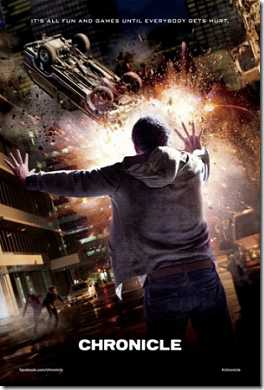
chronicle

Chronicle

This 2012 action comedy tells the story of three teenagers who obtain super powers.  But one of the teenagers is so angsty, that he uses his powers for evil!  While the premise was fun, and the parts meant to be humorous were fun, the overall story didn’t make much sense, as the characters’ motivations for doing things didn’t make much sense (hey, teenagers go to parties, let’s have that).  I think the biggest problem was that the story was told from the POV of a handheld camera, as in Cloverfield.  But, in Chronicle, there’s no reason for it at all.  If you really gained super powers, why in the world would your first thought be to record it all on camera?  It makes many of the elements of the story seem forced as the filmmakers wonder, “Hmmm, how do we work that handheld camera in this scene?”  Disappointing movie.

ran

Ran

This 1985 film was the last epic from director Akira Kurosawa, and starred Tatsuya Nakadai (Kaji from The Human Condition).  It’s very much a retelling of King Lear set in ancient Japan.  A powerful ruler decides to abdicate his powerful position and split his lands between his three sons, who of course do not want to listen to their father for one reason or another.  Battle and tragedy ensue.  As in Kagemusha, it seems Kurosawa loved over-the-top, almost frightening make-up to show his main character’s descent into tragic madness.  The photography was also very flat, like grand paintings, which made the film seem as if you were watching moving illustrations in some history book rather than realistic intimate depictions, but I imagine this is what Kurosawa was going for.  While this film certainly had some great moments, I could hardly stand just sitting there watching the white-faced Nakadai stare blankly at the screen.  Some of the battles also dragged on and on (though it didn’t get as bad as the dying horses in Kagemusha).  Overall, though, fun film.
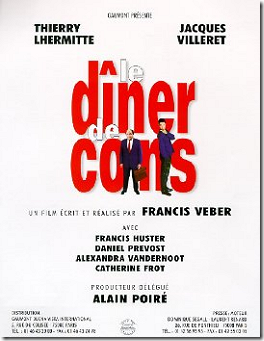
dinnergame

The Dinner Game

This 1998 French comedy tells the story a man who plays a “dinner game” which involves finding someone he thinks is an idiot and bringing him to dinner as a guest so that he and his intellectual friends can make fun of the idiocy of each other’s idiots.  (It was remade in America as Dinner for Schmucks, which I’m guessing was much more raunchy and probably dumber.)  Unfortunately, he never gets to the dinner, as he throws out his back, and his wife leaves him.  And who’s there to help him through the situation?  The idiot he invited inside, of course, who only makes things worse.  Most of the movie takes place on one night in one room as the idiot tries to help the man track down his wife through phone conversations and inviting other friends over, a bit like an extended sitcom.  Pretty hilarious movie.

monkeys

12 Monkeys

This 1995 wacky sci-fi from Terry Gilliam didn’t make any sense.  A man from a post-apocalyptic future is sent back to the past to uncover how a deadly toxin came to destroy much of the breathable air on the Earth’s surface.  And it has something to do with an underground organization called “12 Monkeys.”  It could hardly follow it, or perhaps I just wasn’t interested in trying.

harakiri

Harakiri

This 1962 film from director Masaki Kobayashi (director of The Human Condition) and yet again starring Tatsuya Nakadai tells the tale of a samurai who arrives at an estate and requests to use their courtyard to commit harakiri (suicide consisting of sticking a blade into your gut and slicing open your intestines).  But before he does, he tells the story of why he’s really there, revealing how tragically immoral and hypocritical the warriors of the estate are.  Great film.  (On a side note, the film was remade in 3D in 2011 by director Takashi Miike.  Unfortunately I don’t think I’ll have the opportunity to see it in 3D in theaters, as theaters around here don’t play foreign films, but I would definitely like to see it at some point.  Miike’s 13 Assassins was great, though his portrayal of violence and disturbing imagery is sometimes too over-the-top for me.)

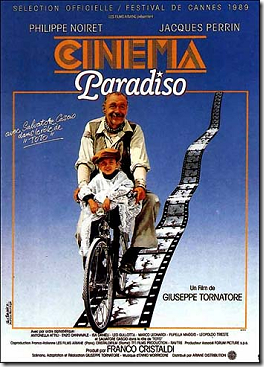
cinema

Cinema Paradiso

This 1988 film tells the story of a young boy who grows up in the 1940s and 50s obsessed with films.  He grows fond of the local cinema’s projectionist, begging to learn how the projector works.  Later, he becomes interested in making his own films, but remains close friends with the projectionist.  The story is great, as is the incredibly beautiful musical score by Ennio Morricone.  Great movie, and I think the ending scene, even if a bit predictable, is the best ending of any film I’ve ever seen.

rublev

Andrei Rublev

This boring film from 1966 tells the story of artist Andrei Rublev as he struggles with his life and faith in the poverty and violence-filled 15th century medieval Russia.  While most of the film was rather boring, I admit I was on the edge of my seat watching to see whether or not the giant bell they make near the end of the film would work or not.  But the rest of the film was rather boring.  Now and then there were some interesting religious and philosophical discussions, but nothing mind-bendingly engaging.

west

Once Upon a Time in the West

This 1968 spaghetti western from director Sergio Leone tells the story of a woman who inherits a piece of land which is worth a great fortune due to its location.  Gun battles ensue over twisted plots of killing or protecting the landowner.  Another great score from Ennio Morricone.  While the pace was sometimes slow, I thought if it was any faster it might’ve been hard to understand the constant twists and turns of the long story.  Great film.

z

Z

This 1969 French political thriller tells the story of the aftermath of the assassination of some important politician (yeah, I don’t know my world political history).  While the film makes you want to see the assassinators caught and the conspiracy uncovered, it doesn’t bring you to the edge of your seat about it.  It reminded me a bit of The French Connection, in how the story is told with handheld-ish documentary-style cameras, running through the streets alongside people.  Overall it was kind of boring.

brave

Brave

Pixar’s new 2012 film tells the story of a princess who, in typical princess fashion, doesn’t want to marry any of the uncharming princes offered to her.  But the real story begins when she accidentally puts a magical curse upon her mother, and must strive to break the spell and mend their relationship.  Unfortunately, the story was a bit of a mess, especially for Pixar’s usually high standards.  The main problem was lack of focus.  The conflict starts out as a princess battling a fate forced upon her, then turns into a relationship conflict.  Add in a magic system that makes little sense and some characters that have no personality and only speak for comic relief, and the end result is a bit of a hodge-podge.  Despite the mess, there are some nice heartfelt moments.  Finally, the title makes no sense, as bravery is only a thin thread of a theme in the film.  The original title, The Bear and the Bow, fits much better, in my opinion.  (You can go ahead and hire me as a creative executive, Pixar.)

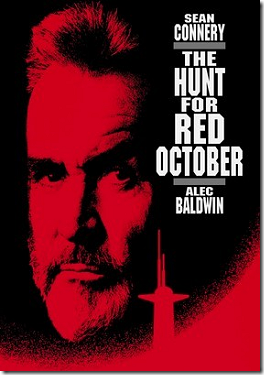
redoctober

The Hunt for Red October

Based on the Tom Clancy novel, this 1990 thriller tells the story of the Soviet captain of a submarine called “Red October.”  He abandons his orders and goes rogue.  Now it’s up to Jack Ryan to find out why and prevent a war from starting when both nations are already on edge.  Fun movie.  It also has a great music score.

magician

The Magician

This 1958 film from director Ingmar Bergman once again stars Max von Sydow, this time as a mysterious magician.  When he and his troupe are investigated for fraud, the magician must prove what his acts are all about.  It reminded me a bit of The Prestige; there’s an interesting theme about how artists relate to their audiences, how both artists and audiences know it’s all a trick, but art is about letting oneself be manipulated for the sake of experiencing emotions.  Great film.

usualsuspects

The Usual Suspects

This 1995 movie tells the story of . . . oh, who cares?  This movie was dumb.

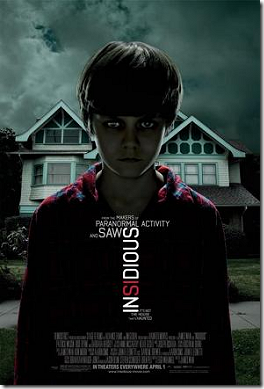
insidious

Insidious

This 2011 horror thriller tells the story of a kid who slips into a coma while something strange and mysterious begins haunting his family’s new house.  Things go from cheesy to ultra-super-cheesy when it is revealed just what is haunting the house and how to set things right.  But it was so ridiculous, that it was actually somewhat fun to watch.

terminator

The Terminator

This classic 1984 film tells the story of the infamous killing robot and the victim he pursues, the famous Sarah Connor.  How this ever became popular, I don’t know.  I reckon the sequel elevated its status?  This is really a cheesy, poorly written piece of slop.

orphanage

The Orphanage

This 2007 thriller tells the haunting tale of a woman who lives in a house that used to be an orphanage.  One day, her son tragically goes missing.  To find him, the woman will have to uncover what happened to the children of the orphanage.  This is one of the few ghost stories I’ve found to be both genuinely creepy and heartfelt at the same time.  The other one that comes to mind is The Sixth Sense.  Though quite tragic, this was a great film.

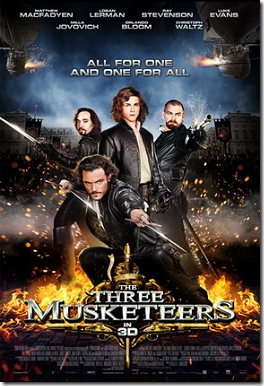
musketeers

The Three Musketeers

I was curious to see how airships would play into the 2011 remake of The Three Musketeers.  But the airships weren’t that epic.  The entire premise for the daring swordfights and sky battles center around . . . getting the Queen’s necklace back so that her husband will not think she’s cheating on him, which, because of other convoluted circumstances, will prevent war.  Not exactly the most exciting plot device to get the conflict going.  But James Corden was funny.

uwm

Unknown White Male

This 2005 documentary follows the aftermath of a young man who suddenly mysteriously suffers from severe amnesia, forgetting almost everything about his life and who he is.  It’s interesting for about ten minutes as one wonders, “Woah, what would that do to a person’s life?”  And then it’s just a bit boring.  Might’ve been more interesting if the filmmaker had waited ten years or so to revisit the young man to see how his life had changed since his amnesia, what sort of friends he kept and what sort of friends he lost, how his personality changed, etc.

artist

The Artist

This Oscar-winning 2011 silent black-and-white film tells the story of a film star who struggles with the film industry’s transition to the “talkies.”  While the premise was fine, it felt like only twenty minutes of story stretched out over an hour and a half, making it extremely boring.  I’m surprised I sat through it.  Too much character brooding.  Boring film.  And, really, if you want to enjoy the novelty of a silent film, watch a real one.  They’re much better.  Filmmakers had to work within the confines of silence; they didn’t use it as a gimmick.

illusionist

The Illusionist

This 2010 animated film tells the story of a young girl who grows attached to a traveling illusionist, who she seems to believe is a real magician.  The illusionist is kind, and is happy to please his biggest fan, but the girl begins to want more and more worldly pleasures.  The illusionist is torn between keeping his biggest fan pleased and happy, or revealing that he’s just an illusionist, and that all his work is just a trick.  Great film.  Certainly not the sort of warm-fuzzy animated film you’d get from America (not that that’s good or bad, only that it’s refreshing to see an animated film with a different tone).

lovelybones

The Lovely Bones

I was curious to see Peter Jackson’s 2009 film based on Alice Sebold’s book.  The film tells the story of a young girl who is murdered and, from beyond the grave, tries to cope with her death and tries to help her family find her killer.  The premise certainly had potential, but unfortunately it seemed like the film forgot its original premise at the end, or didn’t properly set up the conflict the story was meant to resolve.  The films jumps to the killer wanting to not get caught, to the father trying to cope with the tragedy, to the dead girl wondering through the surrealist afterlife trying to figure out what she wants to do now that she’s dead.  It was just a bit too much of a mess.

tsotsi

Tsotsi

I wanted to check out some of director Gavin Hood’s work, as I’m quite curious to see how he’ll handle Ender’s Game.  This 2005 foreign film tells the story of Tsotsi, a poor thief who shoots a woman and steals her car, only to discover a baby in the backseat.  He grows attached to the baby, despite having no means to care for it, and must come to terms with the sorry state of his life.  This could’ve been a powerful movie, but unfortunately the character of Tsotsi was just too evil for me to feel much sympathy for his plight.  He seems to have no remorse over the murders he’s involved in, and seems to have no problem pulling a gun on people and ordering them around.  His tragic childhood and his attachment to the baby do not excuse his behavior.  I suppose he changes by the end of the film, but it wasn’t quite enough for me.  Anyway, after seeing what Hood is emotionally capable of, will he manage to pull off Ender’s Game?  It’s certainly possible, but it’s no guarantee.

business

How to Succeed in Business Without Really Trying

My family watched this 1967 musical on Netflix, so I watched it too.  It tells the comic story of a guy who wants to succeed in business without really trying.  He does this by reading a book and breaking into song every now and then.  Wow.  It was awful.  How did this ever become a popular musical?  The plot is nonsense, the songs seem completely random and rarely progress the story much, and their lyrics are drivel.  But I guess it’s a musical for girls who like preppy guys?

batman

The Dark Knight Rises

Christopher Nolan finished his Batman trilogy with this 2012 installment.  Bruce Wayne is retired and his business, Wayne Enterprises, is waning.  The economy is not so good.  And then comes Bane, physically stronger than Batman, with a terrible plot to destroy Gotham in the most torturous ways he can.  As with all Nolan’s film, this was great, I loved it, definitely a worthy successor to his previous Batman films.  But I still think The Dark Knight is the best Batman movie.  This one is about tied with Batman Begins in my mind.  Overall, fantastic trilogy.  I can’t wait to be able to sit down one day and watch them all one after the other.

So there’s June and July 2012.

Movies watched in May 2012

Here are the films I watched in May 2012.

cronos

Cronos

This 1993 film from director Guillermo del Toro is a bit of a “vampire origin” story.  An old man stumbles upon a “Cronos” device, an immortal-insect powered machine made by a 16th century alchemist.  When someone uses the device by filtering his blood through it, he becomes immortal, and quite vampire-like (he wants to drink blood and stay out of sunlight, for example).  It’s classified as a “horror” movie for its definite horror elements and visuals, but at its heart, like del Toro’s Pan’s Labyrinth, it is really a fantastical drama; the horror elements are not there simply for their own sake.  Fun movie, even while some of the visuals were definitely quite repulsive.

bladerunner

Blade Runner: The Final Cut

I had never seen this 1982 Ridley Scott sci-fi film all the way through before, and the pieces I’d seen on TV were from the theatrical “narrated” version which I couldn’t stand.  The narration was poorly written, poorly performed, unneeded drivel.  So I was happy they made a version without the narration.  It’s certainly a visually stunning film, a very engaging world of night with smoke and rain and neon signs.  The pre-CGI special effects are remarkable.  Unfortunately the story itself was too loose for me; Deckard, as performed by Harrison Ford, needed more personality and drive for his replicant-murder quest.  And the theme of wondering what it means to be human by pondering the nature of replicants is just not a very interesting philosophical question to me; I’ve already thought about it too much myself for such a film to engage me with such philosophical predicaments.  But I can understand why the film seems so iconic.

human

The Human Condition – No Greater Love

This 1959 Japanese film is the first installment of an epic trilogy (based on Japanese novels) directed by Masaki Kobayashi.  This first film tells the tale of Kaji who is sent to supervise a prison camp where prisoners are forced to work in mines.  Kaji works to overturn the injustice he finds there, but meets very few who agree with his moral positions.  The roller coaster of drama often makes the 3-hour film feel more like a TV miniseries than a self-contained story, but it is fantastic.  A great story with great acting and constantly gripping conflict.

ivan

Ivan’s Childhood

This 1962 tragic Soviet film from director Andrei Tarkovsky tells the story of a child named Ivan (who woulda thunk?) who is orphaned by the tragedies of World War 2 and can no longer stand to merely wait on the sidelines.  So he joins Soviet army doing reconnaissance missions as they battle the Germans.  The film features great cinematographic composition, great use of sound (when the sounds and visuals don’t match, but you can tell what the film is “saying”), and great acting.  The story seemed rather sparse to me, which can sometimes be disconcerting for my American-ized tastes, but I think it was purposefully done in this case in the effort of making the film seem more like a bundle of distant childhood memories than a clear-cut this-then-that sequence of events, and from that point of view it is successful.

pirates

The Pirates: Band of Misfits

This 2012 animated feature from Aardman Animations provided some great light-hearted fare after watching those somewhat depressing black-and-white war films.  A glimpse at some non-CGI animation was also quite refreshing, as characters do not move and arc through their motions in the quite the same way.  I love the way stop-motion can feel so much more tangible than CGI, like toys come to life.  While the story itself was a bit too light-hearted for me (The Pirate Captain wants to win the “Pirate of the Year” award – don’t mind me if I can’t quite relate to the gripping conflict that implies), I loved the wild ridiculous humor of it all, and the storytellers did form a well-structured cohesive story out of it.  I had feared the humor would be too cheesy and childish for me.  Some of it was, but some of it was hilarious, and I found myself laughing out loud.  (Though the row of seven or eight children behind me did have some pre-show commentary, such as “The movie is starting!”, I became too engaged in the story of the Pirate Captain to notice whether or not they laughed at all.)  (And I had to laugh at how they changed the “leper-boat” joke to a “plague-boat” (with obvious lepers) joke.  Because you don’t want to offend lepers in a stop-motion film.  Heaven forbid children grow up to be anti-leper, having been encouraged by their youthful watchings of an otherwise harmless animated pirate movie!)  Overall, quite a fun movie.

spartacus

Spartacus

The classic 1960 film from Stanley Kubrick of course tells the tale of the slave Spartacus as he leads an unsuccessfully slave rebellion in the days of ancient Rome.  Despite some rather cheesy fight scenes, love scenes (characters might as well have just said: “You can tell how much I love you by the background music and the twinkle in my eye!”), and effects (bright red paint = blood), the story was great and I highly enjoyed it.  One of the ending scenes very much reminded me of an ending scene in the book The Hunger Games, but seemed much more authentic in how the characters ultimately responded.  Great film.

human

The Human Condition – Road to Eternity

Kaji’s adventures (if they can be called such) continue in this second film from the aforementioned trilogy.  In this film, Kaji is sent to join the army itself.  If he thought things were bad in the prison camp, the army isn’t much better.  This one reminded me a bit of Kubrick’s Full Metal Jacket, in how superiors sometimes treat soldiers so inhumanly and slave-like, it is a wonder any war was able to be fought at all.  I don’t know my history, so I don’t know how much these movies compare to their real-world counterparts, but in terms of questioning the moral obligations of a man in such situations in the context of a story, this film (not Kubrick’s film) does a great job.  Great film.

nausicaa

Nausicaa of the Valley of the Wind

Another animated film from Studio Ghibli and director Hayao Miyazaki, this one from 1984.  This film tells the story of Nausicaa (which looks too much like the English word “nauseous” to me), who is the happy and well-loved princess of a happy community living in the “Valley of the Wind.”  The princess and her happy people live in a world full of evil toxic chemicals that have made certain areas of the world toxic.  Invaders invade the valley, seeking to grow a biological weapon (a “giant warrior”) in their valley which they hope will destroy the toxicity with fire most powerful, but what if it does more harm than good?  Who will save the day?  A pretty princess!  Overall, this one left me scratching my head.  I didn’t understand characters’ motivations, the overall plot seemed too all-over-the-place, and I tend to be annoyed with unauthentic depictions of young royalty being so naturally well-loved by royal subjects.  The depiction of believable fantasy cultures, however, was quite fun.

road

Road to Perdition

This 2002 crime film from director Sam Mendes takes place in the 1930s.  It tells the story of Mike Sullivan (an Italian – just kidding) who works for a mob boss.  When his mobbish ways indirectly get his wife and son killed, he and his surviving son set out for justice/revenge.  (Not sure the line between the two is very easy to distinguish when both parties have already denied certain moral standards.)  A tragic but great film with a wonderful score by Thomas Newman and incredible cinematography by the late master Conrad Hall (who won an Oscar for it).  I had heard someone describe the film by saying “every scene is like a painting” and it’s true.  I especially love the scene in which Mike’s son (Mike Sullivan junior) is spying on his father through a hole near the floor and we watch the scene play out from his perspective.  And the scene in which Jude Law’s character is walking towards the camera and the camera moves closer and zooms out creating the effect of the world warping around him (opposite of the camera moving away and zooming in, popularly used in Goodfellas).  And the scene is which it’s dark and wet and rainy and we still see wonderfully defined silhouettes of mob men as they walk to a dark car before meeting their dark fates.  Worth watching for the cinematography alone.  Great film.

once

Once Upon a Time – Season 1

Not a movie, but I put TV seasons in here too.  Once Upon a Time tells the story of Disney-fied fairy tale characters who are somehow “cursed” into the modern world in an act of revenge, and the only one who can break the spell is Miss Swan.  (Not the MADtv character, which would’ve been more interesting.)  I’m not really a fan of “fairy tales in the modern world!” concept, as I don’t think retelling a story in a different setting is at all creative, but fortunately Once Upon a Time doesn’t quite do that; it simply remakes the fairy tale characters into modern counterparts.  I still found the writing to be a bit too simple, but it seems to be a much more family-oriented show than anything else on TV at that timeslot on a major network.  Disney versions of fairy tales always seem to have something annoyingly unauthentic about them, and the romances in Once Upon a Time are no different.  Still, I find it very interesting to see the storytellers playing with the fantastical elements they’d probably otherwise stay away from; like the cancelled fantasy show Legend of the Seeker, I find these shows inspiring from a storytelling point of view; for me, there are often little nuggets of ideas my story-plotting mind can play with, even if the stories I steal them from aren’t completely engaging.  You know what I mean?  So I’ll keep watching for Season 2.

fringe

Fringe – Season 4

This season of Fringe was not quite as strong as previous seasons have been, but I think it’s because the producers made the over-arching story too complicated and are now trying to answer questions before the series ends with Season 5.  I appreciate that they’re trying to answer questions before it’s too late, but I wish they wouldn’t have made the over-arching story so complicated to begin with.  Now they are paying the price.  It’ll be interesting to see how the series ends, but I think Season 3 was the overall strongest so far (though that animated episode from Season 3 was absolutely awful).

House

House – Season 8

I will miss House.  The last season managed to stay strong despite Cuddy disappearing.  I didn’t much care for the final episode.  It was nice to get the dead characters back, but in the end they raised the stakes so high that the final “joke” was just yawn-inducing.  Overall, though, great season, great series.

judgment

Judgment at Nuremberg

This 1961 film directed by Stanley Kramer tells the story of judge Dan Haywood (played by Spencer Tracy) who travels to Germany after the fall of the Nazi regime to act as a judge in the Nuremberg trials, meant to judge the German judges for crimes against humanity during the Nazi regime.  The film does not try to show how and why racism and the Holocaust were evil (we all know that).  Rather, the film lets us question the role of these German judges.  We know they weren’t saints, but they didn’t directly even know about the Holocaust themselves, so were they that bad?  How bad were they?  For a moment, I was half-afraid the judge was going to make the wrong decision.  Great film.  I especially loved the last lines.  Ernst Janning was one of the judges on trial.  He begs Haywood, the judge, to believe him when he says he didn’t realize so many millions of people would be killed:

Ernst Janning: Judge Haywood… the reason I asked you to come: Those people, those millions of people… I never knew it would come to that. You must believe it, you must believe it!
Judge Dan Haywood: Herr Janning, it came to that the first time you sentenced a man to death you knew to be innocent.

french

The French Connection

I’m tempted to say the real “French connection” was the influence of that handheld camera look that was popular with French filmmakers near that time, but it was based on a book, so probably not.  Anyway, this 1971 crime film tells the true (but fictionalized) story of two police men who uncover and stop a large drug smuggling.  Fun movie, especially with its famous car chase scene (the end of which is completely given away in the film’s iconic poster).

contraband

Contraband

This 2012 film starring Mark Wahlberg tells the story of a ex-drug-smuggler who’s forced back into the world of smuggling to get his family out of danger (which his brother-in-law’s crimes have put them in).  Fun movie.

double

The Double

This 2011 film tells the story of an ex-killer who’s also a government agent investigating himself.  When a younger agent comes close to discovering his secret, he must return to his killing ways and try to find a way out of his deadly predicament.  Another fun movie.

pajamas

The Boy in the Striped Pajamas

The premise of this 2008 film was interesting.  During the Holocaust, a young boy, son of a Nazi official, befriends another boy in “striped pajamas” (or “pyjamas” for foreigners who favour spelling things wrong) – a prisoner in a prison camp who we know is doomed to die.  Some critics have complained that the film’s premise is simply too farfetched.  I can forgive the film that.  But I have three complaints.  Firstly, I don’t think the film explored nearly as many possibilities as it could have.  The film seems to draw (or try to draw) most of its emotional power from us, the audience, already understanding in retrospect how tragic the Holocaust and Nazi racism was.  “Remember how bad the Holocaust was?  Yeah.  Feel that.”  The movie did little to try to create that emotion itself in terms of character relationships; instead we, the audience, must provide it by reminding ourselves how evil those Nazis were.  The film could’ve done so much more with the character relationships.  A wife who doesn’t like what she sees, but turns the other way.  A sister who convinces herself that because her father is a Nazi, Nazis must be a force of good.  A kid in a prison camp who doesn’t understand why he’s being considered an enemy.  The film hardly touched on any of these inner-character conflicts.  Secondly, I’m not sure I agree with this currently popular notion that children are never racists themselves, but are taught to be racists through parental or societal indoctrination.  If that were true, when was racism invented?  I think racism is an unfortunate byproduct of the ways in which humans naturally think (by categorizing things, and labeling things as dangerous, however prejudiced that may be).  In some ways, it is a survival technique (if someone has these traits, don’t trust them) that has become farfetched, irrational, and immoral.  But it can develop in children just as easily as adults; it does not need to be taught.  Lastly, the film just seemed too inauthentic.  Perhaps this relates to my first critique.  Because so many character elements were left unexplored, the characters were left displaying the simplest and most cliché emotions they were capable of, as if the line between good and evil during something like the Holocaust should be as transparent as a battle between a princess and an evil stepmother in a Disney cartoon.  And it’s a very strange combo when you try to mix the weight of tragedy of the Holocaust with the simple and clear morality of Snow White.  Judgment at Nuremberg did a much better job in this regard.  We already know Nazis were evil and the Holocaust was tragic; give us something deeper!  One last critique (with a SPOILER alert): at the end of the film, Bruno sneaks into the prison camp to help his prison friend Schmuel look for his missing father.  How the heck does Bruno think he can help?  How does he know what Schmuel’s father looks like?  It’s such a forced way to get Bruno into the camp that what ends up happening to Bruno completely loses any dramatic power it may have had.  Ultimately this film failed to live up to its potential.

gandhi

Gandhi

“They may torture my body, break my bones, even kill me.  Then they will have my dead body.  Not my obedience.”  This 1982 film from director Richard Attenborough truly spared no expense.  (I had to.)  It obviously tells the story of Gandhi.  While one film, even a three hour one, can only scratch the surface of Gandhi’s work, the film does a superb job of portraying “Gandhi’s best moments” while stringing together a coherent and engaging life-encompassing story.  While I thought Ben Kingsley looked rather odd in his Indian make-up throughout the film, his acting was (as it always is) pretty much perfect.  The cinematography, the writing, the music – everything came together wonderfully for this film.  While I don’t agree with all of the Gandhi’s philosophies (at least as they are portrayed in the film, or maybe I just misunderstand some of them), this was certainly a fantastic film (and it looks great on blu-ray).

Explorations in cinema shall continue, I hope.

Les Miserables teaser trailer

A teaser trailer for the upcoming film version of the popular musical Les Miserables came out recently:

My comments:

This is only a teaser, so it’s hard to know how representational these little glances will be of the finished product. I see some things I like, and some things leave me scratching my head.

We don’t get much in the way of music, which is too bad, since this will be a musical after all, but it’s only a teaser. I don’t like how I Dreamed a Dream begins with no instrumental accompaniment at all; it sounds empty. And even when the instruments do come in, the voice and the instruments just don’t mix right; the voice is too “small” as if she’s singing to herself in a small room. It sounds like it was amplified in post so that it would not be drowned out by the orchestra. (“But the tigers come at niiiii….” Pronounce your T’s, woman!) I hope this sort of recording is not representational the style of sound we’ll hear in the movie, or it will be truly awful.

As for camera work, some shots look fantastic and amazing, others look very bizarre. Wobbly documentary-style wide-angle close-ups look very odd to me if I don’t understand the shot’s context. (Is it a character’s POV? Is it part of a long shot?) I’m also not a big fan of the tilted camera, but, again, it depends on the context; the tilted shots featured in this trailer make me fear the camera tilt will be overused. However, the wide-angle shots panning the barricade, tracking people walking the streets, or looking straight down on the factory workers look brilliant. Regardless of whether or not all these shots will work in the context of the film, I think we’re in for a visual feast.

Guillermo del Toro on children in horror stories

cronos2

I recently saw the 1993 film Cronos directed by Guillermo del Toro (director of one of my favorite films, Pan’s Labyrinth).  Re-watching the film with the director’s commentary, I thought what he said about children in his horror movies was particularly interesting.

I also like what he says about the “innocence” of childhood.  I can’t remember if I’ve mentioned it on this blog yet or not, but I am not a fan of the phrase “the innocence of childhood” as if children can’t be guilty of something just because their worldview might be more inexperienced.  (Similarly, I don’t like the phrase “coming of age” – as if there exists a psychological transition from childhood to adulthood that’s as radical or as clearly defined as puberty, or some other cultural rite-of-passage.  But that’s a different subject.)

On an unrelated side note, I didn’t realize until re-watching Cronos that the child in the movie only has one word of dialog, and is completely silent throughout the rest of the film.  For some reason, I didn’t even notice this at all in my first viewing.  Weird.  I guess that’s a testament to how well her emotions and thought processes are captured without dialog, which I think is a sign of masterful filmmaking.  Or it might be a testament to how completely oblivious I can be.

Anyway, here are the words of Guillermo del Toro:

I love children in horror stories.  Why?  Because I think that the horror tale, or the horror genre, is a logical continuation of the fairy tale.  The fairy tale was, in its origin, a very moralistic tale that was usually done to teach children principles of behavior.  They would be told that if they wondered alone in the woods they would be punished by having a witch try to boil them and eat them, whatever… that if you were lazy and you didn’t build your house of bricks, in would come a wolf that would tear it down… and all these moralistic principles.

Out of which came a far more fantastic, for more anarchic type of fairy tale where, by product of these moralistic lessons, that children became main characters.  They were given their own subgenre.  And out of these fantastic creatures I believe came a branch where the witches and the ogres and the goblins became more and more central to the story and became actually horror tales.

And in these horror tales, if you are going to talk about the darkness, it is central that you talk about the purity.  I’m saying "purity" and not "innocence" because I don’t think children are innocent in the moralistic way they are viewed.  I think that children have a very complex emotional component.  I remember my incredibly troubled first seven or eight years as being an incredibly rich landscape of angst.  I jokingly say that I was seventy by the time I was seven, and now that I’m thirty-eight, I’m finally getting to be young because I suffered so much as I kid, my mind was an ever-boiling little inferno.  And I try to do kid characters that react and interact with the horror stuff in a different and more complex and more natural way than the adults.

I think that children have this powerful possibility in horror tales to be sort of a white center of purity in the middle of the tale.  They are not only the greatest witness, but also the greatest access for the human spirit.  They really root the tales in humanity.

Movies watched in April 2012

Continuing my explorations in cinema, here are the movies I watched in April 2012:

intime

In Time

Being a fan of Andrew Niccol’s previous work, The Truman Show and Gattaca, I was looking forward to seeing this movie from 2011.  In the future, humans have figured out how to stop aging.  But to prevent overpopulation, artificial limits are put on a person’s lifespan, and time left to live becomes a trading commodity, replacing money.  The poor die young while the rich can live forever.  Like Niccol’s previous work, the movie featured wonderful writing, good acting, and an engaging story.  Great film.

cinematographer

Cinematographer Style

Thought I might learn something about cinematography with this DVD from 2006, though it’s just a bunch of talking heads.  Absolutely no examples from actual films at all.  Still, some of the interviews were very interesting, especially the ones with Vittorio Storaro and Gordon Willis.

sundancekid

Butch Cassidy and the Sundance Kid

I had seen a bunch of bits and pieces of this film since it’s so iconic, but never saw the whole thing until this past Easter Sunday.  And it definitely lived up to its iconic status; I loved it.  Great mix of humor and tragedy.  And of course the “Raindrops Keep Fallin’ On My Head” song is insanely catchy.  Though I was familiar with the song previous to watching the film, the spirit of the film and the song match so well, watching the film makes the song even more catchy.  The blu-ray also featured some great commentary tracks and a deleted scene (with lost audio) in which Butch and Sundance watch themselves get killed on a newsreel in a theater.  I don’t know why they deleted it; I think it would have fit wonderfully in the film.

kundun

Kundun

This 1997 film by Martin Scorsese tells the tale of the Dalai Llama.  I guess it was educational.

titanic

Titanic 3D

I was curious to see how James Cameron’s insanely successful film from 1997 would look in 3D (I love 3D), and it was an extremely impressive conversion.  I can’t imagine all the insane amount of work that must’ve went into it, but it was hard for me to tell it was a conversion.  The only scenes that looked a bit odd were the ones in which a night sky full of stars was the backdrop.  It just looked too close to the foreground, as if the actors were acting in front of a poster-board with stars painted on it.  It did not look like the stars were far in the distance.  As for the story, I had never actually seen the first half of the film, didn’t know anything about how Jack got on the ship or what the story with the jewel was all about.  Geez, that romance was corny corny corny.  Is that really the sort of guy women want?  Bleh!  Oh, and of course every time I saw the captain I thought: Theoden King!

realsteel

Real Steel

This film from 2011 tells the story of an alienated father and son trying to find a way to relate to each other through the training and fighting of giant boxing robots.  The story is based on an old sci-fi short story, not the boxing head-popping robot toys.  The special effects were amazing, and it was refreshing to see a heartfelt story behind the action.  Fun popcorn movie.  But they certainly didn’t explore all the possibilities the premise of fighting robots could provide; it will be interesting to see if they create a sequel or not.

startrek

Star Trek

I hate Spock.

godfather2

The Godfather: Part 2

I very much enjoyed this famous 1974 sequel.  Again, I had seen many bits and pieces of the film before, but never the whole thing all the way through.  It was a great film; one of the few sequels better than its predecessor.

burnnotice

Burn Notice: Season 3

OK, it’s not a movie, but I have been watching Burn Notice DVD’s lately, and recently finished Season 3 from 2009.  Great show.  I’m too behind to watch it on TV, but I’ll keep watching the DVD’s when I can.

totoro

My Neighbor Totoro

I’m continuing to catch up on Studio Ghibli’s famous films, essential viewing for animation fans.  This film tells the story of two sisters who discover magical creatures in the woods behind their house who help them, in a way, cope with their mother’s illness.  Great film, full of a believability and spirit you don’t see in many of today’s animated films that are instead full of pop-culture reference gags.  (Though I still enjoy a good pop-culture reference gag.)

warhorse

War Horse

This Spielberg film from 2011 tells the tale of a horse who is “recruited” for war while the boy who raised him wonders whether or not he’ll ever see him again.  A great movie for people who think horses can feel human emotions.  I myself must admit that I am a blatant equusist; I am prejudiced against horses.  I don’t think they can have human emotions.  So it was very hard for me to relate to the horse’s war struggles.  I certainly don’t think there’s anything wrong with a human loving an animal (I know I quite loved my dear dead dog Patches), but I don’t like the idea of love for an animal being romanticized on the level of intra-human love in the context of a film’s story.  Does that make sense?  It’s a similar problem I had with Spielberg’s A.I.; I just couldn’t feel a relatable emotion with a little robot kid who doesn’t have real emotions in the first place.  And in War Horse the Germans, of course, spoke English with accents during the war, don’t you know?  Because Heaven forbid an American should have to read subtitles!

kagemusha

Kagemusha

This Kurosawa film from 1980 tells the story of an impersonator who replaces a dead emperor during dangerous times as old Japanese kingdoms battle each other.  After watching Kurosawa’s Ikiru a couple months ago, it was nice to see a film of his that was more epic in scope, and Kagemusha did not disappoint.  Great film.

visionsOfLight

Visions of Light

This documentary from 1993 about cinematography actually had examples from movies!  Woohoo!  Great stuff, but it still wasn’t as educational as it could’ve been.  It would be nice to see a documentary in which a cinematographer actual goes through the steps he takes to make his creative decisions instead of just looking at a bunch of final products and saying how good they are.  Still, this DVD was educational and even inspirational.

becket

Becket

This 1964 film tells the story of Thomas Becket (played by Richard Burton) who is friends with King Henry II (played by Peter O’Toole).  The King appoints Becket to be Archbishop of Canterbury in hopes that, because they’re friends, he’ll have a bit more control over that position.  But Becket ultimately has different religious beliefs than the King, and their friendship begins to rip apart.  Though some of the film feels a little dated and fakey by today’s standards (nice cardboard crown there, Henry), the story was engaging.  I didn’t think the writing was so great; the characters seemed too blatant about their emotions, and too long-winded when it came to expressing them, like some classical play.  But I guess that’s because it was adapted from a play.  But with a film, I think you can show an emotion much more effectively just by a look in a character’s eye, the way the shot is framed and colored, and what sounds accompany the picture.  No need to say anything sometimes.  But Becket won the Academy Award for Best Adapted Screenplay.  Heh.

towerheist

Tower Heist

This movie from 2011 tells the story of a guy who works in a tower.  A bit like in Fun With Dick and Jane, his boss is arrested for something scammy, and it seems the guy and his working pals who had all their savings in the boss’s company may now go bankrupt.  So they decide to break into the boss’s apartment, find where he’s hiding all his money, and steal it!  The humor was a bit hit or miss for me (some of it seemed too forced), but overall it was quite funny.

casablanca

Casablanca

I had never seen this classic film from 1942 before.  Still, I knew many of the famous lines.  And maybe that’s why they didn’t quite work for me.  I had heard the famous lines so many times before, it felt like they were just being recited.  Overall, it was a good well-written movie, but I don’t know why it became such a huge classic hit.  I didn’t think it was that incredible.

castle

Castle in the Sky

Another Miyazaki film from Studio Ghilbli, this one from 1986.  The movie tells the story of a boy and a girl with a strange magical necklace thing who set out in search of a legendary floating island called Laputa.  I think I would enjoy any adventure film with castles and airships; they really set off my imagination.  So far, of the ones I’ve seen, this is my favorite film from Studio Ghilbli.  Loved it.

moviesold

The Greatest Movie Ever Sold

This documentary from 2011 was weird.  It was supposed to be about the product placement in movies.  But the filmmaker, Morgan Spurlock, decided it would be neat if the documentary itself was funded entirely by companies in exchange for product placement.  The result was a rather empty film.  It was like an ad that just advertises itself.  What’s the content?  The content is the ad itself!  Er, OK, what?  The pitch meetings were interesting to watch, but the documentary as a whole didn’t make much sense to me.

raymond

Exporting Raymond

This documentary from 2010 follows Phil Rosenthal, the creator of Everybody Loves Raymond (one of my favorite sitcoms), as he travels to Russia to help them adapt his sitcom for their country.  Hilarious film, and very interesting to see how the TV business works in Russia.

So that’s, what, 19 this month?  Movies rewatched this month include: 13 Assassins, The Truman Show, and The Prestige.  Explorations in cinema continue this May, I hope.

The Graveyard Book to be animated?

graveyardb

I still haven’t read Neil Gaiman’s The Graveyard Book. It’s been on my “to read” list for a while.  I did read Gaiman’s initial short story the book is based on, which appeared in some magical-themed anthology, and thought it was fantastic.  It featured a wonderful premise that felt both spooky and heartfelt at the same time: an orphan child of a murdered family is raised in a graveyard by ghosts.  There are so many exciting possibilities with such a premise.  Anyway, not long after the book came out and won the Newbery Medal and the Hugo Award, the film rights were optioned.  But it never seemed to move forward.

But according to this recent article:

Disney just made a high six-figure deal for The Graveyard Book, the bestselling children’s title by Neil Gaiman.

OK.  Progress.  Good.  But here’s the news that really excites me (if it’s true):

I’ve learned that Henry Selick, who helmed Gaiman’s Coraline, is now attached to direct The Graveyard Book at Disney.

So will The Graveyard Book become a 3D stop-motion animated feature, like Coraline?  Wouldn’t that be awesome?  We’ll wait and see.  I’m looking forward to it!

Movies I watched in March 2012

Here are all the movies I watched in the month of March.  Well, some are actually from February, but I didn’t do a post for the films of February, so they’ll just have to be included here.  I don’t actually watch a movie every single day.  I wish.  (A star (*) denotes movies I re-watched.)

breathless

Breathless

This 1960 French film is often touted as a very influential film.  I’ll agree that it was ahead of its time, because it was like a bad YouTube video.  It tells the tale of a young man who kills a cop, and the rest is pretty much filler.  I just didn’t get it.  And the jarring cuts are annoying, as even in these YouTube days, they draw way too much attention to themselves.  Maybe with the lack of an interesting story, that’s OK?

badbeautiful

The Bad and the Beautiful

This 1952 film starring Kirk Douglas tells the tale of a film producer who alienates his best friends in the pursuit of his craft.  While it may not be entirely accurate in its depiction of Hollywood’s inside (not that I would know), it makes some interesting points on the creative philosophy of the business.  Fun movie.  (I don’t know why the poster makes it look like a romance.)

arrietty

The Secret World of Arrietty

This came out in Japan in 2010, I think, but it just came to US theaters last month (though I prefer subs to dubs).  It’s based on those “Borrower” books that American audiences should already be familiar with from other adaptations.  This was a wonderful film, full of a simple honesty and reflectiveness that is lacking in so many of today’s fast-paced bing-bang-boom-zip let’s-be-funny-with-randomness animation.  Great movie.

beauty

Beauty and the Beast 3D

The first film I ever remember seeing in theaters was either Disney’s Beauty and the Beast or An American Tail: Fievel Goes West when I was five or six years old.  They both came out in November 1991, so which one I saw first, I don’t know.  Theaters were so big back then.  Anyway, I didn’t want to miss the chance to see the film again in 3D.  The result?  Meh.  The backgrounds looked awesome in 3D.  The characters themselves looked a bit wonky.  But I guess I was prepared for that after seeing The Lion King 3D.  Still fun to see it in theaters once again.

emperor

The Last Emperor

This 1987 film tells the tale of . . . that guy.  I forget his name now.  You know, that last emperor of China.  Except he never really had much power; he was a figure constantly being used by other forces as a symbol.  Not a very fun life.  An interesting movie; educational, at least, if one can be forgiven for not remembering Chinese names very well.

illusion

The Grand Illusion

This 1937 French film from director Jean Renoir tells the story of a prisoner escaping from prison during World War I.  It was quite a good movie, even if its depictions of war probably now seem dated after the horrors of World War II.  Great camera work as well.

children

The Children Are Watching Us

Here’s another great tragic tale from Italian director Vittorio de Sica.  Along with Shoeshine and Bicycle Theives, I think de Sica has a little trilogy of tragic masterpieces.  This 1947 film tells the story of a couple’s marriage falling apart from the point of view of their child, who perhaps doesn’t quite understand everything, but can piece together enough to understand the tragedy of the situation.  Tragic but great film.

angrymen

12 Angry Men

This popular 1957 film was boring.  I just don’t get why it’s so popular.  A bunch of people sit around a table and talk for a while.  I guess what they say should be deemed philosophically important and we can pat ourselves on the back for understanding how wrong prejudice is, but storytelling-wise it makes for a boring film.  They could’ve portrayed the same themes much more dynamically.

empty

Running on Empty

Another film from director Sidney Lumet, this 1988 film starring River Pheonix tells the story of a prodigious piano player who’s family is on the fun from the law.  When River’s character falls in love, it creates quite a difficult situation.  I thought the story and acting were great, but something about the way it was shot and edited makes it look like an old cheesy made-for-TV film.

sunday

Sunday in the Park with George

This really isn’t a film, it’s a recording of the 1985 musical with music and lyrics by Stephen Sondheim, of whom I became a fan after discovering Sweeney Todd back in 2007.  I knew a lot of the songs from the musical from the album, but I didn’t know how they all fit together until I saw this recording.  Great show.  The songs Finishing the Hat and Move On awesomely describe some of the struggles of the creative process.  All artists should check out the musical.

logansrun

Logan’s Run

This 1976 sci-fi film is quite cheesy by today’s standards, but there’s something rather charming about that.  If it weren’t for pointless use of nudity.  Anyway, great score by Jerry Goldsmith.

hugo

Hugo*

I had to rewatch this Martin Scorsese film for a third time when it came out on blu-ray.  It does not get boring; to me, it really inspires creativity.  I especially love getting to see some old Melies work in 1080p.  The movie’s not as good in 2D though.  Oh well.  Still a great movie to have on blu-ray.

rulesofthegame

The Rules of the Game

Another film from Jean Renoir, this one from 1939.  I can’t say it really has much of an effect from my cultural view.  Interesting use of rabbit-killing though.

lorax

The Lorax

A guy cuts down trees (which I don’t think would be capable of photosynthesis anyway), and runs out of trees because he’s not thinking long-term.  Problems ensue.  This 2012 animated film was interesting, I guess.

boys

The Boys: The Sherman Brothers’ Story

It seemed like a good time to watch this 2009 documentary after Richard Sherman passed away.  (Yes, I did know who they were before he died.)  Great and insightful documentary.

primrose

Evening Primrose

A made-for-TV musical from 1966 with songs and lyrics by Stephen Sondheim.  The music was great.  The story was rather bizarre.

thx

THX 1138

I’ve been wanting to see this film from 1971 for a while since it was George Lucas’s first feature.  It tells the story of THX 1138, who decides to escape from the world of his mundane controlled dystopian life.  I must say, unlike Logan’s Run, it does not show it’s age quite so much.  Of course, part of that is because it’s been touched up; Lucas likes to touch up, you know.  But even so, the story and the way it’s told feels much more real than the other sci-fi features from that time (not that I’ve seen very many).  And I’ll resist the strong urge to make a Jar-Jar Binks joke at this time.

pathsofglory

Paths of Glory

From 1957, this Stanley Kubrick film tells the story insane stupid war-leaders making insane stupid war decisions, and then punishing the soldiers when they don’t obey.  It does raise the age-old soldier-philosophy question: when is it right and wrong to disobey orders?  But instead of exploring that question, the film just shoots you in the face because war is bad.  Thanks a lot.  I used to think war was good, but now I understand the truth!

aurevoir

Au Revoir les Enfants

Warning: there be spoilers ahead.  This French 1987 film tells the story of a young student, Julien, at a Catholic boarding school in occupied France.  The school brings in a few Jewish students to hide them from the Nazis, one of them named Jean.  Julien and Jean slowly form a friendship.  And here’s the spoiler, if you’re still reading: at the end of the film, the Gestapo raids the school and captures Jean, several other Jews, and the head of the school who hid them there.  You never get to see what happens to Jean, but as the Gestapo lead him away out the gates of the school, the narrator says something like: “That was the last time I saw Jean.  He died in Auschwitz.  I never forgot that day.”  As an audience member, I didn’t need to be reminded of the horrors of Auschwitz for that to be perhaps the most tragic and depressing ending of a World War II film I’ve ever seen.  The entire film forms such a strong and realistic friendship between the characters that just seeing one of them being led away, and you know they he doesn’t realized he’s being sent to his death, and then being told he died in Auschwitz . . .

xmen

X-men: First Class

From 2011.  I was curious.  I’m not curious anymore.

dreamhouse

Dream House

A man moves into a house with his wife and daughters and then learns it might not be real.  Is he just imagining things?  Are his wife and kids really dead?  Did he murder them?  A fun psychological thriller from 2011.

bridge

The Bridge on the River Kwai*

I bought this 1957 film on blu-ray a few months ago when it was on sale at Best Buy.  I had already seen it a few years before on DVD.  A great film, and looks great blu-ray.

umberto

Umberto D.

Another film from Vittorio de Sica, this one from 1952.  An old poor man does stuff.  I didn’t really get it.

youth

Youth Without Youth

This is a Francis Ford Coppola film from 2007 starring Tim Roth.  A man gets struck by lightning, becomes young again, and gets the sorts of special powers I think we all wish we had.  The movie gives you a lot to philosophically think about, even while the story itself was too bizarre for me to really understand.  I mean, I understood what was happening, I just didn’t always understand the why.  But an interesting film.

abduction

Abduction

From 2011.  A young man discovers his parents are not his parents after a life of not realizing they don’t even look alike.  He must then go on the run as bad people with guns chase him to try to abduct him because his real father is out there and would not want him to be abducted and oh what a complicated mess!  The rest of my family was watching it so I stuck around and watched it.  And now I have watched it.

trespass

Trespass

This was also from 2011, starring Nicolas Cage.  Some bad guys with guns trespass into a guy’s house, hoping to steal his jewels.  But does he even have jewels?!  Watch and find out!

cuttingedge

The Cutting Edge: The Magic of Movie Editing

This documentary from 2004 discusses the art of film editing.  A good documentary for those interested in the subject.  The Walter Murch excerpts are particularly informative.

bonnieandclyde

Bonnie and Clyde

The 1967 classic looks great on blu-ray.  The violence is nothing by today’s standards, but I think the overall story still stands, and the editing and acting are wonderful.

spiritedaway

Spirited Away

Been wanting to see this 2001 film for a while, and I like that the DVD had the original Japanese audio as I hate listening to dubs.  A girl gets trapped in a mysterious spirit world.  Another genius film from Studio Ghibli.  Gotta love it.  Wonderful food for the imagination.

m

M

A 1931 German film with Peter Lorre directed by Fritz Lang.  A child predator is on the loose, and the police aren’t the only ones who want to catch him.  Really amazing camera work for a 1931 film, and it looks fantastic on blu-ray.

So, 30 films.  Good stuff.  The explorations in cinema shall continue, I hope.