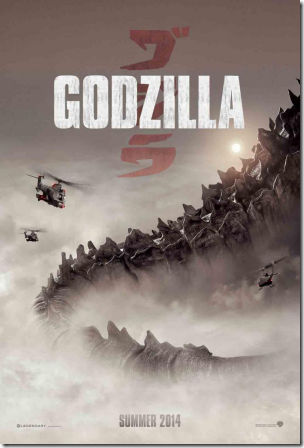
This teaser trailer for a new upcoming Godzilla movie was recently released. Looks like fun! Coming summer 2014.

This teaser trailer for a new upcoming Godzilla movie was recently released. Looks like fun! Coming summer 2014.

Link: The Awakening
Summary: A woman who debunks ghost myths investigates a boarding school said to be haunted by an evil ghost child, hoping to help calm the frightened boys there. But when it becomes apparent that this ghost is quite real, she realizes she’ll have to find a different way to end the school’s haunting.
Thoughts: Grrr! This film made me angry. It had a lot of potential. It feels like the filmmaker’s spark of inspiration was something special. But it’s completely ruined by a horribly plotted ending. A huge chunk of backstory exposition has to be suddenly introduced for the ending to make sense, and it’s all just so out-of-nowhere that the emotional power of the ending is squashed completely. The brain has to process too much information too suddenly that the otherwise powerful emotion it would have evoked is destroyed. It makes me angry because it would have been such an awesome, tragic, powerful, beautiful ending if it had only been set up right. That said, I’m not sure how I would fix it. It would be very tricky. Certainly, the huge chunk of backstory that is revealed at the end would have to come much sooner, perhaps at the very beginning of the film as a prologue. Perhaps I’d make it more like The Devil’s Backbone and reveal the nature of the ghost in the first act. I don’t know. I’d have to play around with the possibilities. Anyway, the film had some other weaknesses as well, but the nature of the film’s climax is my biggest complaint, especially as I think the idea they were going for is so awesome. They just did it ineffectively.
The film did have some strengths. I enjoyed the look and feel of the film, the historic atmosphere. For some reason, that historic era just seems more ghostly in and of itself. The story would not at all have worked in modern day. There are some genuinely creepy moments that work wonderfully, especially the jump moments. Those are always a bit hit-or-miss for me in these sorts of films, but they worked really well in this film. The music was great, especially its use of choirs. And overall, the story manages to stay engaging throughout, even if the ending is messed up.

Link: Only God Forgives
Summary: An ex-gangster seeks revenge on the evil man who killed his brother.
Thoughts: While the film has a very unique look and feel to it (and it’s refreshing to see somebody shoot some decent action sequences without having to shake the camera), it ultimately falls flat because the story is slow and full of bland characters. The ambiguity of the characters’ backgrounds and motivations could’ve been forgiven if there were more to the story, or the simplicity of the story could’ve been forgiven if there were more to the characters. Without either, we’re not left with enough material for a film. There are too many ambiguous scenes that only try to evoke visceral reactions without actually moving the story forward.
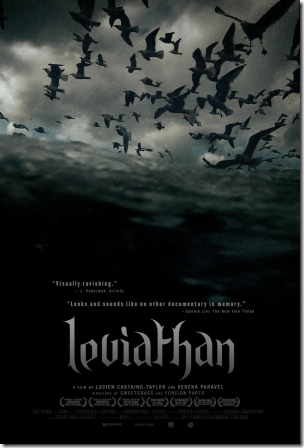
Link: Leviathan
Summary: A collection of random visuals from a modern fishing boat.
Thoughts: This film called itself a documentary, but there’s not much to see or to learn here. All the filmmakers did was get on a fishing boat, put the camera here, record random stuff for a few minutes, then put it over there, record for a few minutes, etc. Half the time it’s hard to even figure out what you’re looking at. The best you can hope for is falling into a meditative stupor. (Hey, look, the poster uses that font…)

Link: The Wall
Summary: A woman finds herself trapped in a valley by an invisible wall.
Thoughts: I’ve seen some pretty terrible and boring films this year, but this film managed to find new depths of inanity I did not know were possible. After finding the wall, the main character quickly realizes she will have to live off the land all by herself, which she is fortunately very proficient at (unlike Tom Hanks in Cast Away, who actually has to figure things out). She doesn’t explore the strange phenomenon of the invisible wall all that much, other than feeling it with her hands and then deciding to smash her car into it (she may know how to grow crops and hunt, but she’s also stupid). The entire film then consists of images of her surviving on her own while she narrates, trying to wax philosophical and romantic about her relationship with the world and the human condition, with the philosophical depth of a fourth grader. Her thoughts include ideas like: “I think mankind is the only creature for which right and wrong exist.” “Maybe humans are the most pitiable creatures because we have enough intelligence to try to resist the natural order.” “Does time move, or do we move through time?” These may be interesting philosophical subjects in and of themselves, but if I were interested in pondering these things, I’d read a book by a philosopher who thought about these things in some depth. I watch films for a subtler sort of introspection. When it’s just a narrator mentioning these things in passing while I watch her character walk across a landscape doing nothing, what’s the point? In the end (spoiler alert), she never escapes or finds out anything about the mysterious wall. She just says something she thinks is poetic and looks out a window, hoping viewers will give her credit for being so contemplative.

Link: Eyes Without a Face
Summary: A surgeon kidnaps women and cuts off their faces, grafting them onto his disfigured daughter, hoping for successful face transplant.
Thoughts: Although the summary sounds disturbing, this film was made in the 1960’s. The make-up is super-cheesy by modern standards. How do you make it look like a young woman has no face? Apparently by squiggling dark crayon all over it. But maybe the cheesy effects can be forgiven by a compelling story? Nope. There’s really not much more to the story than the summary suggests. There is no subtext, there are no deeper meanings. The dialog is bland. The characters are bland. The whole thing is just dull. Not sure why this is considered a classic or why the Criterion Collection thought this would be a good film to put on blu-ray. The blu-ray’s bonus features include the director’s first film, the classic 1949 documentary Blood of the Beasts, giving us a charming little glimpse into the workings of a slaughterhouse. It’s fun for the whole family! Just don’t eat anything for a few hours before watching.
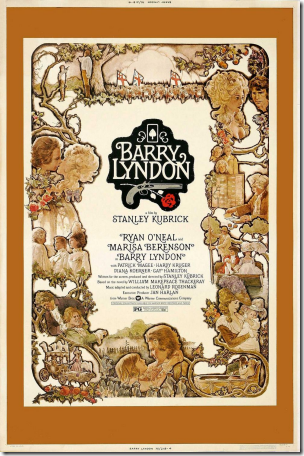
Link: Barry Lyndon
Summary: A young man is forced away from home and ends up marrying into a wealthy family, where, in his foolishness, he squanders his good fortune.
Thoughts: This is a bit of a bizarre film. It doesn’t seem to take itself seriously. I suppose this is true of a lot of Stanley Kubrick’s work. There’s something self-consciously exaggerated about the story and the characters, as if we’re not meant to empathize with the characters, especially in their cruelty, but to view them as peculiar and intriguing specimens who make a wild story possible. Characters are very one-dimensional, yet it works because of how they contrast or compliment one another, like characters from a fairy tale. Visually, the film is nice and painterly, but it does not stand up to the sort of cinematography today’s technology makes possible. Its age is evident. Overall, I enjoyed it, but I think the story and the title character ultimately come across as a bit too dull for the film to share the status of some of Kubrick’s other work, like 2001, Spartacus, and Strangelove.

Link: Drug War
Summary: An illegal drug-manufacturer is caught and tries to avoid the death penalty by aiding police in a high-stakes drug deal sting operation. But is he really helping the police? Or is he only working to subtly sabotage the entire operation and gain his freedom?
Thoughts: Fast-paced and engaging film. Perhaps a little too fast-paced, as I found myself rather confused as to what was going on in the first half hour. Part of that is probably due having to read subtitles and not being used to distinguishing Asian faces very well. (As racist as it may seem to say “they all look the same!”, it’s true; by the end of the film it’s easy, but it’s always a bit of a challenge at the beginning when there are more than a few characters.) Once I had a good handle on what was going on, I very much enjoyed all the plot twists, and the high-tense climactic Scorsese-worthy (or maybe milder-Tarantino-worthy) ending was very satisfying. Overall, I found this to be a very fun action flick.
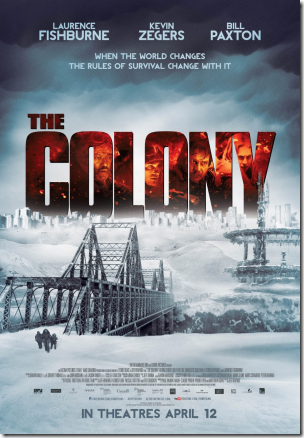
Link: The Colony
Summary: In a post-apocalyptic world of snow, colonies survive in various underground bunkers. When one colony mysteriously won’t answer its radios, men from another colony set out to see what’s going on. The surprises they find may lead to their salvation. Or their doom!
Thoughts: The film starts out OK. The visual effects are nice. The characters are intriguing. The dialog is a bit cliché, but it gets the job done. But when they discover what happened to the mysteriously silent colony, it’s all downhill. Turns out (spoiler alert) that the other colony was killed by zombie-like cannibals. The rest of the film is little more than the heroes battling these animal-like cannibals, and it all feels rushed, repetitive, and empty. And then suddenly it ends. There’s something really off about the structure and pacing that makes the ending seem really abrupt, even though by that time you’re glad it’s over.

I haven’t been a big fan of Disney’s recent live-action fantasy projects, but this teaser trailer is at least intriguing. It’s Robert Stromberg’s directorial debut and is currently scheduled to release in May 2014.
I have begun exploring Jungian archetypes and the role they play in stories. I am currently rereading Christopher Booker’s The Seven Basic Plots: Why We Tell Stories

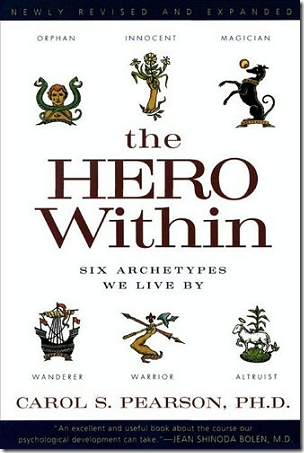
I am a huge fan of a book by Carol S. Pearson entitled The Hero Within, which explores the six archetypes that real-life people embody: the Innocent, the Orphan, the Magician, the Wanderer, the Martyr [or Altruist], and the Warrior. …
While discussing Ms. Pearson’s ideas with my good friend Gilbert Maclean Evans, he pointed out that in every film he could thing of the hero moved through four of the six archetypes from opening moment to final fade. We looked at a bunch of movies and it was true. Every movie, four archetypes. And not only does the hero move through these four archetypes, he or she does so like the proverbial Swiss clock.
The four archetypes are: Orphan, Wanderer, Warrior, Martyr. In every story, the hero moves through these archetypes. In Act 1, he is an Orphan, spiritually if not literally, detached from family or a solid familial support base. In Act 2, he begins as a Wanderer, exploring the world that the story’s catalyst brought about. Half way through Act 2, he becomes a Warrior, fighting for something, again spiritually if not literally. In Act 3, the hero learns to become a Martyr, trusting in a higher power to achieve what he’s after, unafraid of dying in the process. (Sometimes the martyrdom beat is played out by a supporting character, providing the hero the necessary “push” to step into this role himself.)
We see this again and again in stories of all sorts. There’s something about these archetypes and the process of journeying through them that really resonates with us.
So that’s why I’m exploring Jungian archetypes. I’m interested to see if there are any deeper truths to be found in this area, especially in how they relate to storytelling.
So I started reading Pearson’s The Hero Within: Six Archetypes We Live By
Anyway, some of this book seems downright ridiculous. Listing the ways understanding these archetypes can help you, Pearson writes (Pg 29):
[Reason] Seven: Archetypal recognition can help you better understand others and how they see the world.
This seems a rather presumptuous claim, if not self-righteous, especially if it’s in regard to someone you’re in a disagreement with. Reason eight is similar (Pg 30):
Eight: Understanding the archetypal basis for the ways in which people see the world cannot only make you smarter, but also help you see beyond the unconscious bias scholars and journalists often bring to their work.
So not only will you understand others better, you’ll see their unconscious biases! This book seems to encourage readers to form delusions.
Pearson writes (Pg 30):
… if your boss criticizes you nonstop, that may be evidence of the Warrior’s worry that someone may let the team down. He will stay on your case until he is satisfied that you are smart enough and tough enough to handle things on your own. This can be particularly annoying if you are a woman or a man of color and the boss is male and white. It will feel like racism or sexism (which to a lesser or greater degree it is).
Wha . . . what??
Anyway, I’m still curious to know what the author says about the archetypes, but I’m definitely not buying into these notions that they will help you understand other people. That seems a rather dangerous thing to assume.

Summary: A young and very intelligent boy is sent to a “battle school” in space to compete in training games in preparation for fighting deadly aliens. Based on the 1985 novel.
Thoughts: May be spoilers ahead…
The weaknesses:
Some lines of dialog come across as extremely cheesy, and there are cheesy moments when characters smile at each other and nod. I hate those sort of shots. Actually, this is my biggest complaint. The movie would be much better if you just take out some of the cheesy lines. They may have worked in the book, but they just don’t translate to screen for some reason.
Many of the supporting characters came off as flat cardboard characters, either supporting Ender for some unknown reason, or hating him for some unknown reason; we don’t really get a chance to empathize with anyone but Ender.
The set design was a bit sci-fi cliché; clean polished metal walls everywhere, everything all square and straight and bright and colorful.
Battle school and command school always feel a bit fake. We only see three adults, usually talking in their office. Surely there are more somewhere? Or is it that easy to run the place? We only ever see shots of the students doing things in neat clean rooms. There are so few props. There’s no life to the place, it doesn’t feel like a bunch of people are living there. It feels like a bunch of wooden movie sets.
Finally, the movie just sort of misses out on the strong themes of the book. It hints at them now and then by dramatizing scenes from the book, but it never really explores them. There’s the manipulation and emotional abuse Graff puts Ender through because he thinks that’s the best way to make him strong. There’s Ender’s struggle to both defeat his enemy and understand his enemy. There’s what the adults ultimately do to Ender for their own ends. These themes are there in the script, but they’re not there in spirit, if that makes any sense; I never really felt them like I did in the book. The book does have the advantage that we can see into Ender’s thoughts, but there should’ve been a way to get these themes across in the film, in the music and pacing and tone, etc. That’s the art of filmmaking; making a film say things without a character having to speak them, making a film say things that can’t be spoken.
The good:
I thought the film hit some beats very well, particularly Graff and Ender’s exchange as they first blast off into space, when Ender is forced to do push ups after angering a sergeant, when Ender first meets Mazer, and the very end when Ender faces the bug alien Formic thing. (Unfortunately, a lot of these great moments fail to add up to anything thematically; they’re not cohesive. They come across as a highlight reel from the book.)
The camera work was nice. A lot of straight head on shots, which are refreshing and help draw you into the characters and the world. I only fear the director may have over used it. (Over-the-shoulder shots usually feel very faky to me; it’s rare that people just stand there facing each other talking, or even look directly at each other through an entire conversation.)
Very nice cinematography and music. Great acting. (I don’t blame actors for having to deliver cheesy lines.)
Overall:
Overall, despite my complaints, the story from the book is still there, it still works, and it’s still powerful. Overall, the film was honestly better than I expected it to be. Still a lot of missed potential and really annoying cheesiness. I guess it also helps to be familiar with the book, because then you can understand what’s going on in Ender’s head even if it’s not coming across on screen (or is delivered through a really cheesy line). That is, I can’t really think of this as a film in and of itself; it’s a layer added onto my understanding of the book.
I enjoyed it. If you’re a fan of the book, you’ll likely enjoy it too. Still not as powerful or as deep as the book, but it’s certainly one of the better book-to-film translations I’ve seen.

Here’s a short interview with Jonathan Blow, the game designer behind the upcoming puzzle adventure game The Witness, which I’m looking forward to. I don’t really understand the logic behind the puzzles shown in the video or if I’ll have any interest in solving such puzzles, but the game as a whole certainly looks interesting. One can also find more info on the game on its development blog.
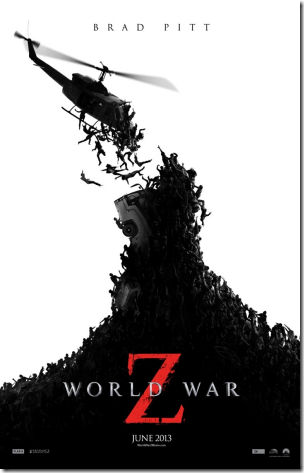
Link: World War Z
Summary: When a zombie epidemic spreads so fast that apparently there’s no warning for any country at all, a man sets out to investigate the zombie-ism and save what’s left of the world.
Thoughts: The biggest problem with this movie was lack of characterization. The film tries to get into the action right away, so we have no time to get to know the characters. So when they’re in danger and running from zombies after just two short scenes, we really don’t care much about them. If anything, they annoy us, especially the hero’s two daughters who do nothing but stand there and scream when their father isn’t there.
After a half hour or so of boring bland zombie survivalism (with enough shaky cam to make you queasy), the real story begins: it is up to our bland boring hero to investigate the origins of the zombie virus. But even this is not the real story, because the investigation somehow morphs into finding out why the zombies don’t bite certain people, and using whatever it is to save everyone else. And even this investigation is boring because nothing’s at stake for our hero until near the end, when his family is put in danger. But they’re still such bland characters that it’s still hard to care.

Link: Blancanieves
Summary: A retelling of the fairy tale Snow White and the Seven Dwarves set in the late 1920’s in Spain, with Snow White being the daughter of a bullfighter. After an attempted murder by her wicked step mother, she finds herself traveling with seven bullfighting dwarves.
Thoughts: Like The Artist, this is a modern-day black and white silent film. It is too bad The Artist overshadows this film for the novelty of being a modern-day black and white silent film, because where The Artist is gimmicky, cheesy, dull, and uninspired, Blancanieves is fantastic.
While the tale of Snow White is familiar enough that you will always know where the story is headed, the film does provide interesting twists that allow for a fresh perspective on the classic tale. The photography is brilliant, managing to turn an otherwise normal black and white world into something that seems on the edge of fantasy. The story and the pacing are tight; never is there a dull or pointless moment, yet never does it feel rushed. Being a silent film, it is very refreshing to see the much more imaginative and economical ways in which filmmakers can tell a story without needing to resort to dialog. Finally, the musical score Alfonso de Vilallonga is the icing on the cake; it is beautiful. Overall, the film creates a wonderfully mesmerizing storybook feeling that I found to be very enchanting. I’ve lately seen a number of films based on re-imagining classic fairy tales, but this is the best I’ve seen so far. Great film.


