New trailer for Turbo

Earlier this month, DreamWorks released a new trailer for their upcoming film, Turbo.  I can’t say it looks very impressive.  Looks like a standard “I wanna be somebody!”, “genie out of the bottle” story.  But, of course, trailers misrepresent films all the time, so we’ll see.

The Ladykillers (1955)

ladykillers

Link: The Ladykillers

Summary: After an otherwise successful robbery, a group of thieves must face one last problem: a kindly old lady who has discovered their secret and wants to inform the police.  The criminals decide they’ll have to kill her.  A dark but lighthearted classic bumbling British comedy.

Thoughts: I found this film to be hilarious.  Alec Guinness is particularly great as the sleazy crime boss, looking almost as creepy as a younger Christopher Lee, but with ridiculous teeth and nasty hair.  The story is a bit slow to get going, and then it’s all-over-the-place, but it’s easy to forgive with its dry unsubtle wit.  Great stuff.  They don’t make ‘em like this anymore.

Argo (2012)

Argor

Link: Argo

Summary: The true (but obviously exaggerated) story of a CIA operative who pretends to be a Hollywood producer creating a film to rescue American hostages stuck in Iran.

Thoughts: This was a fun film.  I’m not sure how it’s Academy Award Best Picture material, but that probably had more to do with Academy politics.  But as far as political thrillers go, this was very good.  They kept the story tight and easy to understand; a lesser writer or director may have tried to over-develop the characters or the plot.  But they kept it lean, so that the focus was on the suspense, the close calls, a few of them literal.  It would be almost Hitchcockian if it wasn’t for the greater emphasis on action.  Of course, the close calls are exaggerations of the true story, but they make for an exciting film.  Definitely a good film to study for its pacing, for creating suspense without having to over-develop backstories.

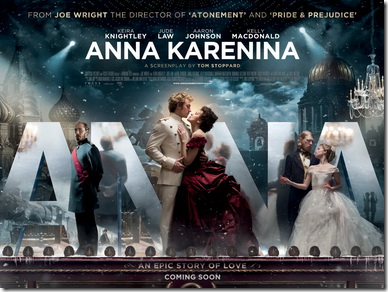
Anna Karenina (2012)

anna

Link: Anna Karenina

Summary: An insane selfish woman cannot figure out her love life and cries a lot.

Thoughts: The main character, Anna, is no way portrayed to be a character we are meant to empathize with.  Throughout the entire movie, her motives are hard to understand; she seems to be ruled by her lustful desires more than anything else, and cries whenever she can’t have exactly what she wants, evoking the sort of empathy one might have for a child who fights with everyone and then cries when no one will play with her.  Maybe there was more to the character in Tolstoy’s original story (which I will probably never read), but if so, I didn’t pick up on it here.  Anna just seems to be a selfish crybaby.  The subplots involving the side characters are far more interesting.  In honesty, though, I have yet to be impressed by anything written by Tom Stoppard.  His writing itself isn’t so bad, it’s just shallow; either he enjoys being far too blunt, or his subtlety is too subtle to work, so that the overall story feels as empty as this simile.  (I’m so meta.)

Filmmaking-wise, the film was very creative.  The film is staged as an elaborate play in a theater, so scene transitions sometimes consist of sets forming around characters, and some sets still contain elements of the theater, such as that row of lights along the bottom edge.  While it was creative, however, it didn’t really add anything to the story.  Perhaps one could argue that the hints that the story is taking place in a theater reminds the audience of the false pretenses or notions or actions of the characters or their situations, a consideration that “we are all just actors in our own plays” or something.  If so, it seems more coincidental than anything else; the same could be said of any story presented in such a way.  Still, it was fun to watch.  The cinematography was also beautiful, every scene like a painting, and the music fit the drama very well.  I particularly enjoyed its Tchaikovskian influences.  (I’m so cultured.)

Imaginaerum Blu-ray release date

imaginaerum

It looks like the low-budget 2012 foreign fantasy film Imaginaerum, based on the 2011 album of the same by Nightwish, will be available on DVD and Blu-ray next month, on April 24, 2013, and is now available for pre-order from Nightwish’s website.  Paying $30 some to have it imported from Finland is bit much for me, so I’ll resist ordering for now and hope to see it cheaper through some other online vendor in the future.  But I love the album and the film score so I’m looking forward to getting my hands on this film at some point!

Neverwas (2005)

neverwas

Link: Neverwas

Summary: The son of a famous children’s fantasy author returns to his hometown to work at a mental institution where he discovers a crazy old man whose delusions, as it turns out, provided the inspiration for his father’s fantasy book.

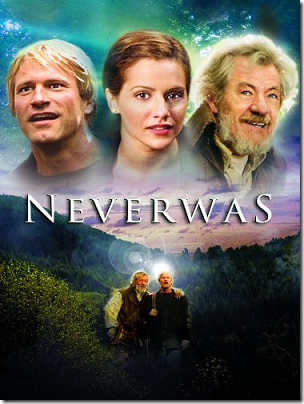
Thoughts: You know you’re in for a cheesy movie when something like the above picture is the movie poster.  And when you learn the film came straight to DVD with no theatrical release.  And it was cheesy.  There were a lot of things that didn’t quite work.  But, overall, I found it to be a surprisingly touching story, and I very much enjoyed it.

I stumbled on this movie in a strange way.  I was planning out middle-grade fantasy novel (still plotting it out; won’t be the next book I write, but it’s simmering) involving a child who’s fantasy-author father dies.  I was trying to think of a name for the kingdom for the father’s fantasy novels, which would, of course, be the name of the middle-grade book itself.  And, of course, compound words make the best sort of names, as they conjure up certain feelings.  “Neverwas” was one of the names I thought about.  I Googled it to see if it was taken by something else, and indeed it was.  Not only that, but it seemed this strange film had many similarities to my own story: a dead father who was a fantasy author.  Actually, that’s the only similarity, but at the time it seemed like a lot.  You know how writers are, always afraid their ideas have been taken.  Anyway, that’s how I stumbled on the movie, which probably pre-biased me in favor of it.

That said, Neverwas is a strange movie.  It’s not a fantasy, it’s a drama.  It’s about an adult dealing with adult issues.  His father became a famous author, giving interviews and winning the hearts of readers, but his son knew how depressed and messed up he actually was.  His father committed suicide.  So while the world sees his father’s fantasy book as a brilliant work of literature, his son sees it as the mad writings of a man who’d rather retreat into a nonsense world than deal with his real-world problems.  And then to learn that his father’s novel was actually based on the ramblings of another still-living delusional old man, he loses even more respect for his father, and for himself.

But all this is very inward and personal, making it a very hard story to capture on film, and usually the only way it manages is through cheesy dialog and mood swings that barely make sense.  Overall, the story muddles itself with too many character conflicts that are all too internal.  I think it would’ve worked better if the main character had focused on one external goal that represented what he needed internally.  That way, it would have been much easier to empathize with him.  Without it, some viewers really have to put some effort into understanding the main characters’ struggles, and it’s just not going to work for a lot viewers.  It’s going to come across as shallow or convoluted.

But if you can get past the cheesy dialog, some of the more forced plot points, and the hard-to-understand scenes of the main character sitting there crying, I think there is something touching under it all.  It’s about how we use stories to deal with the hard problems of the real world, and how those stories can be both real and unreal at the same time.  There are some wonderfully deep themes here if you can catch sight of them.  Of course, as a fantasy writer, I’m biased towards any film that can portray fantasy stories as something important and meaningful.  They give me ideas for more stories and inspire me to keep writing.

Finally, the film features a beautiful score by Philip Glass.  I know a lot of his work sounds like mostly a bunch of shifting arpeggios, but I love it, and it fits the spirit of the film wonderfully.

The film was only $6 on Amazon, so I couldn’t resist purchasing it.

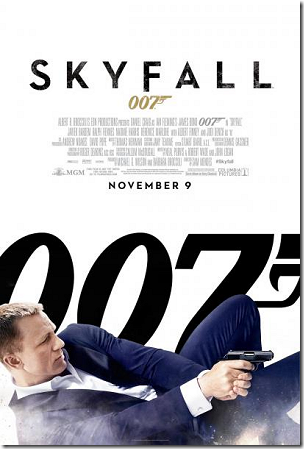
Skyfall (2012)

skyfall

Link: Skyfall

Summary: A mysterious villain begins attacking the secret service of which James Bond is an agent.  The target seems to be agent M herself.  James Bond must save the day.

Thoughts: Overall, I enjoyed the film.  I think it’s certainly the best Bond film starring Daniel Craig.  The opening action was fun, the opening titles and song were great, and the overall story was believable and made sense.  It wasn’t too over-the-top or so convoluted that you lose track of why people are fighting.  They kept the story tight and focused on the characters and their inner-conflicts, and that made the action sequences resonate much more strongly.

The portrayal of technology was a bit silly.  The decryption of computer code is represented by messed up visuals on a computer screen sorting themselves out, as if decrypting is something like solving a slide puzzle.  And then Q says dramatically, “The code is obfuscated!  Security through obfuscation!”  OMG!  Obfuscation!  Oh no!  But James Bond “solves” the obfuscation with a password?  Uh.  Um.  OK.  Or maybe I wasn’t paying attention well enough, because I was laughing too hard at Q’s reaction to the obfuscation.  The technology in the film relies too much on techno-babble.  (“Most audiences won’t know what obfuscation is!  So let’s pretend it’s something really clever!”)

I did a report on komodo dragons when I was in sixth grade.  Though I obviously didn’t become an expert, I did not find the CGI dragon’s portrayal in the film to be very realistic.  It moved too gracefully and was too sinister and quick to attack humans, as if like a mini-dinosaur from Jurassic Park.  The scene made me laugh.  The scorpion and the teeth removal were also too obviously CGI.

And the fight under icy water?  Well, I guess it’s better than invisible cars.

Colin Trevorrow to direct Jurassic Park 4

According to this article from Deadline:

Colin Trevorrow, who made his feature directorial debut on the no-budget Sundance pic Safety Not Guaranteed, is about to make a Tyrannosaurus rex-sized leap in scale for his next film. He has been set by Universal Pictures to helm Jurassic Park 4, the third sequel to the dinosaur franchise hatched from Michael Crichton’s novel.

Sounds good to me.   Safety Not Guaranteed was an overall good movie, especially for its budget, though it’s dirty humor side-story was pointless.  But I’m sure we’ll not see that brand of humor in Jurassic Park 4 with screenwriters Rick Jaffa and Amanda Silver.  This installment, planned for a 3D release in 2014, is sure to be better than Jurassic Park 3.  I’m looking forward to it.  In the meantime, the 3D re-release of the original Jurassic Park is coming next month.

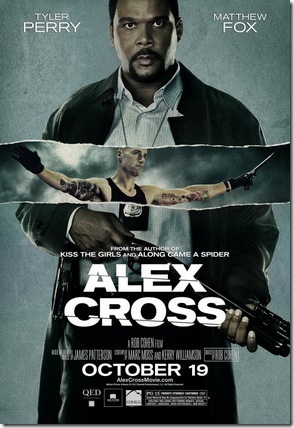
Alex Cross (2012)

Link: Alex Cross

Summary: A man solves a crime. It’s that exciting.

Thoughts: This film provides a great example of atrocious characterization. Right from the beginning, we are given no reason to empathize with the main character. Two big characterization problems: 1. He is portrayed as being just about perfect. He’s happy with everything and everyone is happy with him. There’s no reason to empathize with him because he’s never struggles with anything. Which leads us to: 2. He has no real goal. He just wants to stop the bad because that’s his job. That’s hardly a captivating motivation. Things change half-way through the movie when a tragedy makes things personal, but by then it’s too late, by then we really don’t care. And even then the stakes and the character’s motivations remain bland. He just wants revenge because the villain is just so evil! Add to this a convoluted backstory to explain the crimes and a shaky camera (why are shaky cameras still in style?) and we have a truly terrible film experience.

The only good thing I can think of is a clever bit of suspense in one scene. A man is driving a car and we know another car will crash into it at any moment. We know its coming, but we have to wait for it. Fun little bit.

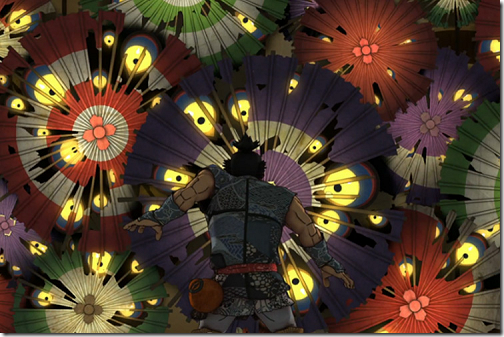
Short Peace trailer

shortpeace

I came across this trailer on a post on Cartoon Brew.  It’s for an upcoming Japanese animated film called Short Peace, a collection of four animated shorts.  I can’t understand Japanese, so I have no idea what the trailer is saying, and I have no idea what any of these stories are about.  But I love the animation style, and so I’ll be very interested in looking out for this, when it ever makes it to the US.

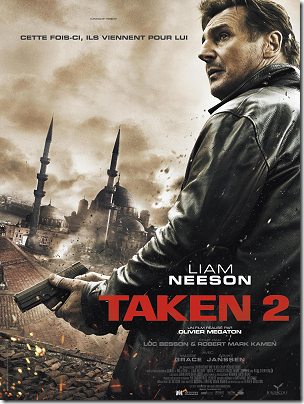
Taken 2 (2012)

taken2

Link: Taken 2

Summary: From director Olivier Megaton.  A man and his wife are kidnapped by a ruthless villain obsessed with avenging the death of his son.  The man must escape and save his family by being an action hero.

Thoughts: Though the film tries to ride on the success of its predecessor, it fails pretty miserable, becoming a parody of the first.  The villains do not seem nearly as dangerous or sinister; instead they become mindless enemies to kill as if from a video game.  The story is all over the place with way too much setup and slow pacing.

Filmmaking wise, the editing is rapid and disorienting enough to give someone a seizure while obscuring any real action.  Even when there’s no action, it seems the camera man is purposefully trying to annoy you as much as possible by wobbling the camera slightly and doing these stupid little zooms, as if this will somehow make everything seem cool and edgy.

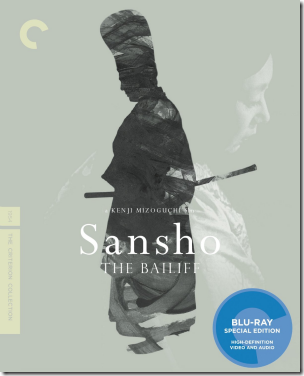
Sansho the Bailiff (1954)

sansho

Link: Sansho the Bailiff

Summary: This Japanese film from director Kenji Mizoguchi is based on an adaptation of a Japanese folk tale.  It tells the story of a boy who is separated from his parents and sold into slavery under the ruthless Sansho the Bailiff.  But he grows up, escapes, becomes powerful, and sets out to bring Sansho to justice and find his parents.

Thoughts: Honestly, I thought the story was rather boring.  The premise is certainly ripe with material, but the characters hardly make any interesting decisions themselves, save for a few near the end when Zushio arrests Sansho.  I imagine if Kurosawa was working with the same material, he’d make it much more dramatic.

Filmmaking wise, Mizoguchi makes very effective use of action-oriented long shots, fluidly moving the camera for emotional impact to the point where you wouldn’t guess that you had watched a long shot without paying attention.  But he avoids close-ups and POV shots as much as possible.  I suppose he thought this would raise the emotional impact of the two-character interaction sequences, but I think close-ups would’ve helped a great deal; staying away from close-ups changes the emotional impact to a more observational sort, which I don’t think serves this story as well, because the emotional impact of this story comes from the characters’ reactions to circumstances more than the circumstances themselves.